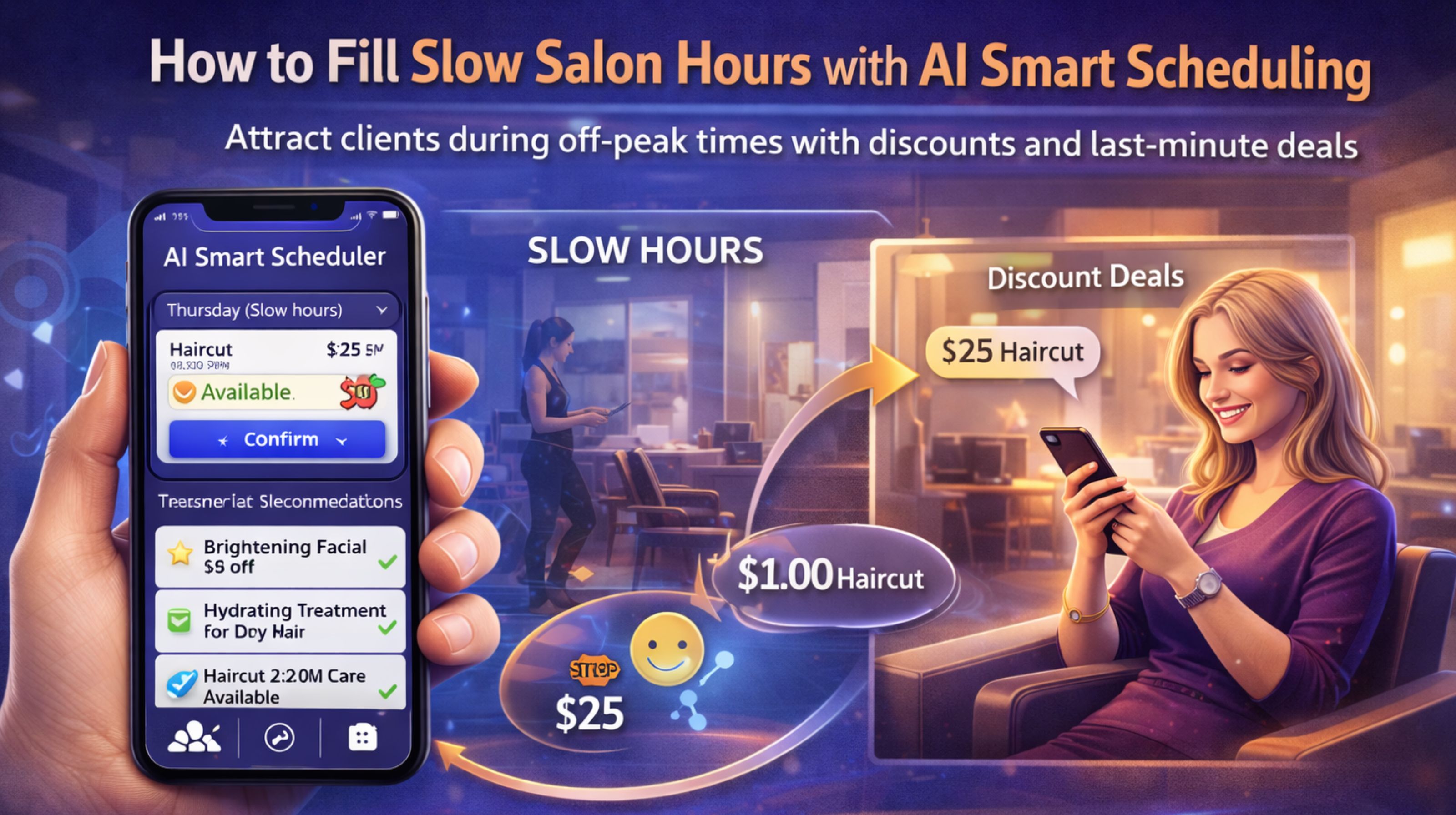


You know the feeling. It's 2:30, and the chairs are empty. Your stylists are just... waiting. And you're mentally calculating the rent, the salaries, all that. Another day where the afternoon just disappears. So you hear about this AI scheduling. It's supposed to learn your patterns, fill these gaps. Sounds good, but really? With our customers who book last-minute, cancel last-minute, want everything *now*? Can a computer really understand the chaos of a salon day here? Let's see if this tech talk actually translates to more clients in those dead hours, or if it's just another complicated thing to manage.
What "Filling Slow Hours" Actually Means in Your Salon
Okay, so "filling" hours. It's not just shoving any appointment anywhere. It's about seeing the rhythm. Like, of course after lunch is slow. But also, the week before Diwali? Pure madness. You notice things—a lady who comes in for a quick trim on a quiet Tuesday might come back next month for a full keratin. That's the gold. But here's the thing I keep thinking about: what's worse? Paying my staff to sit, or overbooking them so much that the service quality drops and clients complain? There's a line. If you just fill slots with heavy discounts, you attract the wrong crowd. People who just want the deal, once. Then your regulars see the salon is packed with bargain hunters... not good. And a big point: this AI won't magically find new clients. Its main job is to take the clients you already have and make it smoother for them to book those awkward, empty times.
The Reality of AI on Indian Salon Floors
So how does it actually work here? The tool looks at your past bookings. It might figure out that bridal trials always take longer and mess up the afternoon. Or that in July, everyone wants anti-frizz treatments. That's useful. But then it suggests moving Mrs. Sharma's weekly manicure to Tuesday at 3 PM. Fine. But what if my best manicurist is off on Tuesdays? Or a keratin treatment *needs* its full two hours—you can't squeeze it. The software doesn't know that. You have to tell it about local holidays, school breaks, even if it's going to rain. It learns from history, so if a new Bollywood hairstyle goes viral next week, the AI is clueless. And you can't just install it and walk away. You have to tweak it, every week almost. It's a tool, not a manager. You still need your head in the game, maybe looking at bigger salon management trends to stay ahead.
The Mistake: Buying Tech Without a Booking Strategy
This is the scary part. You buy this fancy AI scheduler thinking it will solve everything. But if your clients still call you directly because your website booking is confusing, then the AI is working blind. It has no data. The real blind spot is thinking the computer can replace your gut feeling. Like, the AI might slot a haircut at 3 PM. But you *know* that client brings five pictures from Pinterest and talks for twenty minutes before even sitting down. She needs more time. If you just follow the AI to fill the book, your staff gets stressed, clients feel rushed during their facial or color... and then they don't come back. So the goal got twisted from "happy clients who return" to just "full chairs." That's a loss.
How to Decide on an AI Scheduling Tool for Your Salon
Before even looking at tools, just track it yourself for two weeks. A notebook is fine. Which hours are dead? What services happen then? Who's working? Get a real feel. Then, look for software that gets *our* services—not some international version. Can it send a special offer for a Tuesday afternoon blow-dry to clients who've done it before? Can it handle when someone just walks in? Most importantly, it has to work how your clients work. If they book on WhatsApp, it has to connect there. Then, test it. Run the AI's suggested schedule alongside your real one for a month. See if it actually helps. The goal isn't just a packed book; it's a smooth, profitable flow. Places like parlourtime can help you see how these tools fit into the whole puzzle of running a salon, not just as a shiny gadget.
FAQ
q: Will AI scheduling automatically bring new clients to my salon?
a: No. It doesn't do marketing. It tries to organize the bookings you already get, making those empty slots more visible and bookable for your existing clients.
q: How does the AI know which services to suggest for slow hours?
a: It digs into your past data. It looks for services that are popular but shorter—like threading or a men's haircut—that could fit into a gap without messing up the big, time-sensitive appointments.
q: Is it safe to let AI manage my staff's shifts and appointments?
a: You should never let it just *manage*. It should *suggest*. You or your manager need to approve everything. The computer doesn't know that a certain stylist is best with curly hair or that a client is nervous.
q: What's the biggest mistake salons make with smart scheduling?
a: Letting bookings happen outside the system. If half your clients still call you, the AI only sees half the picture. Its predictions will be wrong, and you might get double-booked.
q: Can these tools handle last-minute cancellations and walk-ins?
a: The good ones can. They can instantly open up a canceled slot and text someone on the waitlist. Some can even guess how likely walk-ins are at different times, so you're not completely surprised.
a: It can set up specific offers. Like, "Quiet Time Facial" between 2-4 PM, and send it only to clients who have had facials before. It uses history to target, not just blasting everyone.
q: How long does it take for the AI to learn my salon's patterns?
a: A couple of months, usually. It needs to see a few cycles—regular weeks, a holiday week, etc. It needs enough real data on bookings, no-shows, the works.
q: What if the AI suggests something that doesn't make sense for my clients?
a: You must be able to say no. You have the final say, always. The AI sees numbers and patterns. You see the person, their history, and what they really need.