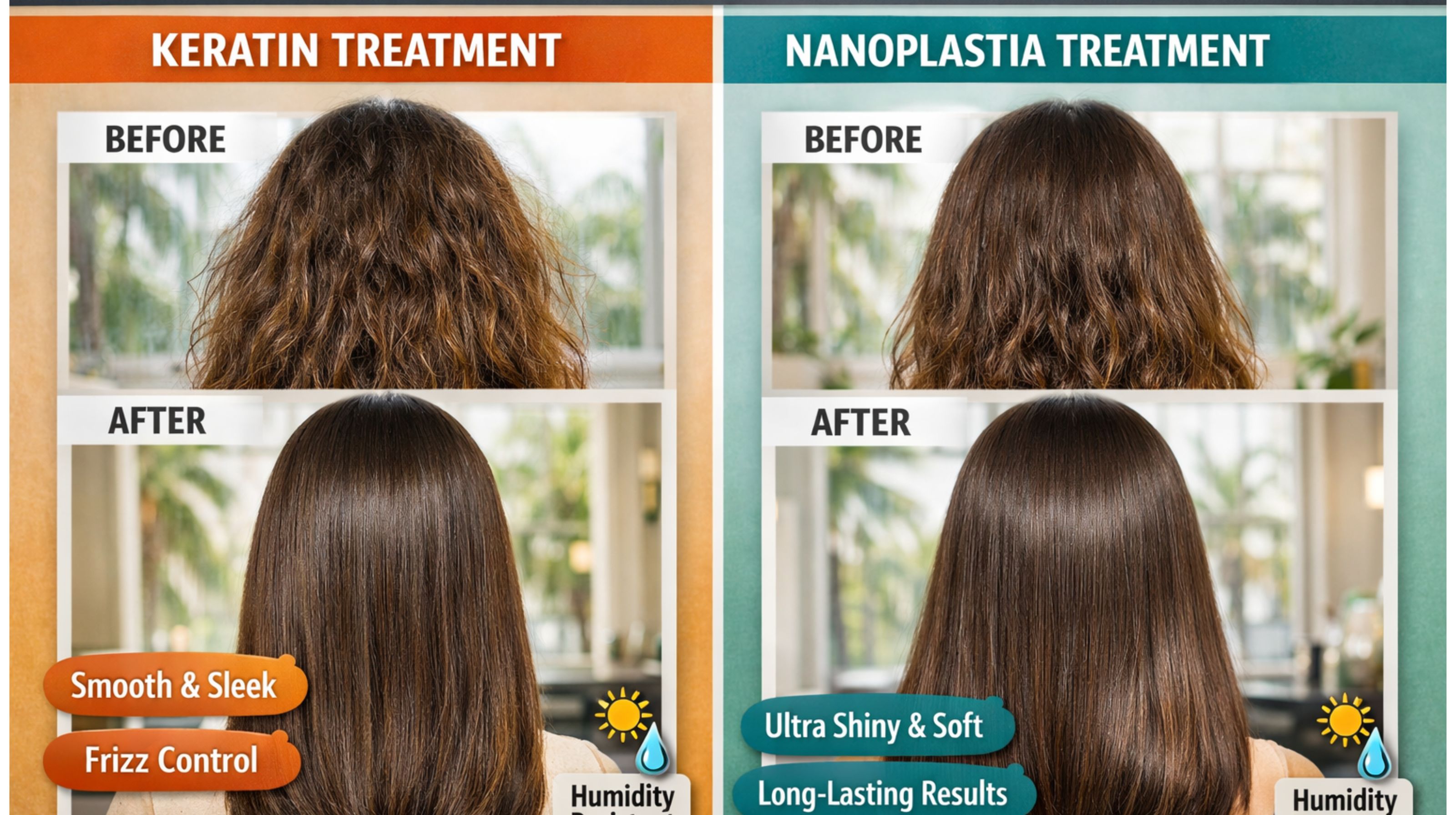


When your hair just gives up and turns into a frizzy mess the second humidity climbs, you're stuck deciding between keratin and nanoplastia. Both promise smoothness, sure, but the long-term trade-offs for your hair's health and your style are actually pretty different.
What Keratin and Nanoplastia Actually Do to Your Hair
So, keratin treatments work by forcing a solution—usually with formaldehyde or a derivative—into the hair shaft. That bonds under high heat to temporarily fill gaps and coat the strand for smoothness. Nanoplastia, often pitched as the "healthier" option, uses amino acids and conditioning polymers to try and rebuild the hair's internal structure without those harsher chemicals, aiming for a more flexible feel. At its core, it's chemical restructuring versus a deep, intensive conditioning reinforcement.
The Reality of Each Treatment in Muggy, Humid Climates
In real, sticky humidity, a traditional keratin treatment builds a strong, semi-permanent barrier. It's really good at repelling moisture and blocking frizz for maybe 3-5 months. The catch is that seal can break down unevenly as it washes out, sometimes leaving hair looking a bit patchy and weighed down. Nanoplastia gives a softer hold. It allows more natural movement and is less damaging, but its moisture resistance just isn't as high. You often need a strict routine of sulfate-free products and regular touch-up masks to keep it smooth in high humidity—a detail a lot of salons kind of gloss over.
Common Mistakes and Hidden Risks for Humid Weather Hair
The biggest mistake is picking based on just price or the marketing. Hair type matters so much. Fine, thin hair can get over-processed by a heavy keratin treatment, ending up limp and greasy. Meanwhile, coarse, super porous hair might find nanoplastia's effects too subtle and fleeting when the humidity is relentless. Another thing people get wrong is assuming nanoplastia is always "chemical-free." Many formulas still have mild restructuring agents, and the results depend heavily on the technician's skill and how they apply the heat, which can lead to some inconsistent outcomes.
How to Decide Which Treatment is Right for Your Hair and Climate
You've got to start with a brutally honest look at your hair's porosity, its thickness, and how much maintenance you'll actually tolerate. If you need maximum, long-lasting frizz defense in tropical humidity and can handle stricter aftercare (and that potential regrowth line), keratin is the stronger pick. If your hair is color-treated, already damaged, or you care more about flexibility and hair health than total frizz immunity, nanoplastia is the safer bet. For tricky cases with colored hair or prior damage, talking to a pro who knows advanced hair care solutions is crucial. You really need someone who understands both the chemistry and the styling to get a safe result.
FAQ
Which treatment lasts longer in humidity, keratin or nanoplastia?
Keratin treatments usually last longer, about 3 to 5 months, and provide a stronger shield. Nanoplastia results tend to last 2 to 4 months and need more diligent upkeep with the right products to hold up in moist air.
Is nanoplastia better for damaged or colored hair?
Generally, yes. Nanoplastia is often the better call for damaged or colored hair because it's less invasive, helps repair the hair shaft, and skips harsh chemicals like formaldehyde that can strip color or cause more brittleness.
Can I wash my hair normally after these treatments?
Not really, both need specific aftercare. For keratin, you must wait 72 hours before washing and then use only sulfate-free, sodium chloride-free shampoo. Nanoplastia also needs sulfate-free products, and a lot of stylists will recommend a series of follow-up masks to keep the benefits.
Which treatment is more effective for extreme frizz control?
For extreme, humidity-driven frizz, keratin is generally more effective. It creates a stronger, continuous layer around the hair shaft that acts as a tougher barrier against moisture compared to the conditioning-based approach of nanoplastia.