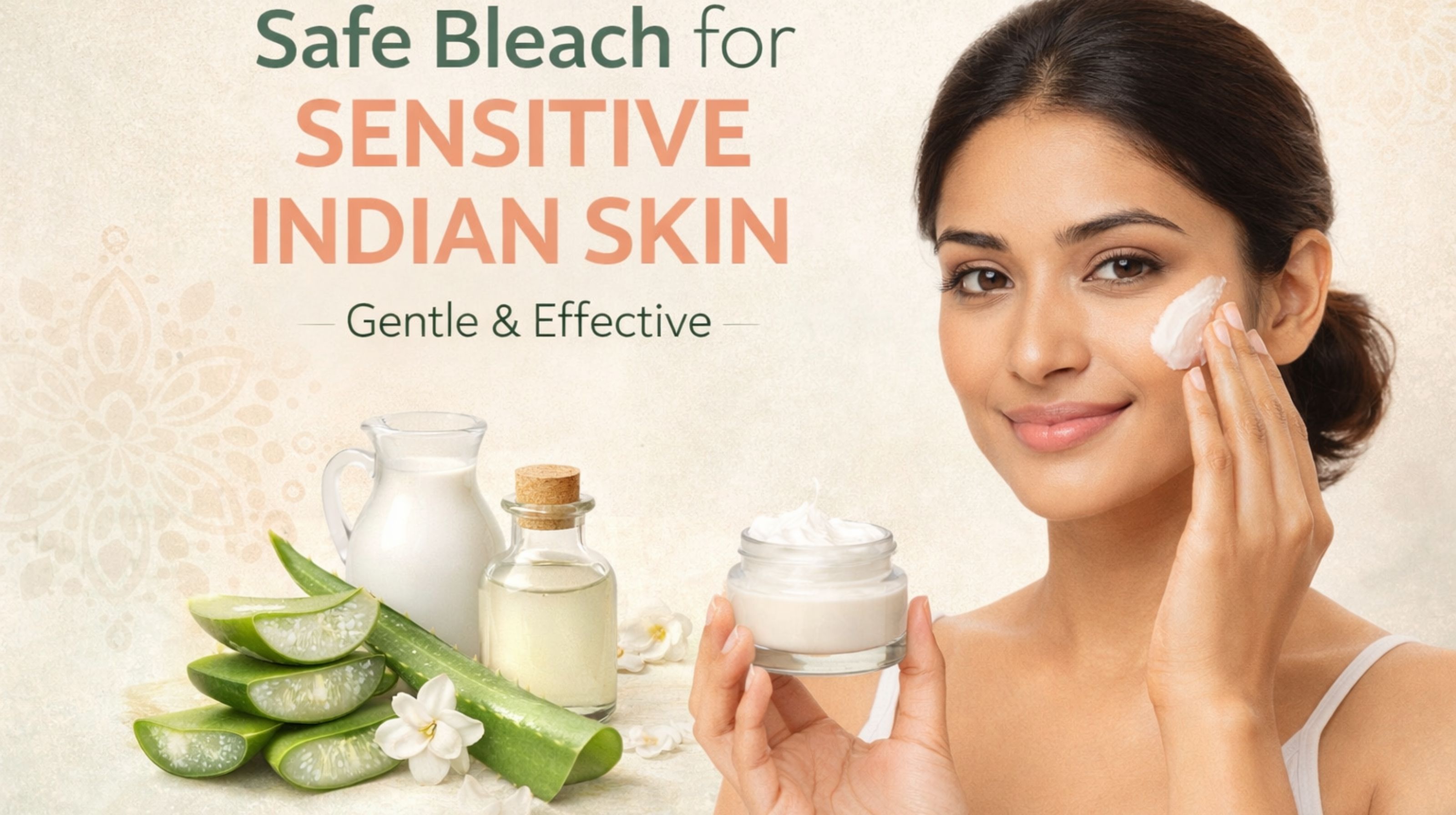


If you have sensitive Indian skin and are thinking about bleaching, you're probably stuck. You want to deal with facial hair or dark spots, but you're also genuinely worried about that burning feeling or doing some real damage. That search for something "safe" isn't just casual—it feels personal and pretty urgent.
What "Safe Bleach" Really Means for Sensitive Skin
Let's be clear: here, "safe" doesn't mean no risk at all. It means a product that's *trying* to cut down on the usual irritants for skin that reacts easily. They often do this by using less of the active stuff, like hydrogen peroxide, and leaving out harsh additives like ammonia. The goal is to reduce the chance of irritation, not get rid of it completely. That's a key difference.
The Reality of Using Bleach on Reactive Skin
In real life, it's tricky. Even bottles labeled "gentle" or "for sensitive skin" can lead to stinging, redness, or little bumps. This is especially true if your skin barrier isn't at its best, or if you get tempted to leave it on a bit longer. I've noticed a lot of people think a mild formula means they have more time, and that's how they end up with a worse reaction. That patch test behind the ear? It's not just a nice idea. It's the one step most people ignore, but really shouldn't.
The Biggest Mistake: Confusing "Natural" with "Safe"
This is a big one, and it can cost you. There's this assumption that if a bleach kit is herbal or "natural," it's automatically safer. But ingredients like lemon or walnut extracts can make your skin super sensitive to the sun. They can cause a severe reaction called phytophotodermatitis, which sometimes leaves you with darker, blotchy patches that are a much bigger headache to fix than what you started with.
When Bleaching Makes Sense (And When It Doesn't)
Bleaching can be a practical choice for lightening dark facial hair, especially if your skin tone is fair to medium—it just makes the hair less obvious. But it rarely, if ever, works as a fix for melasma or dark spots from old acne. In fact, it can irritate the pigment-producing cells and make things worse. If you're looking for overall skin lightening, a slower route with ingredients that inhibit pigment, like kojic acid or vitamin C, is a much safer bet in the long run.
FAQ
What is the safest active ingredient in bleach for sensitive skin?
You'll want to look for creams that use hydrogen peroxide, and at a low concentration—often under 6%. It's generally less aggressive than other options. And try to avoid anything with ammonia listed near the top of the ingredients.
How long should I leave bleach on sensitive facial skin?
Don't go over the time on the box. Honestly, for the first try, consider shaving 25-30% off that time. On your face, we're usually talking 5-7 minutes, maximum. If you feel a hot, prickling sensation, that's your cue to take it off right then.
Can I bleach my skin if I have active acne or broken skin?
No, absolutely not. Putting bleach on acne, cuts, or skin you just waxed will drive the chemicals deeper. That can cause serious burning, might scar, and will almost certainly make any dark spots worse. Your skin needs to be fully healed and intact.
What should I do immediately if my skin reacts badly to bleach?
First, wash it all off with cool water. Then, use something soothing like pure aloe vera gel or a basic, fragrance-free moisturizer with ceramides. Hold off on steroid creams unless a doctor tells you to use one. If you see blisters forming, it's time to see a dermatologist.