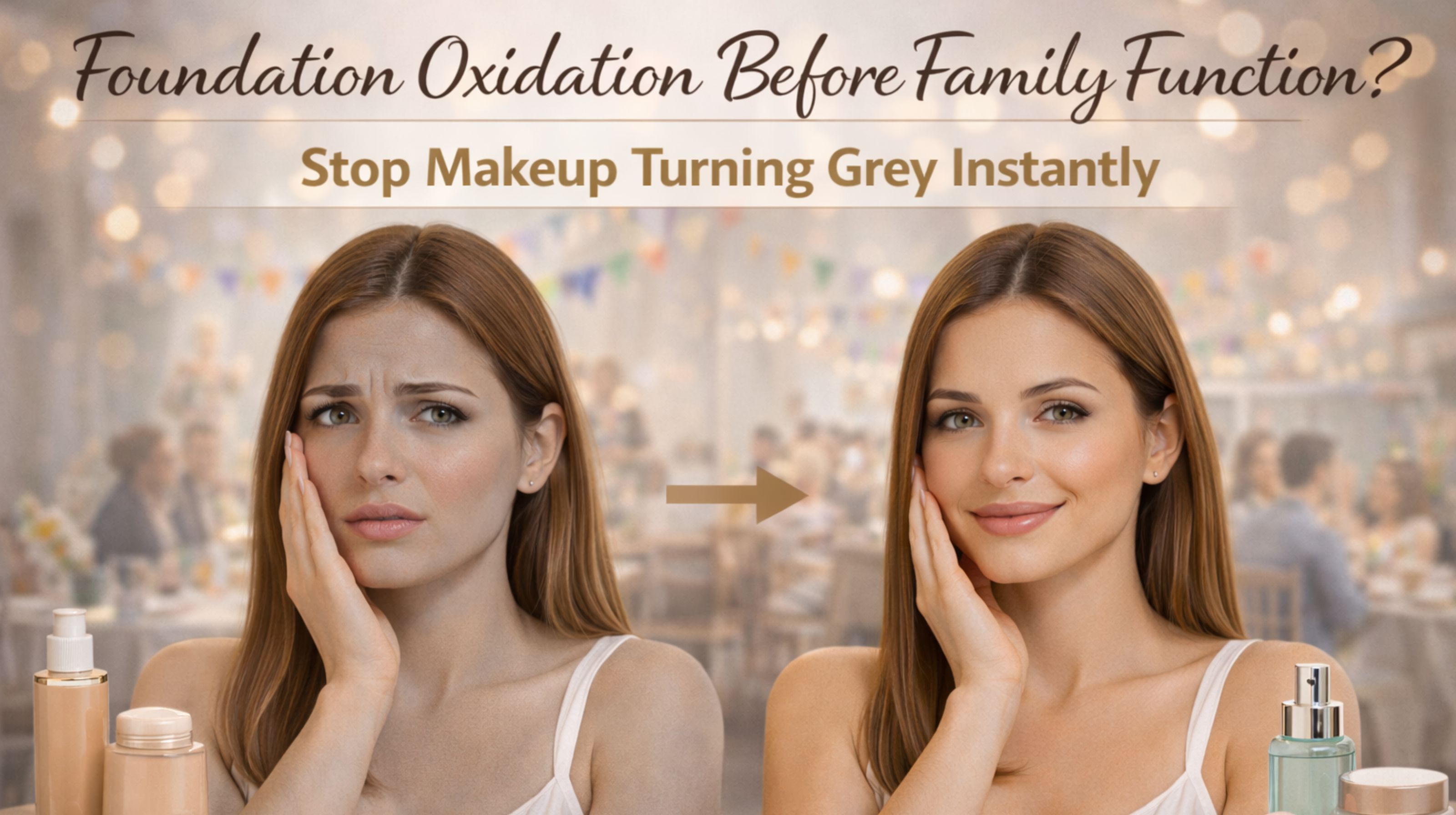


You book the salon makeup for the big family function, picturing that flawless, camera-ready glow. But then the real panic hits. You see your foundation turning a dull, ashy grey—or maybe a weird orange—just an hour in. Right when the aunties start pulling out their phones for photos. This isn't just a bad makeup day. It's foundation oxidation, this chemical thing between your skin's oils, the makeup itself, and our lovely Indian heat and humidity. For our medium to deep brown skin tones, that grey cast is just... so stark. Makes you look washed-out, almost ghostly. The salon promises "long-lasting" but if they don't get your skin's unique pH, or use the wrong primer, or forget about the harsh hall lighting... that perfect base is gone by the first round of samosas. You're not overreacting. It's a real blind spot, leaving you blotting in a bathroom stall instead of enjoying your own family.
What Foundation Oxidation Really Means for Your Salon Visit
In the salon chair, oxidation is that unspoken thing. You get that sinking feeling when your fresh, perfectly matched foundation just... changes colour on your skin within the hour. It's not the artist's fault right then, but it's a preparation thing they missed. The real issue? A lot of artists use this one universal primer, or a foundation with stuff in it that reacts badly with our skin's natural oil—which, let's be honest, tends to be oilier. In the cool, controlled salon air, the match looks perfect. But under the heat of those wedding hall lights, or in a humid banquet room, the reaction speeds up. Your foundation doesn't just fade. It actively changes, often going greyish or this weird orange mask that starts separating around your nose. That's the core of it. You pay for professional makeup, and it unravels because of a chemical process everyone saw coming but no one talked about.
The Reality of Makeup on Indian Skin in Event Conditions
What actually happens is a clash. Between the product's chemistry and your skin's own... ecosystem. Here's a thing you might not think of: the skincare you layered on before. If you had a salon facial or used a vitamin C serum the day before your appointment, your skin's surface acidity changes. It becomes a more reactive canvas, and that can speed up oxidation. Also, many artists don't think about "flashback"—foundations with high SPF or silica can give a pale grey cast under phone cameras or flash photography. Which is basically every family function now. The service stops helping when the artist insists on using the same "bridal" or "high-coverage" foundation for everyone. They ignore that these thick formulas are the most likely to oxidise on oily skin. The misunderstanding is thinking more product lasts longer, when really, it's just more stuff that can react and turn grey.
The Critical Mistake: Assuming Your Trial Was the Final Result
The biggest risk is believing your salon trial—usually done in a calm morning slot—will look the same on the event day. Which involves evening wear, maybe some stress-induced oiliness, and totally different conditions. A major blind spot is not doing a real "wear test." Did your trial makeup last through a simulated 5-hour function in actual humid weather? Probably not. Artists often drench you in setting spray for that initial "locked-in" feel, but some alcohol-based sprays can dry the top layer so much it makes the foundation underneath separate and oxidise faster. It gets worse when you realise the salon's own colour-correction—using peach or orange correctors—can itself oxidise. So instead of neutralising darkness, it amplifies the grey tone. You're left with a patchy, discoloured base that no amount of powder from your clutch can fix.
Your Decision Help: Correcting or Changing Course Before the Event
If you're seeing grey oxidation in your trial, or you're having flashbacks to a past bad experience, you need a plan. First, when to wait: if you see a slight darkening after 2 hours but your skin still looks like one piece, maybe a primer switch is all you need. When to rebook: schedule a corrective trial immediately. But demand a "real conditions test"—put on the makeup and sit near a heater, or just go outside in the afternoon heat for an hour. See if the colour shifts. When to change the service: if their HD or full-coverage foundation always fails, switch your booking to a lighter, serum-based foundation. Or even a professional tinted moisturiser. When to change the salon: if the artist brushes off your concerns as "normal" or can't even explain why they're using certain products. The unstable situation is panic, patchy photos, constant powdering. The stable situation is having a calm plan. Maybe using a platform like parlourtime to find artists who actually list oxidation-control as a thing they do. So you know your base will stay true from the puja to the reception.
FAQ
q: Why does my foundation turn grey or ashy on my brown skin?
a: It's usually foundation oxidation plus the wrong formula. A lot of foundations have ingredients that react with your skin's natural oils and the air, changing colour. On deeper skin, that change often looks grey or ashy because the warm undertones get lost. Also, using a silicone-based primer with a water-based foundation, or the other way around, can make everything separate and look chalky.
q: How can I stop my makeup from oxidizing before a family function?
a: It's about prepping your skin and picking the right product. Start with a pH-balancing toner and a primer meant for oil control in humidity. Tell your salon artist you want a foundation called "non-oxidising" or "colour-true." Ask for blotting powder, not a heavy setting one. Most important, do a real wear-test. Put on the full makeup and let it sit in a warm place for an hour before you finalise anything.
q: Is it normal for makeup to oxidise in Indian wedding humidity?
a: A little darkening can happen in crazy humidity, sure. But a severe shift to grey or orange? That's not "normal." It means the product doesn't match your skin. Professional salon makeup should be made to last through 4-6 hours of an event. If it changes colour badly in the first hour, that's a service problem, not just the weather.
q: Should I change my salon if my trial makeup turned grey?
a: Not necessarily after the first time, but definitely if they won't fix it. Ask for a second trial with different primers and foundations. If the artist isn't willing to try new things, or blames your skincare routine, that's a big red flag. For a really important event, you can use a booking platform like parlourtime to find artists with reviews that specifically say "colour stays true." It means they get this issue.