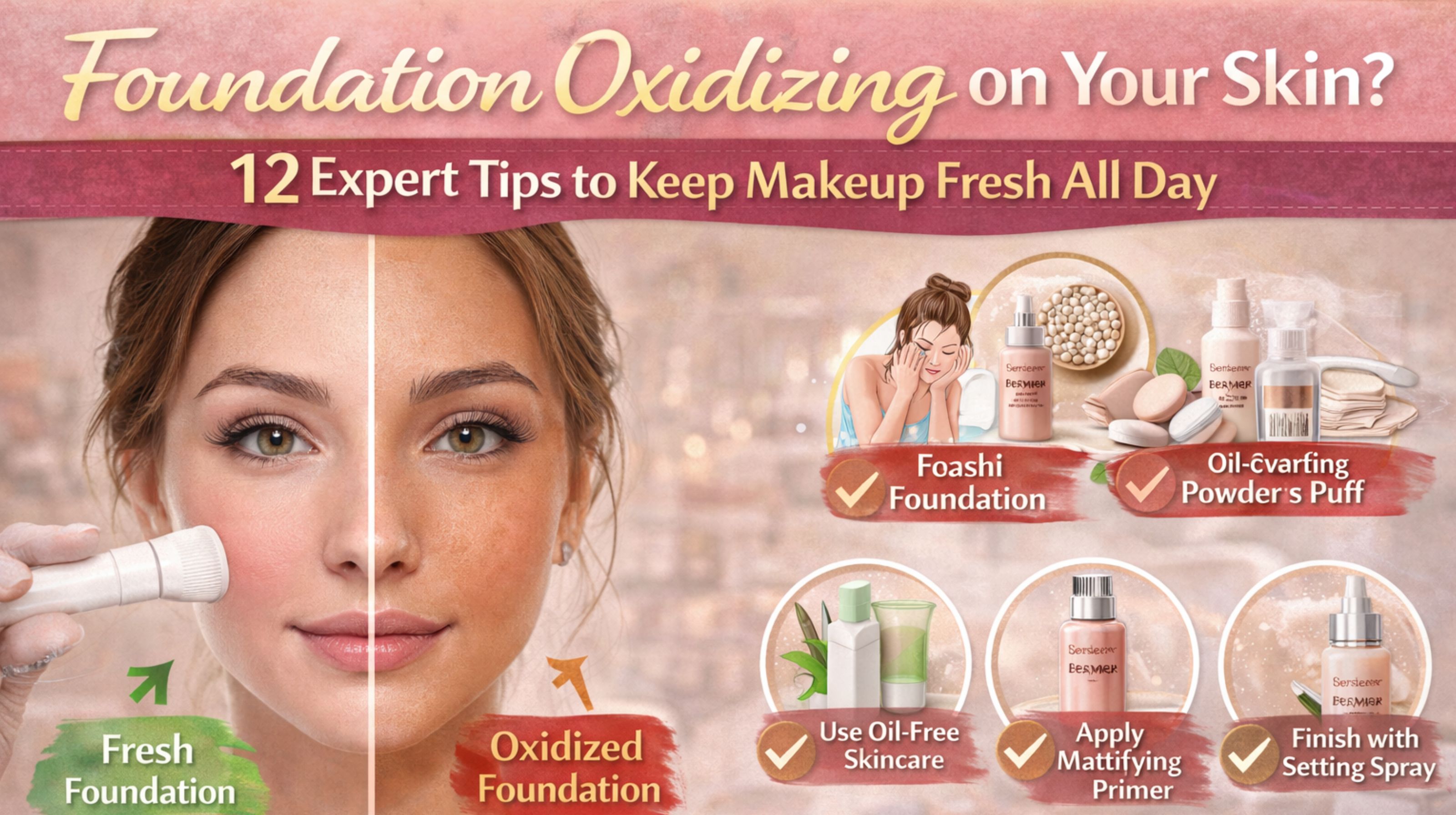


You know that feeling. You leave the salon feeling perfect, and then by lunchtime, you catch your reflection and... what happened? Your face looks orange. Or maybe kind of grey and ashy. It's not just a bad makeup day—it's this thing called oxidation. Makes you wonder if getting it done professionally was even worth it, you know?
What Foundation Oxidation Really Means for Your Salon Visit
At the salon, the lighting is perfect, the artist is skilled. They match you spot-on. But this... this they can't control. It's a chemical thing. The foundation mixes with the air, your skin's oils, even your skin's pH, and it just changes colour. I've heard friends say they went straight from the salon to a meeting and felt so embarrassed because their face looked muddy. They loved the service but hated the result hours later.
The Reality of Oxidation on Indian Skin Tones
On our skin, it's so obvious. For warmer, deeper tones, it goes this bright orange or red. Makes you look kind of... unnatural. For fairer skin, it can look ashy, like a grey cast. And here's something I never thought about—what you put on your skin *before* matters. If you use a vitamin C serum or a strong toner, it can actually make the foundation oxidize faster. Your makeup artist probably doesn't have time to ask about your whole skincare routine during an appointment.
The Mistake: Assuming It's Just the Foundation's Fault
It's easy to just blame the salon or the foundation brand. You think, "I'll just buy a more expensive one." But that's not always the fix. The real issue is your own skin. Your natural oils come through as the day goes on, especially in our humidity, and that's what really sets off the reaction. The foundation that was flawless at 10 AM is breaking down and changing colour by noon because of *your* skin.
How to Decide Your Next Step for a Flawless Base
So what do you do? First, figure out your skin type. What are you putting under your makeup? Before your next salon visit, or even when you're buying foundation yourself, test it. Put a stripe on your jawline and just... leave it. Go about your morning. Check it after a couple of hours in real daylight. That tells you more than any swatch in a store. It's confusing, so sometimes you need to read up on it. I've found Parlourtime's blogs helpful for breaking things down without pushing products. You have to be a bit scientific about it, not just guess.
FAQ
q Why does my foundation turn orange on me?
a It's that oxidation process. The pigments react with your skin's oils and pH, and they darken and shift colour. On warm skin like ours, it often goes straight to orange.
q Can a primer really stop foundation from oxidizing?
a A good primer can help. A silicone-based one puts a bit of a barrier between your oily skin and the foundation, so it slows things down. But if the foundation itself is the problem, a primer won't magically fix it.
q Should I buy a lighter shade to compensate for oxidation?
a A lot of people try this, but it's tricky. You might end up looking too light and ashy when you first put it on. It's better to find a formula that just doesn't change colour much on you, even if that means testing a few.
q How can I check if a foundation will oxidize before buying?
a Don't just swatch and wipe. Put some on, maybe on your jaw, and don't blend it all the way. Wait half an hour and then look at it in sunlight. The colour you see then is the real one. Reading what other people say, like on parlourtime, can also give you clues about how it wears in real life, not just in ads.