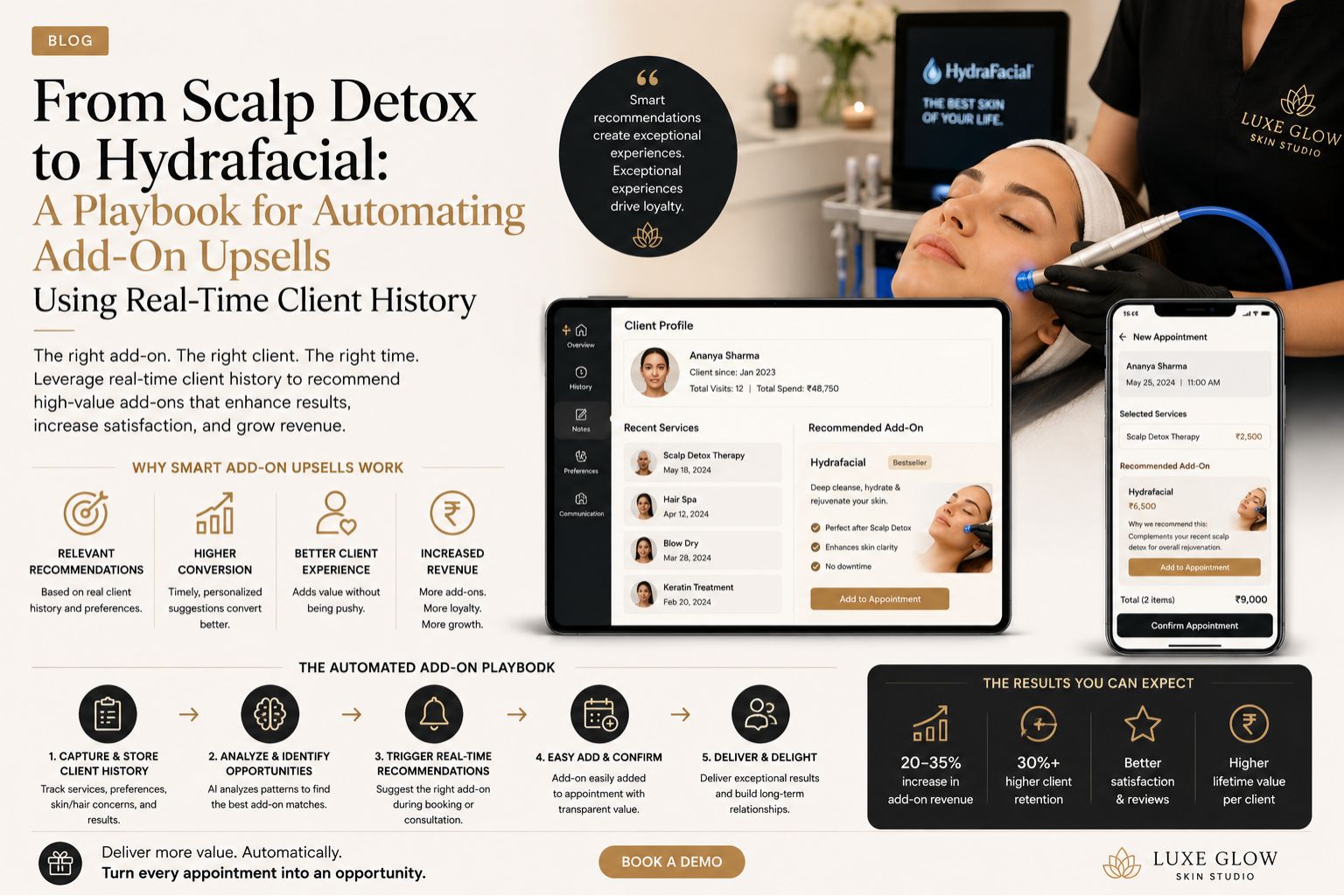


Many salons in India, honestly, lose money on every appointment because they miss the chance to offer add-ons like scalp detox or hydrafacial based on what the client actually needs right then – not just what's on the menu. Automating upsells using real-time client history means you spot the exact moment to suggest a service, turning a simple haircut into a full treatment package without any awkward, salesy pitch that makes both parties uncomfortable.
Why Real-Time Client History Unlocks Add-On Opportunities
When a client books a basic hair service, their past visits, you know, often reveal a pattern of dry scalp or dandruff complaints that a scalp detox could fix immediately – I mean, why wouldn't you? Instead of guessing or just hoping they ask, real-time data shows you the last product used or treatment received, so the stylist knows to recommend a detox before the wash even starts. It just makes sense.
The Reality of Upselling in Indian Salons
Many salon owners assume clients will say no to add-ons, but honestly, most rejections happen because the offer feels random or pushy rather than personal – it's like that uncle at a wedding trying to sell you a watch. A client who just finished a bridal package might genuinely appreciate a hydrafacial if the system flags their previous hydration concerns, but without that history, the suggestion feels like a cheap sales trick. Nobody likes that.
Common Mistakes That Kill Add-On Revenue
The biggest blind spot, and I see this all the time, is treating every client the same – offering the same five add-ons regardless of past behavior or skin type – it's lazy, frankly. For example, a client with oily scalp might need a clarifying treatment not a moisturizing one, but if the system doesn't pull their history properly, you waste time and lose their trust. They'll just think you're not listening.
How to Build an Automated Upsell Playbook for Your Salon
Start by linking your booking software to client profiles – I know it sounds technical but hear me out – so that when a stylist checks in a repeat client, the system suggests three relevant add-ons based on last visit and trends. For instance, if a client had a facial six weeks ago and now reports dull skin, the app can flag a hydrafacial as the next logical step, and the stylist can confirm with confidence instead of stammering through a pitch.
FAQ
q How can I automate add-on suggestions without annoying clients?
a Use real-time history to match offers with past needs, so the suggestion feels like a helpful reminder – like a friend saying "hey, you liked this last time" – rather than a sales pitch. For example, if a client previously requested a scalp detox, the system can prompt the stylist to ask about their current scalp condition during check-in. Simple.
q What data do I need to start automating upsells?
a You need client visit history, treatment preferences, product purchases, and skin or hair condition notes from past appointments – basically everything you already have but aren't using properly. This data helps the system pick relevant add-ons like hydrafacial for hydration or detox for buildup.
q Will this work for first-time clients too?
a For new clients, use initial consultation data or basic skin type questionnaires to suggest one or two universal add-ons – nothing overwhelming – then refine offers as their history grows. Parlourtime helps you track these patterns over time without you having to remember everything.
q How do I train my team to use real-time suggestions?
a Show them how reading the client profile before service actually builds trust and increases revenue – and role-play simple scripts that explain the add-on benefit based on history, not pressure. Most stylists adopt it quickly once they see higher tips and happier clients.