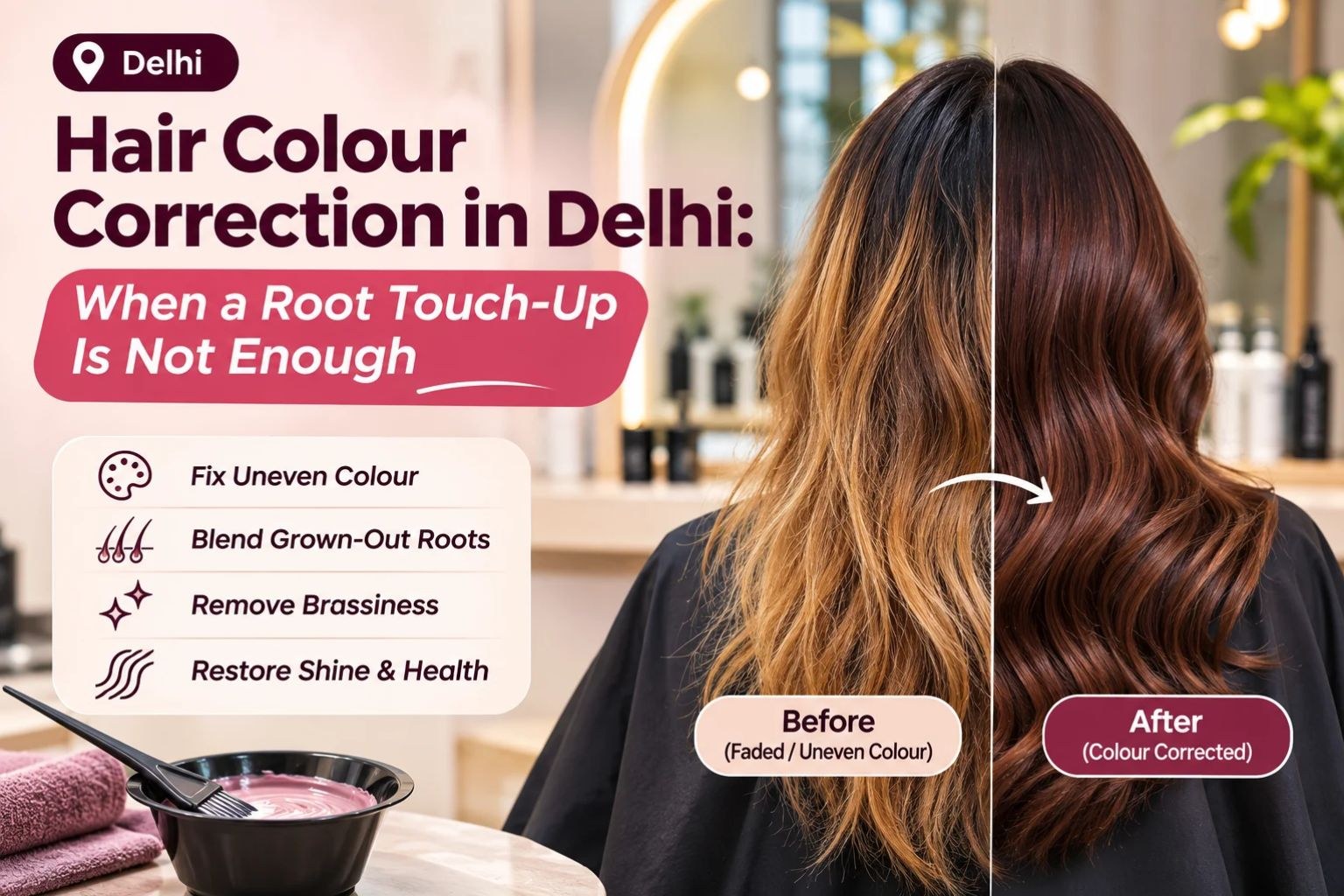


A root touch-up treats only the new growth near your scalp. It is not enough when previously coloured hair already shows banding, uneven tone or unwanted warmth through the lengths. Colour correction reworks that old colour so the whole strand reads as one shade, and this guide helps Delhi readers tell which one their hair actually needs.
Why a root touch-up sometimes fails on previously coloured hair in Delhi
Takeaway: a touch-up adds colour on top, but it cannot undo what is already sitting on the lengths.
In a touch-up, fresh colour goes only on the regrowth and the rest of the strand stays as it is. When old colour has built up over several applications, the roots and the lengths no longer start from the same place. New growth is untreated, while the mid-lengths and ends carry earlier layers, so the same shade can look different above and below the line.
Overlapping product makes this harder. If a touch-up is repeated often and the colour creeps past the root area, those layers pile up and the ends can read darker, flatter or patchier over time. Lift can also come through unevenly, which is where unwanted warmth tends to show up first.
Signs your colour needs correction rather than a refresh
Takeaway: if the problem sits in the lengths, not just at the scalp, it is usually a correction job.
Banding: a visible horizontal line where the roots stop and the old colour starts, which deepens with each root application.
Patchiness: some sections looking lighter, darker or duller than others on the same head.
Unwanted warmth: brassy or orange-leaning tones sitting where you wanted a cooler or softer shade.
Uneven tone from root to tip: the lengths no longer match the shade you are maintaining.
If only the root line is showing and the lengths still look close to your intended shade, a refresh is often reasonable. When several of these signs appear together, plan for correction instead of another root application.
What a glossing step adds after correction
Takeaway: glossing finishes the job — it does not replace the correction itself.
Glossing is a tone-adjusting, shine-adding step applied after the main correction work. It helps settle the final shade, soften unwanted warmth and leave the surface looking more reflective. What it does not do is remove an old band or fix patchiness on its own; those need correction first.
Think of the order as correction, then gloss, then care. Asking whether a gloss is included, and at which stage, is a fair question when you are comparing how a salon works.
Aftercare routine to protect corrected colour
Takeaway: what you do in the weeks after correction matters as much as the session itself.
Wait before the first wash, following whatever waiting period your stylist advises after the service.
Use sulphate-free, colour-safe cleansing and keep conditioner on the lengths rather than the scalp.
Limit heat styling and protect hair from strong sun where you can.
Space out chemical services, including future touch-ups, so the hair has recovery time between them.
Practical checks before you decide
Look in daylight, not bathroom light: can you see a clear line where the roots end?
Feel the lengths when wet: if they feel stretchy or snap easily, ask whether correction should wait.
Check the tone, not just the depth: is the lengths shade warmer or flatter than you wanted?
Ask how many sittings a correction would take, and whether a strand test comes first. A studio that inspects your hair before promising a same-day result is showing care, not reluctance.
Plan around deadlines: festivals and events leave little room for a second session if the first result needs adjustment, so start corrective work earlier.
Before booking, gather your requirements and check the services a salon actually lists, rather than relying on promise language. You can also read hair care resources to separate repair from colour work.
In short: refresh when the issue is only at the roots; correct when the lengths are the problem; and give corrected colour a patient aftercare routine so the even result holds.