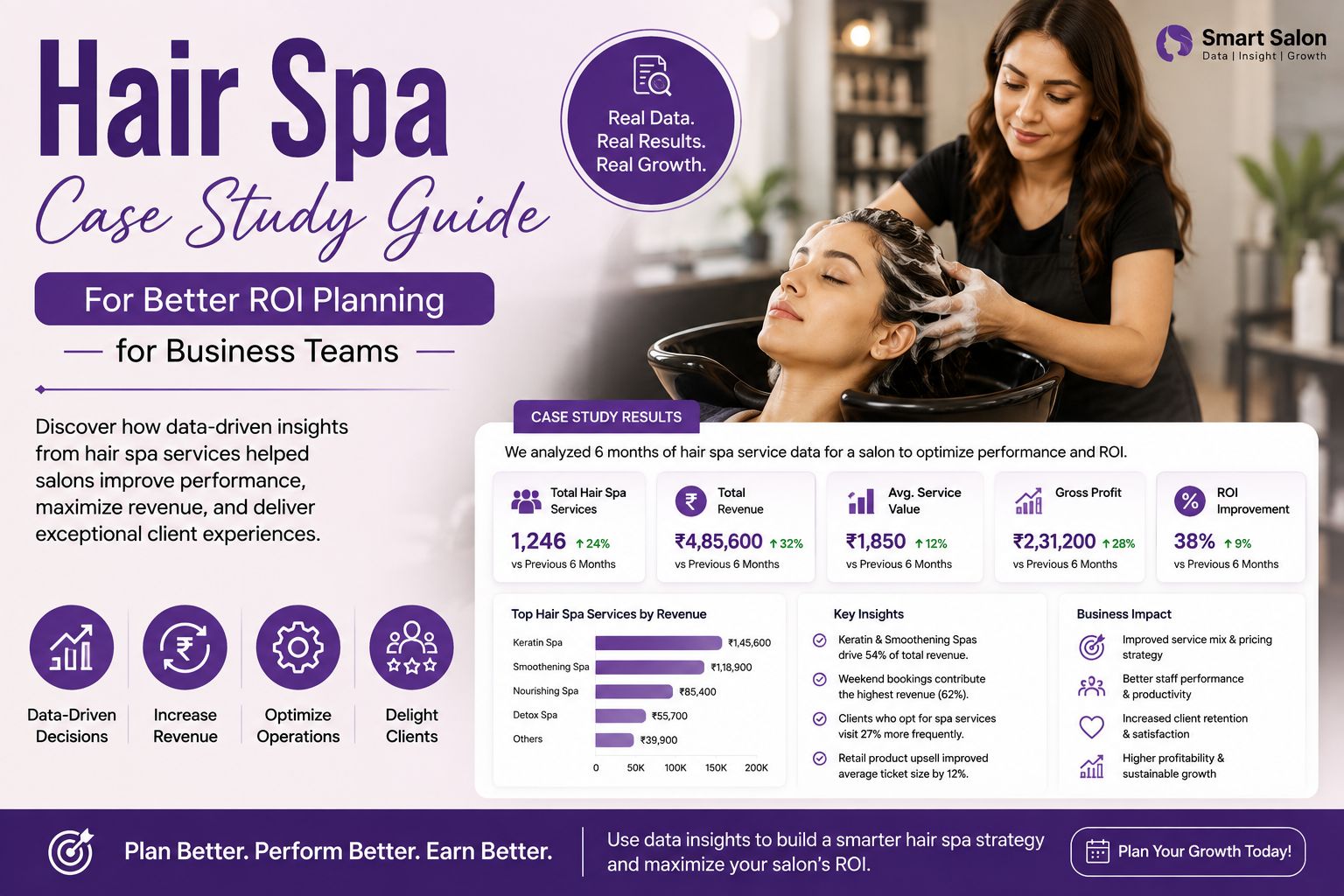


When business teams start reviewing hair spa case studies for ROI planning, the first challenge is separating operational data from marketing claims. Many salon owners and managers look at average ticket size or product sales, but they miss the service duration, skill dependency, and repeat visit frequency that actually determine profitability. A hair spa case study for business planning must include client satisfaction scores, chair utilization rates, and product consumption patterns. Without these details, revenue projections often look promising on paper but fail in practice because the service takes longer than expected or requires more expensive aftercare products. Business teams need a clear framework that connects treatment outcomes with measurable business metrics before allocating marketing budgets or training resources. Honestly, without that connection, you're basically guessing.
What a Hair Spa Case Study Should Measure for ROI
A useful hair spa case study for ROI planning should track the full service journey rather than just the treatment price. The baseline data must include consultation time, pre-service scalp analysis, product application duration, and the recommended home-care regimen that influences product retail sales. Business teams often overlook that a single hair spa session involves multiple staff touchpoints, which affects labor costs and scheduling capacity. The case study should also record the client's hair condition at the start, the specific concerns addressed, and the realistic outcome timeline communicated during consultation. When teams document these operational details, they can calculate true service cost per minute and compare it against alternate revenue-generating treatments like hair smoothening or keratin procedures. This baseline becomes the reference point for evaluating whether the hair spa service meets profitability targets or needs repositioning. Though, getting that baseline data consistently is easier said than done in a busy salon.
Understanding the Business Reality Behind Hair Spa Service Costs
In actual salon operations, hair spa profitability depends heavily on product cost percentage and staff efficiency, not just the service menu price. Many business teams assume that premium product pricing automatically creates higher margins, but wastage during application and low retail follow-through often erode those gains. A practical case study observation is that clients with dry or chemically damaged hair typically require more product and longer processing time, which reduces the number of daily services a stylist can complete. Weather conditions also influence demand, as monsoon humidity and winter dryness often lead to higher hair spa bookings, but these seasonal spikes can stretch staff availability and product inventory. Business teams should model both peak and lean seasons to understand cash flow implications rather than relying on annual averages that hide monthly volatility. This operational understanding prevents the common mistake of overstaffing during slow months or understocking during high-demand periods. It's a delicate balance, and it shifts constantly.
Mistakes Business Teams Make When Reviewing Hair Spa Case Studies
One major mistake in case study analysis is treating client satisfaction scores as the only success indicator while ignoring the cost of client acquisition and retention. Positive feedback does not automatically translate into repeat visits at profitable intervals if the service frequency recommended is unrealistic for the target audience's budget. Another blind spot involves comparing hair spa results with more intensive treatments like keratin or smoothening without considering the difference in service price point and maintenance expectations. Business teams often miss that hair spa primarily addresses scalp health and temporary nourishment, whereas chemical treatments alter hair structure over a longer period, setting entirely different client expectations and rebooking patterns. Overlooking the retraining time required for new staff to perform consistent hair spa protocols also distorts labor cost projections, leading to understated operational expenses. Additionally, focusing only on revenue per session rather than client lifetime value can lead to pricing strategies that attract one-time users instead of building a base of regular clients who purchase retail products. This is a trap that even experienced teams fall into, mostly because it's easier to track immediate numbers.
Decision Framework for Hair Spa ROI Improvement
Business teams should establish clear decision boundaries before adjusting hair spa pricing, promotion, or service protocols based on case study findings. The first step is defining a minimum acceptable profit margin per service hour and setting a target for retail product attachment rate that reflects realistic client buying behavior. If a case study demonstrates that a particular hair spa package underperforms on chair utilization time, the team should consider whether service duration can be streamlined without compromising results, or whether the price point needs adjustment to match the true labor cost. When repeat visit data shows gaps longer than the recommended maintenance interval, the business may need to improve client education on aftercare benefits rather than discounting the service further. Teams should also compare the hair spa's contribution margin against other scalp-focused services to determine if resources should shift toward alternative offerings. For business teams looking for structured guidance, resources on salon courses and service management can provide additional frameworks for evaluating treatment profitability. If internal data remains inconsistent, comparing operational benchmarks through beauty service questions can help identify whether the issue lies in service delivery, pricing structure, or client communication. Ultimately, the goal is to make the hair spa a predictable revenue stream, and when multiple case studies show declining returns despite correct execution, it may be time to reassess the product line or service format entirely. Parlourtime discussions often highlight that maintenance expectations influence satisfaction more than the treatment itself, which guides realistic service descriptions. That part about expectations is something I keep coming back to.
Frequently Asked Questions
q What basic metrics should a hair spa case study include for ROI analysis?
a A practical hair spa case study should track service duration, product cost per session, staff labor hours, repeat visit frequency, and retail product attachment rate. These five points give you a solid starting picture.
q How can business teams avoid skewed data in hair spa profitability reviews?
a Teams should analyze data from multiple service providers and account for seasonal demand fluctuations to prevent seasonal biases from distorting annual revenue projections. Pulling numbers from just one busy month can ruin the whole forecast.
q Why does staff expertise affect hair spa ROI calculations?
a Experienced staff typically use products more efficiently and complete services faster, which improves chair utilization and reduces product wastage, directly impacting profit margins. Their trained hands make a genuine difference on the cost sheet.
q What is the typical impact of seasonal changes on hair spa service demand?
a Demand often rises during humidity and winter dryness because clients seek scalp relief, but these periods can also strain inventory and staff scheduling if not planned in advance. It's a double-edged thing, really.
q How does client expectation management influence the success of hair spa programs?
a Managing expectations about temporary nourishment versus permanent hair repair is critical, as misaligned expectations lead to lower satisfaction and reduced repeat booking rates. Being clear upfront really saves headaches later.
q When should a business team consider discontinuing a specific hair spa package?
a When consistent case study data shows low repeat rates and poor contribution margins despite operational adjustments, the team should evaluate replacing the package with an alternative scalp treatment. If tweaks aren't working, you have to make the call.
q What role does retail product sales play in overall hair spa ROI?
a Retail sales of recommended home-care products often provide a significant revenue stream that improves overall service profitability and extends the value of the client relationship. That's where the real margin often hides.
q How can business teams use case study findings to balance service quality and profitability?
a Analyzing service time constraints and product costs helps teams set realistic pricing that maintains quality standards while ensuring each session contributes positively to operational profit. It's about finding the sweet spot, not just cutting corners.