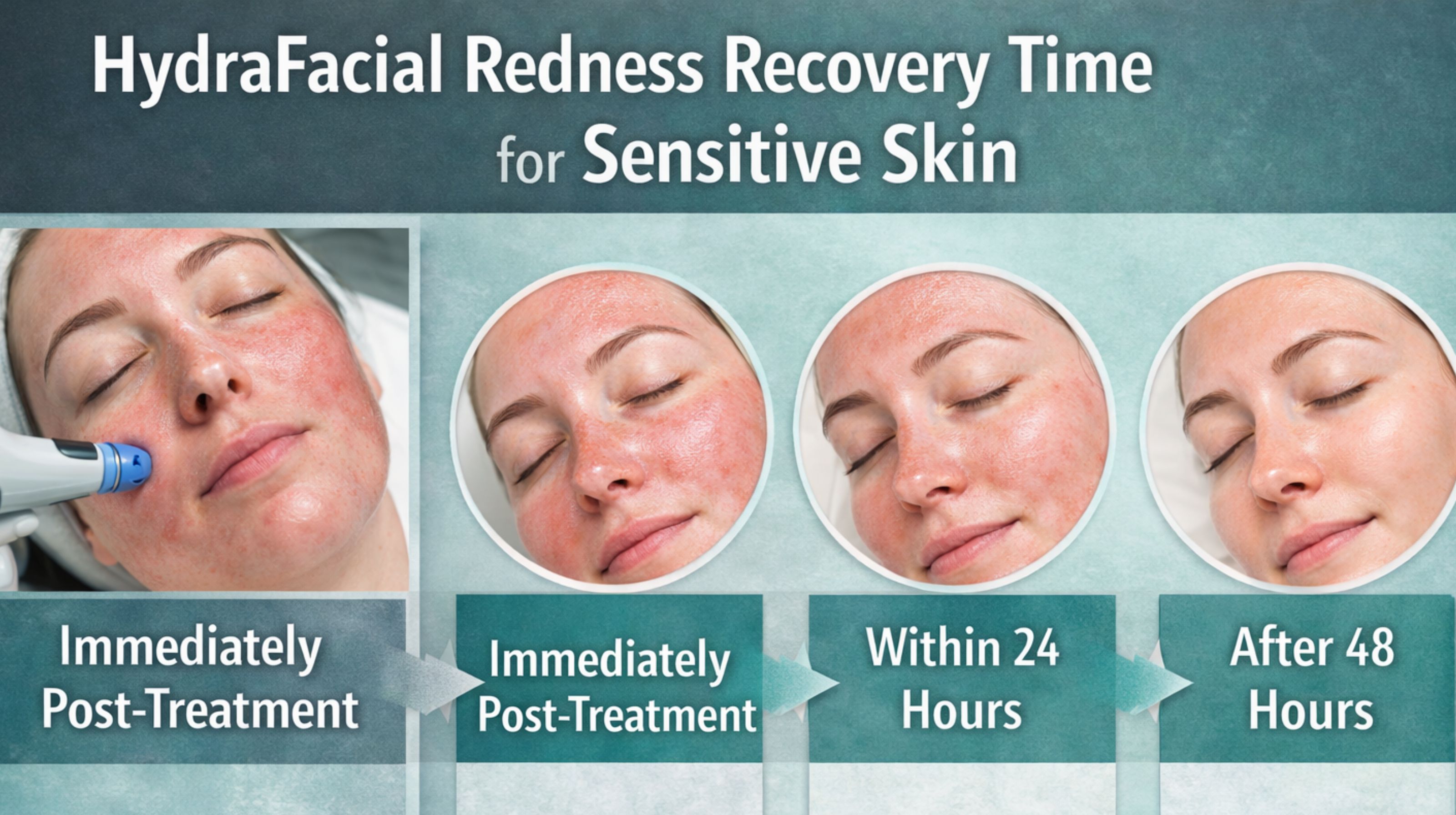


If you have sensitive skin, you're probably looking into HydraFacial redness recovery time because you're concerned about visible downtime or a reaction that throws off your week. The official line often says "no downtime," but if your skin is reactive, the truth is you'll likely need to plan for some redness. It can last anywhere from a few hours to over two days, really depending on how intense the treatment was and your skin's own personal threshold.
What HydraFacial Recovery Actually Means for Sensitive Skin
Recovery here isn't about healing a wound. It's more about calming down the inflammation that gets triggered by the physical exfoliation, the suction, and those active serums. For sensitive skin, this process is just less predictable. One operational detail that really matters is the "double cleanse" step. The first gentle cleanse is usually fine, but that second cleanse—the one with the vortex power and salicylic or glycolic acid—can cause immediate erythema (redness) that basically starts your recovery clock ticking.
The Real Timeline of Post-HydraFacial Redness and Irritation
In a clinic, most clients with sensitive skin see peak redness within about 30 minutes after the treatment, with it fading a lot by the 4-6 hour mark. But here's a common reality: "delayed redness." Your skin might look calm when you leave, only to flush again in the evening because your body temperature rises or you're exposed to something. The 24-48 hour window is critical; this is when underlying micro-inflammation from booster serums (like peptides or growth factors) can cause a persistent, low-grade redness that people sometimes mistake for a rash.
Why Your Sensitive Skin Might Stay Red Longer Than Expected
The biggest mistake is thinking all HydraFacial protocols are the same. The choice of "boosters" completely dictates recovery. A brightening booster with high-potency vitamin C or an acne treatment with salicylic acid will absolutely prolong redness compared to a simple hydrating serum. Also, a non-obvious risk is the technician's pressure; too much suction on delicate cheek or décolletage skin can cause petechiae (those tiny broken capillaries) that show up as splotchy redness lasting 3-5 days—way beyond the typical recovery. That's the boundary where the "no downtime" claim really stops applying.
Managing Your Recovery and Deciding on Future Treatments
To try and shorten recovery, apply a mineral-based sunscreen immediately and stick to only cold, filtered water on your face for the first 24 hours. Whether you do it again really depends on logging your skin's response. If your baseline redness lasts more than 36 hours even with a gentle protocol, talk to your aesthetician about maybe disabling specific steps, like the acid-based cleanse, for your skin type. Figuring this out often needs a blend of aesthetic treatment knowledge and a solid understanding of sensitive skin barrier function, which is where professional skin and wellness consultancies can provide crucial guidance.
FAQ
Is it normal for sensitive skin to be red after HydraFacial?
Yes, transient redness is a normal inflammatory response for sensitive skin because of the exfoliation and extraction, but it should be mostly gone within 12 hours.
How can I reduce redness immediately after my treatment?
Ask the clinic for a cold compress or a chilled mask right after. For the rest of the day, avoid hot environments, heavy exercise, and spicy foods to minimize flushing.
Can I use my regular skincare products after HydraFacial?
Avoid active ingredients (like retinoids, strong acids, or physical scrubs) for at least 48-72 hours. Just use a gentle, hydrating cleanser, a fragrance-free moisturizer, and a mineral sunscreen.
When should I be concerned about post-HydraFacial redness?
If the redness comes with swelling, pain, warmth, pustules, or itching that goes beyond 48 hours, or if the redness starts spreading, contact your provider. It could signal an infection or bad reaction.
Will my sensitive skin get used to HydraFacials over time?
Often, yes. With consistent, properly spaced treatments (every 4-6 weeks), your skin's tolerance can improve as the barrier gets stronger, which might shorten recovery time each session.
Are certain HydraFacial tips or settings better for sensitive skin?
Yes. A good technician should use lower suction, possibly skip the beta-hydroxy acid (BHA) tip in the cleanse step, and avoid going too hard on extractions, especially on the cheeks and nose.
Does the type of HydraFacial booster serum affect redness?
Absolutely. Soothing boosters with ingredients like aloe, arnica, or ceramides are the way to go. For your first treatment if you're highly reactive, I'd avoid boosters like "Brightalive" (high-potency Vitamin C) or "Clarifying" (salicylic acid).
Is HydraFacial a good choice for someone with rosacea-prone sensitive skin?
It can be, but it needs extreme customization. The treatment has to avoid triggers like heat and too much suction. The Lymphatic Drainage booster is often a good pick. This isn't a casual decision—it requires a professional assessment, kind of like navigating complex technical projects where getting the system integration and execution exactly right is non-negotiable.