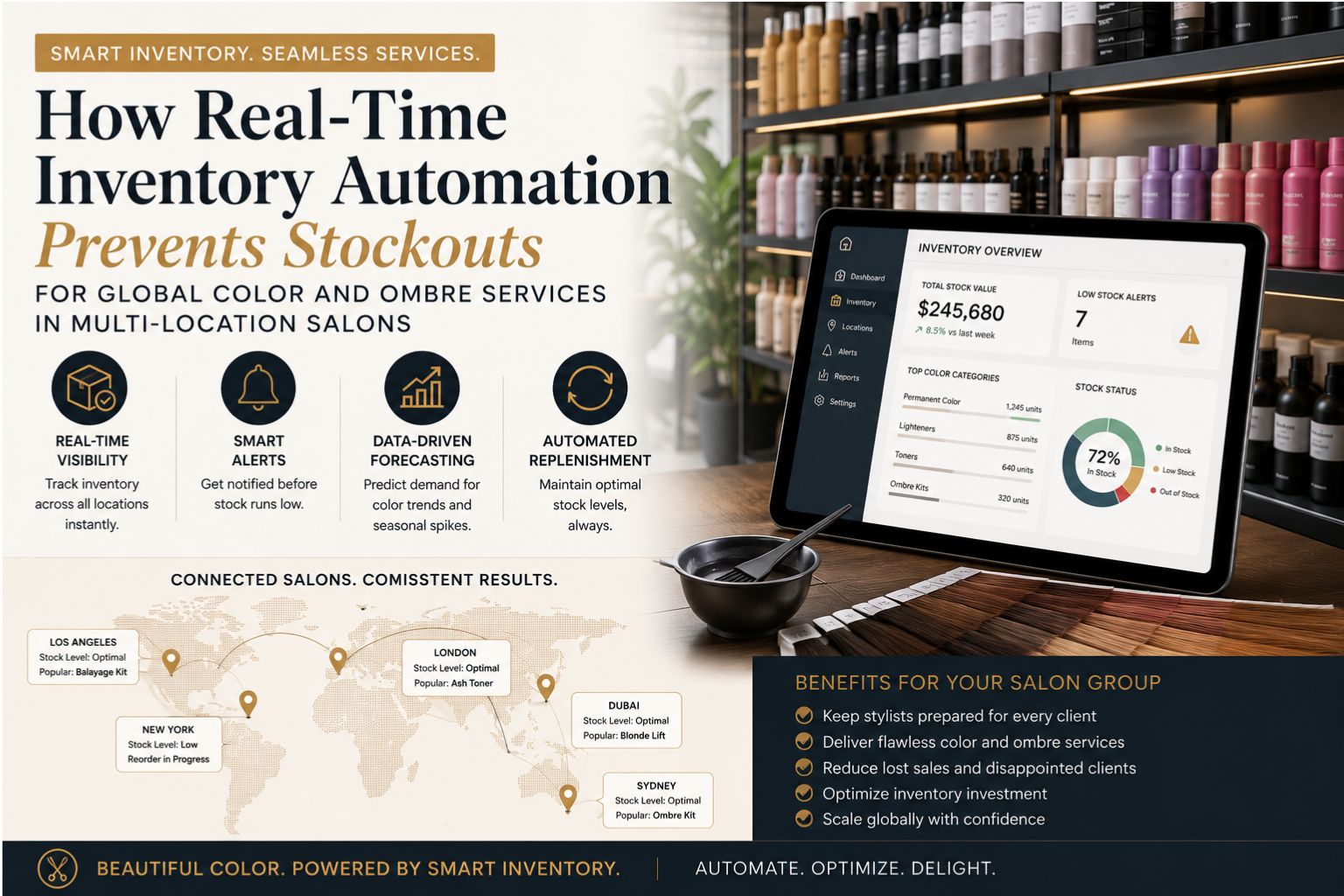


For multi-location salons offering global color and ombre services, running out of a specific shade or developer mid-service is not just a logistical nightmare—it directly causes client dissatisfaction. I’ve seen salons where a stylist had to send a client home with half-done highlights because the correct toner wasn’t available at that branch. Real-time inventory automation directly prevents these stockouts, ensuring every service from a balayage to a full global color can be completed without a last-minute scramble or a disappointed customer walking out—trust me, I’ve been that customer once and it’s not fun.
Understanding the Real Risk of Stockouts in Color Services
When a salon group carries premium color lines, each location orders independently. This leads to one branch sitting on excess stock of a shade while another is completely out. During a busy bridal season, I’ve observed that a salon might have four bottles of a specific ash blonde color, but all are stored at one location, leaving the other three salons scrambling. This isn’t just about inventory—it’s about service integrity. A stockout for a global color service means either substituting a shade (which clients often dislike—I mean who wants to look different from what they agreed?) or booking a follow-up appointment, which damages trust and wastes time.
How Inventory Automation Changes the Reality of Multi-Location Operations
Real-time automation syncs stock levels across all branches the moment a tube of color is used. If a stylist in Bandra uses the last of a specific violet-based toner, the system immediately updates inventory for the entire chain. This prevents a stylist in Juhu from promising that same service to a client. The common misunderstanding is that automation is only for large warehouses, but for a multi-location salon network, it’s the key protecting your appointment book. Without it, a simple ombre service can turn into a three-hour disaster because the developer ratio is wrong or the required paste is missing—I’ve literally heard horror stories from friends who waited forever.
The Hidden Mistake: Relying on Manual Stock Checks
Many salon managers believe they can track color usage manually with spreadsheets or verbal handovers. This fails because a stylist might use a bottle of global color for a touch-up and forget to log it. In one case, a salon double-booked ombre services at two different branches, only to discover the only suitable lightener was at one location. The client at the other branch had to wait 45 minutes for a courier. This delay directly impacts the beauty service timing and creates a negative experience that drives clients to competitors. Automation removes this human error, guaranteeing that every branch’s inventory reflects real consumption—something that honestly, should be basic in 2024.
Decision Help for Salon Owners: When to Implement Automation
If your salon chain operates across two or more locations and offers any global color or ombre service, you need real-time automation before your next bridal season. The boundary where manual systems stop working is the moment you have more than twenty color SKUs. A delayed restock or a misplaced order can create a domino effect, causing cancellations for services that rely on specific chemical reactions. Automation helps you reorder based on actual consumption patterns, preventing the panic of an emergency purchase. For salon groups using parlourtime’s operational insights, this becomes a seamless part of daily workflow rather than a reactive crisis—and honestly, who needs more stress in their life?
FAQ
q How does inventory automation prevent stockouts for ombre services?
a By syncing real-time usage data across all locations, the system alerts managers when a specific lightener or toner is low, preventing a service from being booked at a branch that lacks the necessary product.
q What happens if a global color service is started and a shade runs out mid-application?
a Without automation, the stylist must pause the service, search nearby branches, or substitute the shade, which often leads to patchy results or client dissatisfaction that nobody wants; automation prevents this by flagging low stock before the appointment even begins.
q Does automation work for salons with only two locations?
a Yes, even for a small chain, manual tracking fails when different branches have different popular shades—I’ve seen this happen way too often; automation ensures that a color transfer between branches is tracked instantly, avoiding miscommunication.
q Can automation help with ordering the right quantity of developer?
a Absolutely. The system tracks consumption patterns per service type, ensuring that developer ratios are aligned with actual usage across all locations, not just based on guesswork or average orders that might be completely off.