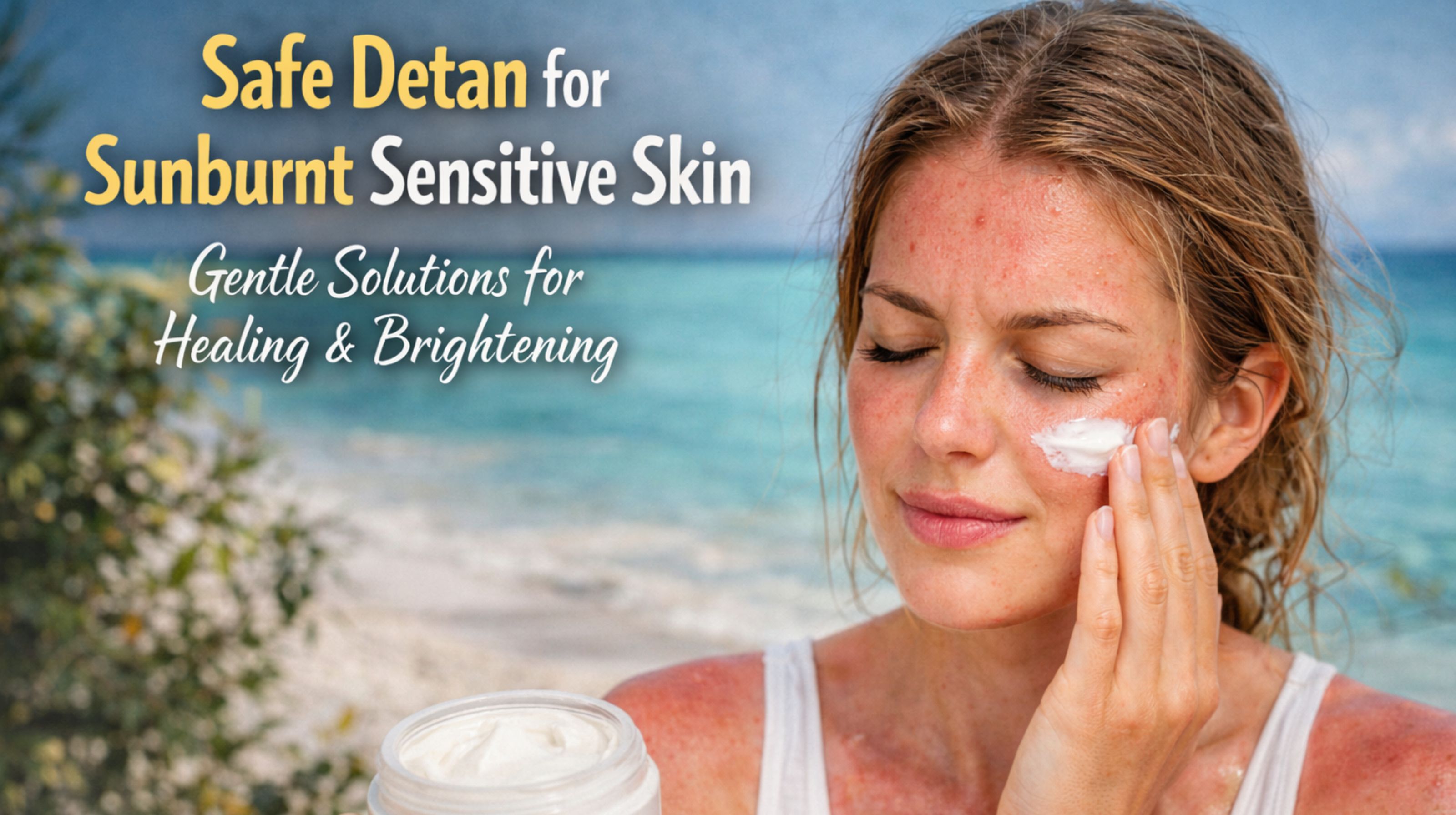


When your sensitive skin is already red, tight, and painful from a sunburn, the idea of adding a detan treatment on top can feel pretty risky. You want to even out the tan lines, sure, but you're probably terrified of triggering more stinging or a full-blown reaction. The real goal here isn't just to remove the tan; it's to do it without setting your recovery back by a whole week.
What "Safe Detan" Actually Means for Burnt Skin
In this situation, "safe" has nothing to do with marketing labels. It's all about not interfering with your skin's healing process. A truly safe detan for sunburnt skin is one that prioritizes calming the inflammation first. I've seen people reach for strong exfoliating scrubs or acidic masks the moment peeling starts, and honestly, that's the fastest way to turn a simple sunburn into raw, damaged skin. The safe approach needs to be deeply hydrating and work with your skin's natural shedding cycle, not fight against it.
The Reality of Detanning on a Fresh Burn
Here's the practical truth: you can't effectively detan skin that's actively inflamed. Any product strong enough to break down pigmentation will almost certainly aggravate the burn. What you usually have to do is just apply a gentle, cooling moisturizer or aloe gel for a good 3-5 days until the worst of the redness and pain calms down. Only then, when the skin isn't tender to the touch but is in that dry, flaky phase, does detanning even become a possibility. Trying to rush this is the most common mistake, and it's one that really sets you back.
The Biggest Risk: Confusing Peeling with Progress
A major misunderstanding is thinking that aggressive physical or chemical exfoliation is somehow "helping" the tan peel off faster. On sensitive, sunburnt skin, this doesn't actually remove the tan more effectively—it just strips away the fragile new skin forming underneath. The result is skin that's way more vulnerable to hyperpigmentation and takes much longer to heal properly. The tan might look lighter for a minute, but that's usually just because the skin is now irritated and swollen, not because the pigment is gone.
When to Start and What to Use Instead
So, detanning only makes sense after the burn has fully cooled down. When you do start, look for ingredients that hydrate and offer very mild, enzymatic exfoliation. Papaya or pineapple enzymes are a good example—they work on the surface without any scrubbing. One practical detail people often ignore is that a simple oatmeal paste or a yogurt mask can gently lift surface pigment while providing a lot of soothing relief. The trade-off is you need patience; this method takes days of consistent, gentle care instead of one intense treatment, but it won't wreck your skin barrier.
FAQ
Here are the most common questions I get about detanning sunburnt sensitive skin.
Can I use my regular detan face pack on a sunburn?
No, you really shouldn't. Most standard detan packs have exfoliating acids or granules that will cause severe stinging and can damage the compromised skin. That just delays healing and can even lead to scarring.
How long should I wait after a sunburn to start detanning?
Wait at least 5-7 days, or until all the redness, heat, and pain have completely gone away and the skin has entered the dry, flaky peeling phase. Your skin should feel calm, not sensitive to the touch.
What is the safest first product to try?
Start with a plain, fragrance-free aloe vera gel or a calming moisturizer with ceramides for several days. For your first actual detan step, something like a mask with yogurt or mashed papaya is good—apply it for just 10 minutes and rinse with cool water.
Are there any ingredients I must absolutely avoid?
Avoid anything with physical scrubs (like walnut or apricot), strong AHAs/BHAs (glycolic, salicylic acid), retinoids, or heavy fragrance. Also, skip steaming your face, since the heat will just make the inflammation worse.