

Have you ever booked a hair spa at your local salon hoping for silky, manageable hair, only to find your scalp feeling greasy or your hair smelling strange the next day? You are not alone. So many Indian women ask is hair spa good for hair after a disappointing salon visit, wondering if the treatment actually helps or just creates more styling problems. What many do not realize—and I didn’t either until I started asking around—is that the outcome depends heavily on your scalp condition, the products used, and whether you communicate clearly with your stylist before the service begins. It’s almost like rolling a dice if you don’t speak up.
What a Hair Spa Actually Does to Your Hair and Scalp
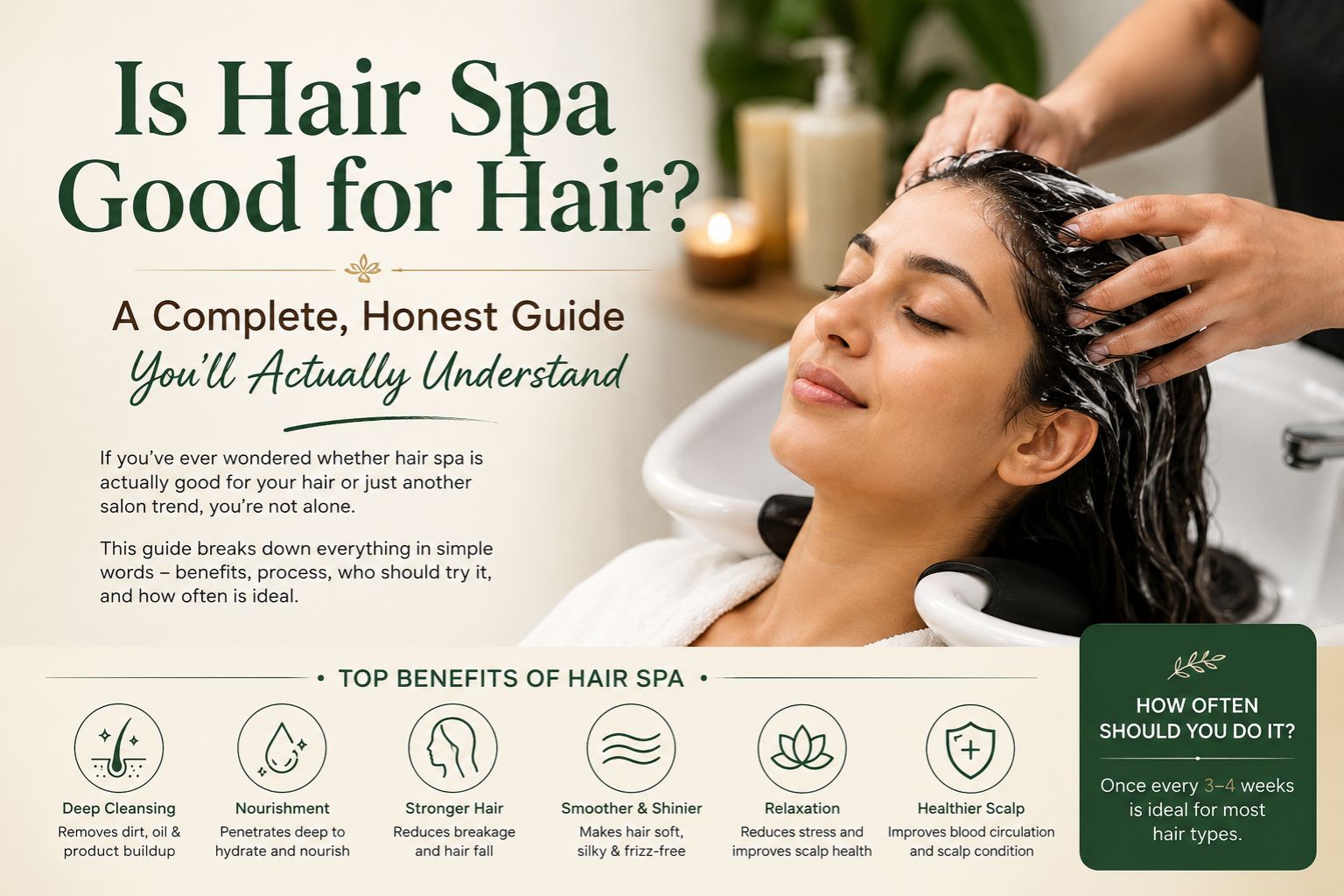
Think of a hair spa as a deep conditioning treatment combined with a scalp massage and steam therapy. But honestly, it is not a magic fix for hair fall or dandruff, no matter what they tell you at the counter. During a typical session at a parlourtime salon, the stylist applies a protein or moisturizing mask, then uses steam to open cuticles so the product penetrates. This can leave your hair feeling soft for a day or two—sometimes even less—but many people overlook that the massage pressure and product ingredients can cause a burning sensation on sensitive scalps, especially if you have an underlying condition like eczema or an allergic reaction to fragrance. I’ve felt that tingle myself and wondered if it was normal.
Real Results on Indian Hair: What Actually Happens
In most Indian salons, hair spa treatments are marketed as a solution for frizz, dullness, and hair fall. However, the reality on Indian hair types—which are often oily at the roots and dry at the ends—is that a heavy mask can weigh hair down and make it look lifeless within 24 hours. A non-obvious detail people often overlook is that the delayed glow people expect after a spa actually comes from natural scalp circulation, not the product itself. That surprised me when I read about it. If your scalp is congested or you have product buildup, a hair spa can actually make the problem worse by sealing in dirt. Many customers report patchy results where some areas feel conditioned while others remain dry, simply because the stylist did not section the hair properly. It’s frustrating when you’ve paid for a full service.
Common Mistakes That Ruin Your Hair Spa Experience
The biggest mistake most people make is assuming a hair spa works like a standalone fix. In reality, it is a service dependency: if your salon skipped an oil massage or a clarifying shampoo before the spa, the product will sit on top of your hair instead of absorbing properly. I’ve been there—where the mask just sits there like a heavy layer. Another boundary where hair spa stops working is when you have chemical damage from straightening or coloring—no amount of steam will repair broken bonds, trust me on that. A common misunderstanding causing dissatisfaction is that people expect the spa to stop hair fall instantly, but it only addresses surface texture, not medical issues like hormonal imbalances or nutritional deficiencies. You need to understand that a hair spa is a temporary cosmetic service, not a treatment for hair fall. It’s like putting a bandage on a wound that needs stitches.
How to Decide If a Hair Spa Is Right for You Right Now
Before you book your next appointment, ask yourself honestly: am I preparing for an event like a wedding where I need instant shine, or am I trying to fix a long-term scalp issue? Bridal preparation often includes a hair spa for gloss and manageability, but if you have an event within 48 hours, be aware that the spa smell can linger and the results may flatten under heavy styling products. That’s a real risk. A useful decision rule is that if your hair feels dry and brittle, a moisturizing spa can help, but if you are experiencing sudden hair fall or an itchy scalp, see a dermatologist first. Really. Many customers mistakenly book a hair spa hoping to skip a proper skin or hair consultation, which leads to wasted money and disappointment. For personalized service details, you can always contact your salon directly through parlourtime to clarify what products are used and if they match your hair type. It’s better than guessing.
FAQ
-
q: Is hair spa good for hair fall?
-
a: No, a hair spa does not treat the root cause of hair fall. It only improves surface softness and shine temporarily. If you are losing hair due to stress, hormones, or medical conditions, you need a doctor, not a salon service. Plain and simple.
-
q: How often should I get a hair spa at the salon?
-
a: Once every two to four weeks is sufficient for most Indian hair types. More frequent sessions can lead to product buildup and make your scalp feel heavy or greasy. Always check your salon's recommendation based on your scalp condition—and maybe even your own gut feeling.
-
q: Can hair spa damage my hair?
-
a: Yes, if your scalp is sensitive or the products contain harsh chemicals, a hair spa can cause a burning sensation, irritation, or even temporary hair weakening. Always ask your stylist for a patch test before the full service. Don’t be shy about it.
-
q: What is the difference between a hair spa and a deep conditioning treatment at parlourtime?
-
a: A hair spa typically includes steam heat and massage to open cuticles and help product penetrate deeper, while deep conditioning is a simpler leave-in treatment. The spa also requires more time and often costs more, but the results are not always better if your hair does not need the extra heat. Sometimes less is more, honestly.