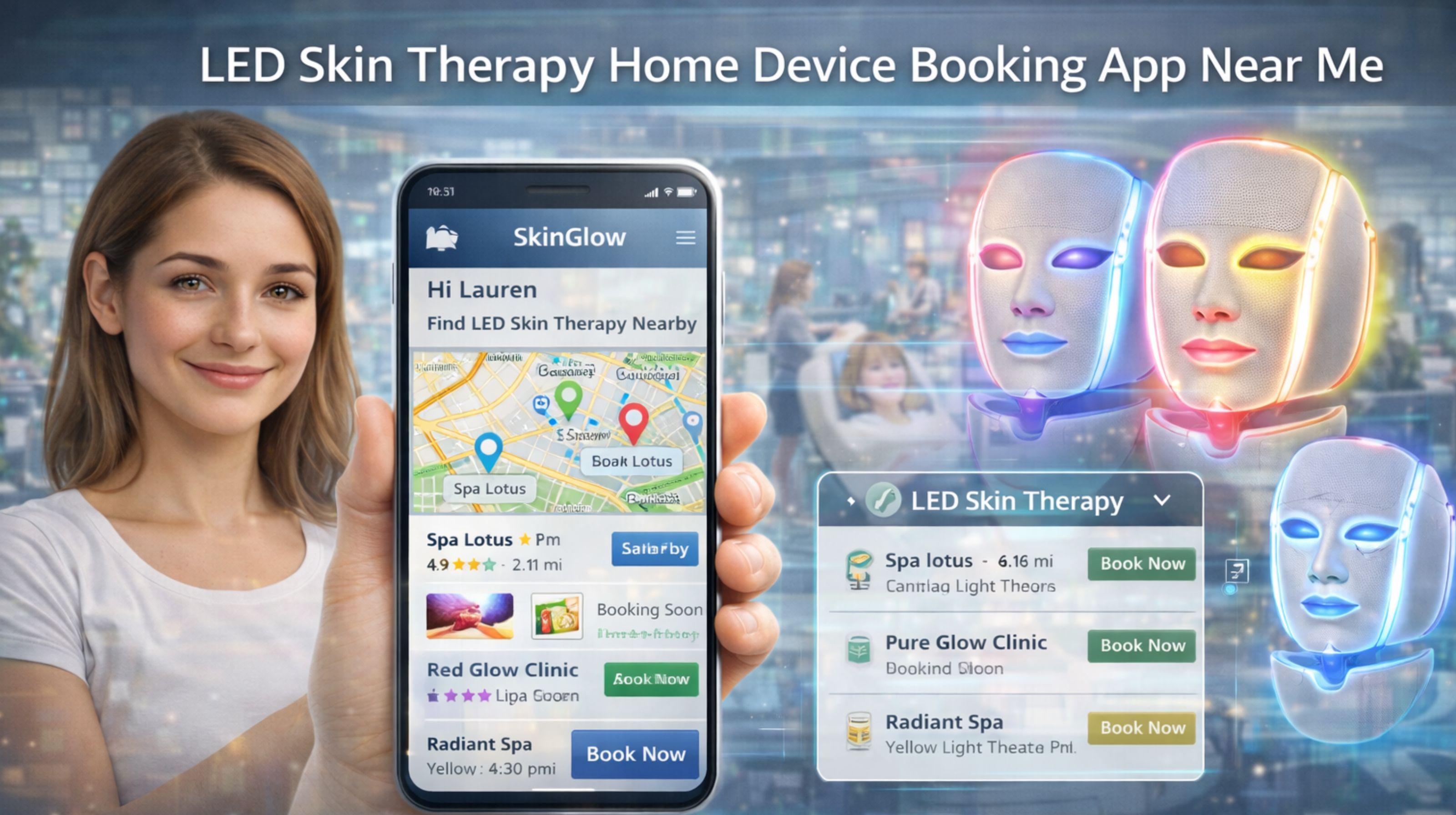


You see the ads for LED devices promising salon-level results at home, and the booking app makes it look simple. But the real question isn't about finding a service near you—it's about what happens after you tap 'book'. The gap between the filtered promise and the actual experience on Indian skin is where most client dissatisfaction quietly builds, often overlooked in the rush to secure a slot.
What 'LED therapy at home' really means for your salon visit
When you book an 'LED skin therapy' session through an app, you're often not booking a traditional facial. You're booking a targeted light treatment, which might be a standalone service or a short add-on. In a real salon, the therapist will first assess your skin—something an app can't do—to choose the right light color (red for anti-aging, blue for acne). The common misunderstanding is that it's a one-size-fits-all glow; in reality, its effectiveness is entirely dependent on your specific skin condition and the device's calibration, which varies wildly between salons.
The reality check: how LED light behaves on Indian skin tones
The promise of reduced pigmentation or acne clearance is tempting, but the reality involves nuance. On deeper skin tones, certain LED wavelengths can sometimes cause temporary darkening or highlight existing hyperpigmentation if not used correctly. A non-obvious detail people overlook is the need for absolutely clean, product-free skin; any residue can block the light or cause uneven results. Many clients report a subtle warmth or tingling during the session, but a sharp burning sensation means the device is too close or on the wrong setting—a clear boundary where the service stops working and risks damage.
The hidden risk: wrong assumptions about device-led treatments
The biggest mistake is assuming the handheld device you see in the app's gallery is what you'll get. Salons use professional-grade panels, not the weak, consumer-grade wands. The risk is paying for a 'therapy' that's too brief or underpowered to create any real change, leading to the "I saw nothing" disappointment. Another service blind spot is the need for consistency; a single session booked in a rush before an event is virtually useless. Real improvement requires a course of treatments, a commitment most booking apps conveniently gloss over when showing you 'available slots near me'.
How to decide if booking LED therapy is your right next step
Your decision should start with a consultation, not a booking. Use the app to find a salon, but call them or visit their FAQs page to ask about their device brand, treatment protocols, and therapist training. Look for places that don't promise instant miracles but explain the process. If you're managing expectations for a specific event, book your first session at least 6-8 weeks prior to see how your skin reacts. For ongoing concerns, understanding the long-term plan is crucial. Platforms like parlourtime can help compare real client notes on different salon approaches beyond just location and price.
FAQ
q How many LED therapy sessions do I actually need to see a difference?
a Most dermatologists and experienced estheticians state that a minimum of 8-10 sessions, spaced closely together, is needed for noticeable results like reduced acne or improved texture. Booking a single session from an app is often a wasted investment.
q Can I use my home LED device after a salon treatment for better results?
a It's not recommended without explicit guidance from your therapist. Layering different light wavelengths or intensities can irritate the skin. The salon treatment is calibrated for a specific outcome; adding an uncontrolled variable at home can disrupt that process and cause redness.
q I have sensitive, reactive skin. Is LED therapy safe to book?
a While LED is generally non-invasive, sensitive skin requires a patch test first—a step many app-based bookings skip. Inform the salon beforehand. A common observation is that clients with rosacea or extreme sensitivity can experience flare-ups from the heat emitted, not the light itself.
q Why did my friend get amazing results from LED, but my skin looks the same?
a Skin condition, age, lifestyle, and even the specific device used create vastly different outcomes. Your friend's acne might be surface-level, while yours could be cystic and deeper. The misunderstanding causing dissatisfaction is comparing results without comparing the underlying skin biology and treatment parameters. For more personalized insights, reviewing community experiences on platforms like parlourtime blogs can provide context.