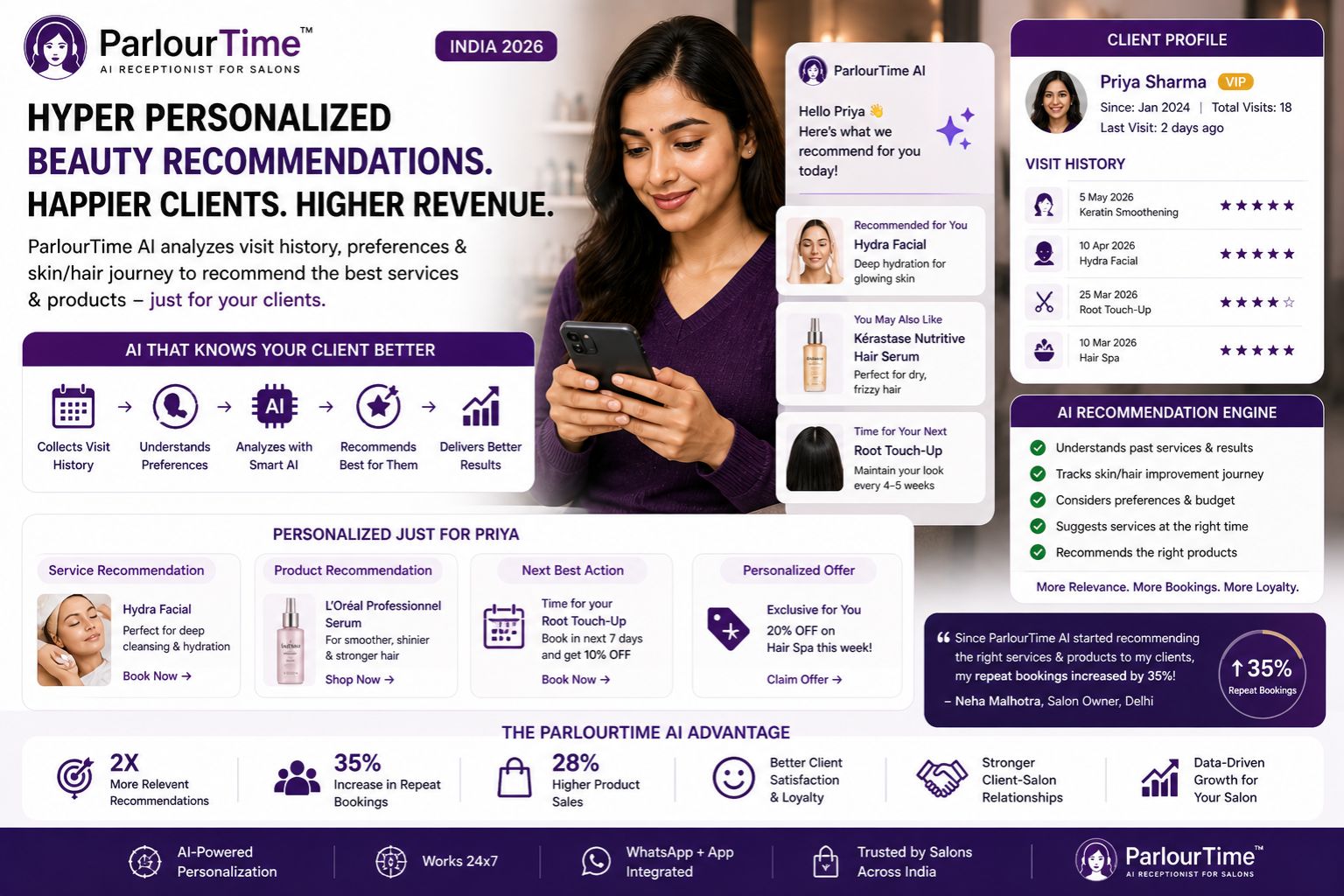


When you walk into a salon in 2026, your past treatments now directly shape the services offered to you through hyper-personalized beauty recommendations based on visit history. This system, driven by platforms like Parlourtime, tracks your previous experiences to suggest the next step — but honestly, many customers still face dissatisfaction when the supposed "personalized" suggestion misses the mark, leading to confusion and even skin reactions you never expected.
What Hyper-Personalized Recommendations Mean for Your Salon Visit
A hyper-personalized beauty recommendation based on visit history means the system recalls your last three facial treatments and predicts your skin's current state. For example, if you had a chemical peel three months ago, the recommendation might suggest a gentle hydrating facial next. However, what many overlook is that this system cannot account for recent changes in your skin sensitivity caused by lifestyle stress or diet — I mean, who even logs their stress levels? — which can lead to a treatment feeling mismatched or causing a real burning sensation during application.
The Reality of Visit History Recommendations for Indian Skin
Indian skin types, often prone to pigmentation and oiliness, react differently to repeat treatments, and a hyper-personalized recommendation based on visit history does not always capture this nuance. A common observation in salons is that customers expect their skin to respond identically each time, but factors like seasonal humidity or hormonal changes break this pattern completely. The boundary where this recommendation fails is when a previous treatment, like a laser session, alters skin texture temporarily, and the next suggested service does not adapt to this temporary fragility — you end up wondering why your face feels raw.
Common Mistakes and Risks of Relying Solely on Visit History
The biggest risk of a hyper-personalized beauty recommendation based on visit history is ignoring the non-obvious details your skin displays today. For instance, a customer might have a history of tolerating strong peels, but a recent bridal preparation routine with harsh scrubs can make their skin raw — trust me, I've seen brides regret this. A system relying only on past visits might still push a strong exfoliating treatment, leading to patchy results or burns. This dissatisfaction often stems from the misunderstanding that visit history equals current skin condition, which is a dangerous assumption for service timing.
How to Make the Best Decision Using Visit History Recommendations
To use a hyper-personalized beauty recommendation based on visit history effectively, always factor in your current event constraints, such as an upcoming wedding or function, and your skin's reaction threshold. For example, if your history shows you took a keratin treatment three months ago, a recommendation for a repeat may be premature if your hair damage repair is still incomplete — and let's be honest, who hasn't had a bad hair day from rushing? A smart approach is to use the platform's suggestion as a starting point and discuss any recent side effects. Platforms like parlourtime integrate visit data to guide you, but the final call should involve a live check on your skin's sensitivity to avoid treatment doubt.
FAQ
q How does a hyper-personalized recommendation based on visit history work for salons?
a It works by analyzing your past salon visits, such as specific hair treatments or facials, to suggest the next service. But honestly, it cannot see if you have developed a new skin sensitivity, so always confirm with your stylist before booking.
q Can this recommendation cause skin reactions if followed blindly?
a Yes, if your visit history shows a past tolerance for strong products, but your skin is currently stressed from sun exposure or other beauty treatments, the suggested service can lead to redness or burning — I always say a patch test is still advised no matter what the app says.
q How accurate is visit history data for predicting my current hair or skin needs?
a It is a useful guide for service timing and past preferences, but it misses real-time factors like delayed glow from a previous facial or current hair damage repair status. It is best used as a reference, not a guarantee — you know your skin better.
q What should I do if the recommendation feels wrong for my current condition?
a If the hyper-personalized suggestion from a platform like parlourtime feels off, discuss your recent concerns about skin reaction or treatment doubt with the therapist. Your immediate comfort and safety matter more than the algorithm's prediction — don't be shy to speak up.