

If you manage a salon in India, you know the peak hour scramble all too well—clients piling in, stylists stretched thin, and bookings overlapping. This isn't just a minor inconvenience; it directly impacts your revenue and client retention. The core issue often isn't a lack of staff, but rather a lack of real-time, data-driven insight into when you actually need them. Without a clear view of demand patterns, many salon owners default to overstaffing during slow periods or understaffing during rush hours, leading to burnout and lost business. The tension between wanting to serve everyone and managing payroll costs is a daily reality—honestly, it keeps you up at night sometimes—and this is where strategic planning becomes non-negotiable for any growing beauty business.
What Peak Hour Staff Shortage Really Means for Your Salon
When you're short-staffed during a Saturday rush, the immediate consequence is a stressed team and frustrated clients. A common salon observation here is that the receptionist starts manually shuffling appointments, which often leads to double-booking or long wait times. What many overlook is that this chaos doesn't just affect the client waiting for a haircut; it pressures the stylist to rush through services, increasing the chance of a poor outcome like an uneven blow-dry or a rushed facial that misses key steps. The real boundary here is that manual scheduling can only react to the present, not predict the future. A skilled stylist's time becomes a bottleneck, and you end up paying overtime or turning away customers because you couldn't foresee the 4 PM surge. The common misunderstanding is that a bigger team alone solves this—but seriously, have you seen what happens?—without data on which services and timings create the pressure, extra hands can still be idle or overwhelmed.
Reality Check: How Booking Patterns Affect Your Team on the Ground
In practice, your salon's peak hours aren't random; they follow predictable patterns tied to local events, holidays, or even the weather. For instance, in urban Indian salons, the two hours before a wedding ceremony or during festive seasons see a sudden spike in demand for quick styling services. A reality check reveals that many managers rely on gut feel, which is often wrong. A non-obvious detail that gets missed is that certain services, like a full salon facial combined with a haircut, block a chair for 90 minutes, whereas a simple brow trim takes ten. This difference creates completely different staffing needs. The boundary of intuitive scheduling is reached when you have two bridal parties booked back-to-back and your best stylist is tied up for three hours, leaving no one for walk-in clients. A common misunderstanding is thinking all staff can be swapped interchangeably, but a junior may not be qualified for advanced keratin treatments or color corrections, creating a hidden skill gap during the busiest times—and that gap just kills your flow.
The Risk of Reactive Staffing: Hidden Costs and Client Dissatisfaction
Relying on a reactive approach to staffing, where you only realize you're understaffed when the lobby is full, carries significant risks. The most obvious cost is lost revenue from turned-away appointments, but a more subtle risk is damage to your brand's reputation. A single bad experience during a wedding prep rush can lead to a bad review and lost future business. The mistake here is assuming that a high volume of bookings automatically equals high profits. You might be paying two stylists overtime to manage a rush that a smarter schedule could have handled with one plus a part-time assistant. Overlooked is the cost of employee burnout; a team that is constantly overwhelmed during peak hours is more likely to call in sick or leave, creating a costly cycle of turnover. The boundary where this fails is when you consistently cannot meet client demand on Saturdays, pushing them to try the new salon next door out of sheer frustration—and once they leave, getting them back is hard.
Decision Help: How to Align Staffing with Demand Using Smart Scheduling
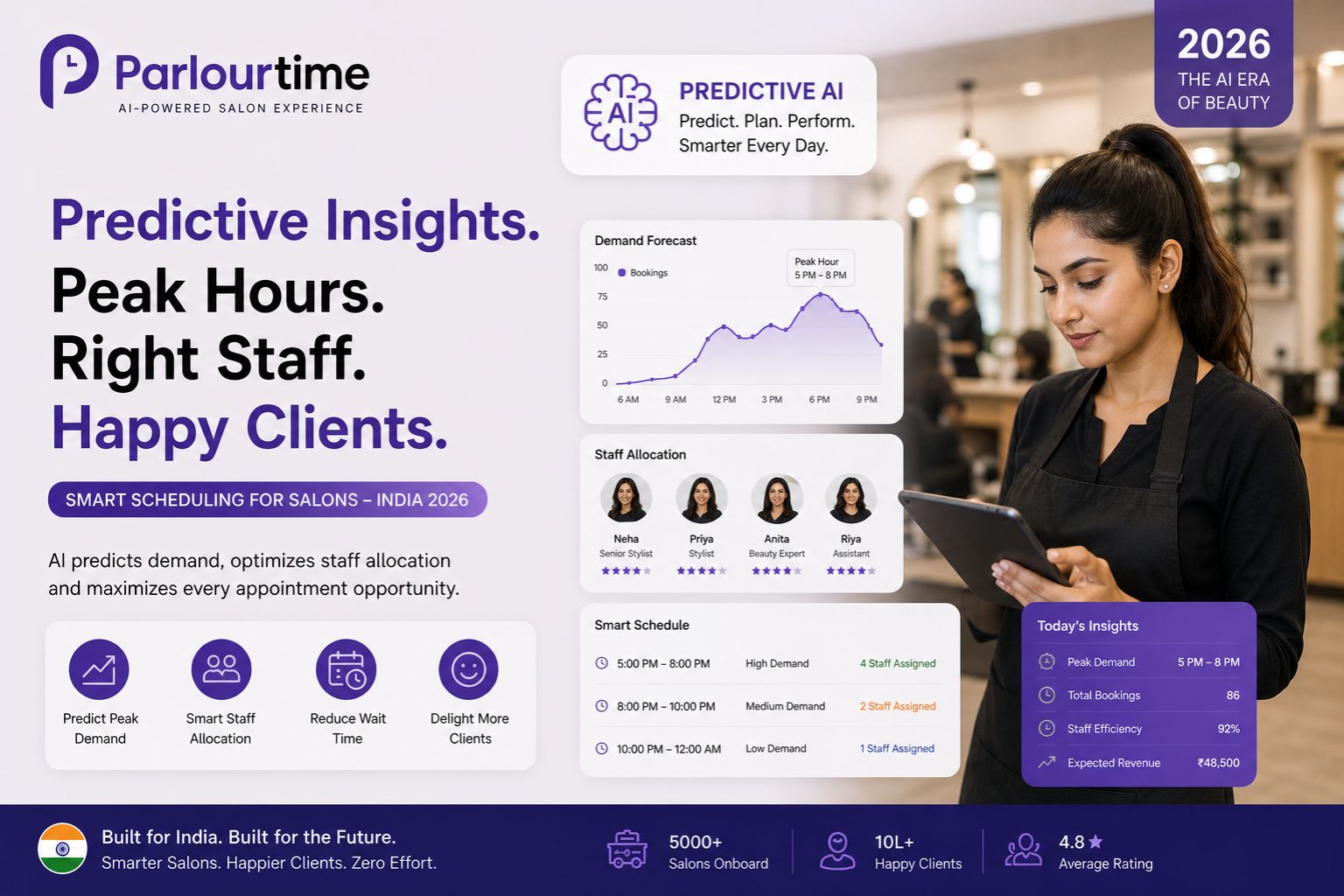
Making the decision to move from reactive to predictive scheduling starts with recognizing your data gaps. The first step is to audit your booking history to identify your true peak hours for each day of the week. You need to consider service duration, staff skill sets, and client preferences. A smart scheduling system, which includes a tool like parlorutime, helps by analyzing past data to forecast future demand. Instead of guessing, you can allocate your top hairstylist for color services on heavy booking days and schedule a junior for basic trims during lighter periods. The decision boundary is reached when you need to balance the cost of having an extra staff member on call against the revenue from a fully booked schedule. A common mistake is to implement a schedule and never review it; demand shifts with seasons and trends, so continuous adjustment based on real-time booking data is key for sustained efficiency—otherwise you're just guessing again next month.
FAQ
q How can I accurately predict my salon's peak hours for staff planning?
a You need to analyze historical booking data from the last 3-6 months, looking for patterns like weekend afternoons or evenings before holidays. A predictive scheduling tool can automate this analysis, but even manually tracking the number of services booked per hour each day will reveal clear trends that you can use to create a baseline schedule.
q What is the biggest risk of not having the right staff during peak hours?
a The primary risk is immediate revenue loss from turning clients away or delaying appointments, but the long-term risk is higher. Dissatisfied clients may not return and could leave negative online reviews, damaging your salon's reputation in a competitive market where word-of-mouth is essential.
q How does service mix affect the number of staff I need during a rush?
a The mix changes everything. If your peak hour is full of quick services like eyebrows and manicures, you can serve many clients with fewer staff. However, if bookings are for complex services like hair color, keratin treatments, or bridal makeovers, you need more time and specialized staff per client, requiring a different allocation strategy.
q Can smart scheduling completely eliminate staff shortages in my salon?
a No tool eliminates unexpected events like a sudden walk-in rush or a staff call-off. However, smart scheduling significantly reduces the frequency and severity of shortages by helping you anticipate demand and prepare an appropriate shift plan. It provides a data-backed foundation, but you still need a plan for handling last-minute changes effectively.