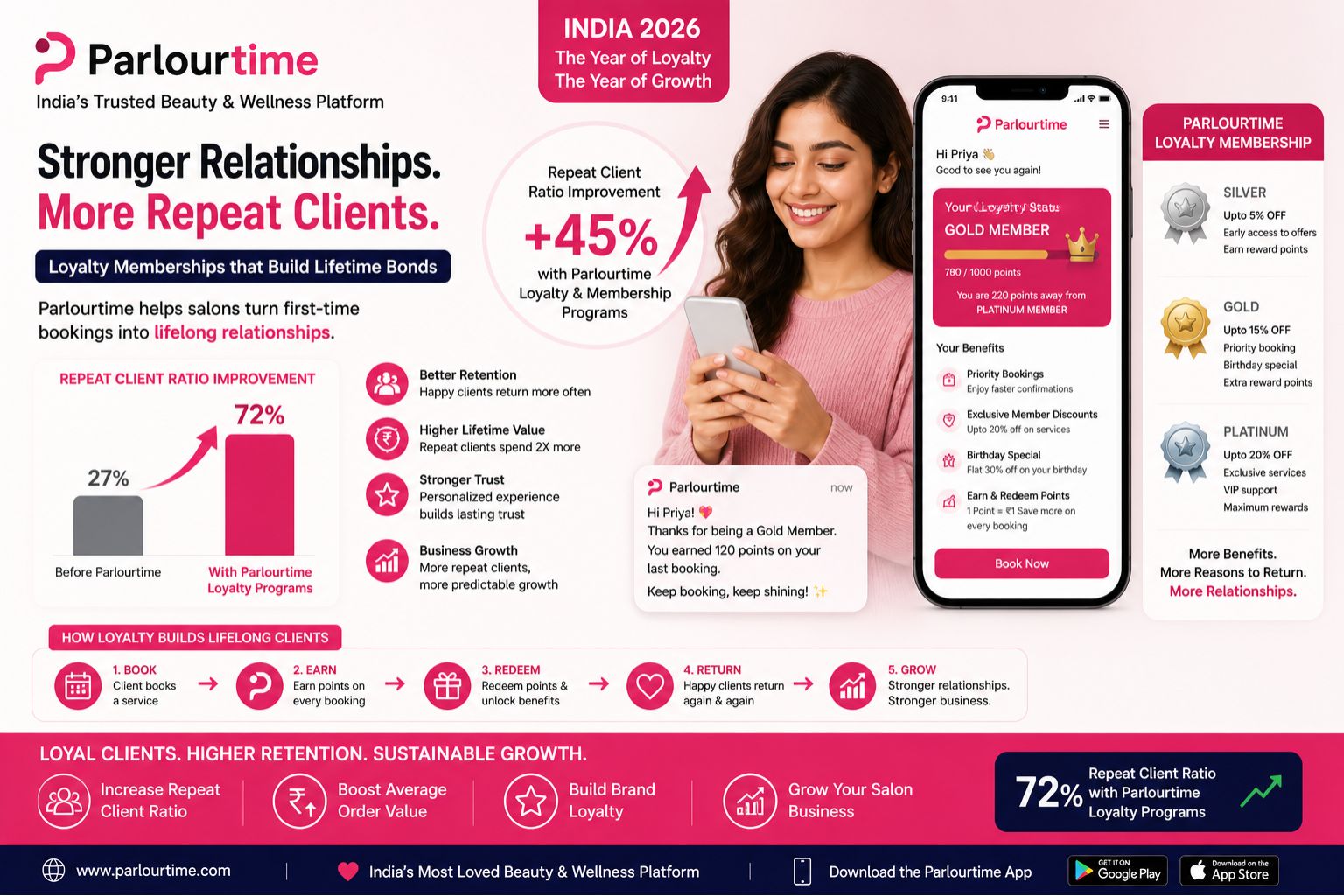


Many salon owners in India struggle with low repeat client ratios, where a customer visits once and never returns. In 2026, improving this number requires a shift from one-time offers to genuine loyalty membership programs that reward consistent visits. A common observation is that salons often focus on discounts for new clients but neglect the regulars who form the backbone of revenue. For instance, a client who gets a salon facial monthly may still feel undervalued if there is no structured reward for her loyalty. This gap, honestly, signals a need for systematic engagement – not just random “come back” messages.
What Repeat Client Ratio Means for Indian Salons
For a neighbourhood salon in Mumbai or Delhi, the repeat client ratio directly impacts monthly income stability – I mean, think about it. When a client walks in for a hair treatment or skin care session, the likelihood of her returning depends on more than just service quality—it includes follow-up communication, booking ease, and perceived value. A real-world issue is that many salon managers overlook the post-visit experience, assuming a satisfied customer will automatically rebook. But honestly? Studies and ground-level feedback show that without a reminder or incentive, even happy clients drift to competitors offering introductory deals. It's frustrating but true.
Reality Check: Why Current Membership Attempts Often Fail
Many salons try loyalty cards or punch-based schemes, but these fail due to poor tracking or lack of perceived value. On Indian skin and hair – and this is important – clients often seek hydration treatments or colour jobs, expecting personalised plans. A non-obvious detail is that clients value flexibility: they want points that do not expire quickly or require high minimum spends. For example, a membership that only works for one service category, like hair damage repair, may leave clients who want a mix of hair and skin services feeling excluded. This mismatch reduces sign-ups and repeat visits, and owners sometimes wonder why it's not working.
Common Mistakes and Risks in Client Retention
A major risk is assuming all clients want the same loyalty approach – and that's a big mistake. First-time visitors may respond to discounts, but loyal clients prefer exclusive access or early booking slots. A common misunderstanding is that higher discounts automatically increase retention. In reality, a client who receives a 20% discount on a bridal service may still switch if the aftercare advice or product recommendation feels generic, like some copy-paste message. Another boundary is that loyalty programs must integrate with existing salon software—manual tracking leads to errors and client frustration. I've seen it happen: when a client visits for a keratin treatment and expects a follow-up message but gets none, the trust just breaks. Poof.
Decision Help: How Salons Can Choose the Right Timing and Structure
To improve repeat ratios, salon owners should assess their peak seasons—like wedding months or festive periods—and launch memberships just before these times. A timing constraint is that launching a program during a slow month may get overlooked – nobody's really paying attention then. Service dependency matters: a membership for skin care routines should include facials and peels but also allow roll-over to hair services if the client prefers. One decision help is to start with a simple three-tier model—basic free membership with birthday points, paid tier with monthly discounts, and a premium tier with express access. To see how other salons structure such plans, you can explore resources on salon blogs and loyalty guides. For any technical implementation queries, the FAQ section offers clarity on integration steps. Parlourtime supports building this system for long-term client loyalty – honestly, it takes some thought but it works.
FAQ
q What is a good repeat client ratio for a salon in India?
a A healthy repeat client ratio is around 40-60% of total monthly clients, but many salons start at 20-30% before implementing structured loyalty programs.
q How can I design a loyalty membership that works for bridal clients?
a Bridal clients value exclusive pre-wedding packages and priority booking; consider a paid membership that offers a free trial session and discount on the final package – and don't forget to follow up post-wedding too.
q What is the biggest risk in starting a loyalty program at my salon?
a The biggest risk is launching without a clear tracking system or staff training; poorly executed programs can frustrate clients and reduce visits instead of increasing them – I've seen salons lose clients this way.
q How quickly can I expect to see an improvement in repeat clients after starting a membership plan?
a Most salons see a 15-25% increase in repeat visits within three to six months, especially when the program is promoted in-salon and via reminders like SMS or app notifications.