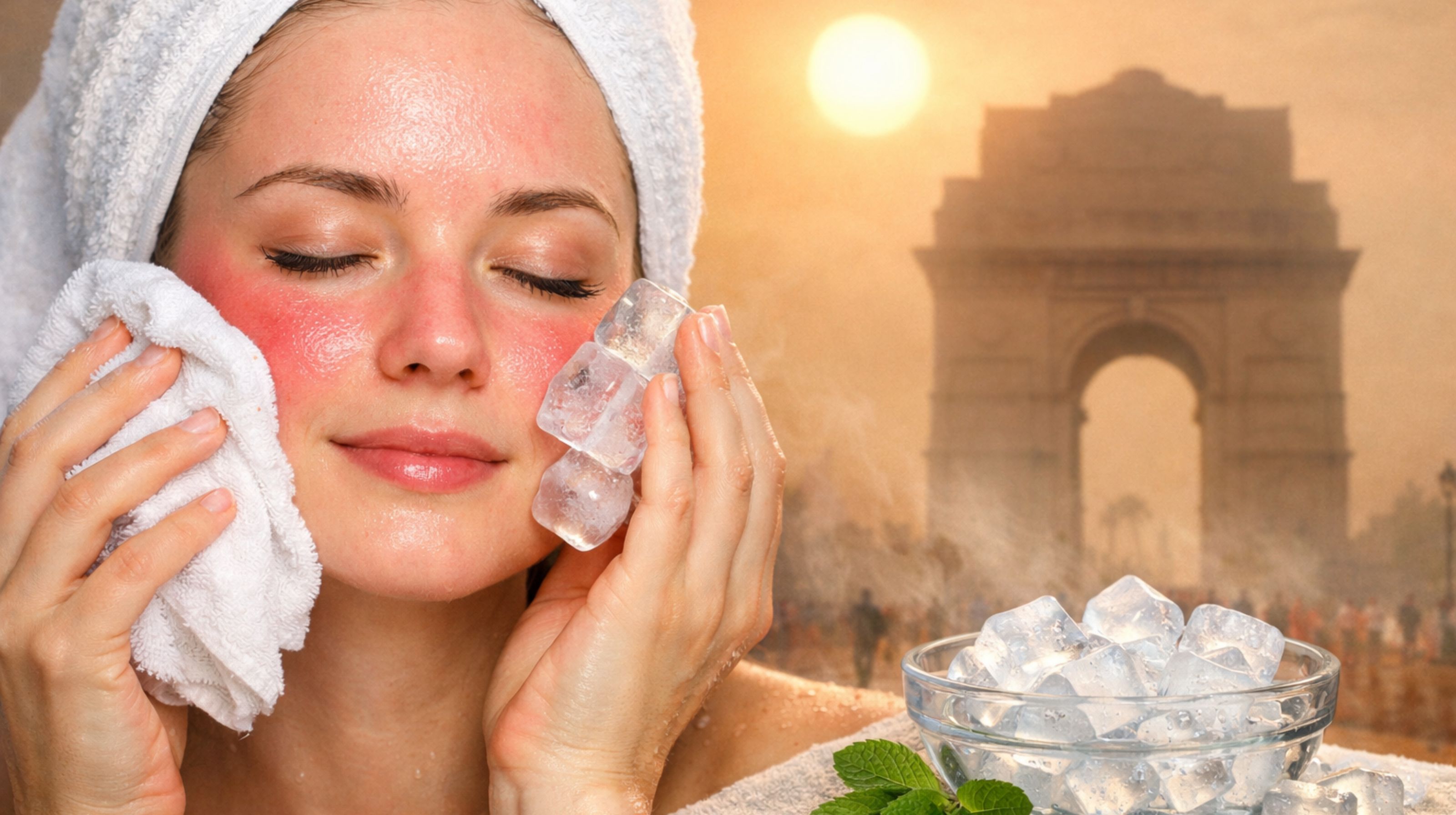


When a brutal heatwave hits Delhi, your skin often pays the price with sudden redness and inflammation. Your immediate instinct is to reach for something cold, and an ice facial seems like the perfect quick fix. But honestly, whether it's the right move depends entirely on what's actually happening under your skin's surface.
What an ice facial actually does to heat-stressed skin
In the context of a heatwave, an ice facial works mainly as a vasoconstrictor—it temporarily tightens blood vessels, which can reduce the look of redness and calm that hot, prickly feeling. From what I've seen, the real benefit is that instant relief from surface-level heat and the reduction of any immediate puffiness the extreme temperature shift causes.
The reality of using ice on post-heatwave skin
In practice, most of us just grab an ice cube, wrap it in a thin cloth, and glide it around for a minute or two. The relief is real, but it's fleeting. The redness often comes right back once your skin warms up again. That's because the ice hasn't addressed the underlying inflammation or barrier damage caused by the pollution, sweat, and dehydration that come with Delhi's heat.
The common mistake that makes redness worse
The biggest misunderstanding? Applying ice directly to the skin or holding it in one spot for too long. That can cause ice burns or even broken capillaries, especially on delicate facial skin that's already been roughed up by the heat. Another risk we often overlook is using ice on skin that's actually dry and irritated, not just flushed. The cold can further disrupt a weakened moisture barrier, which just leads to more sensitivity down the line.
When an ice facial makes sense versus when to avoid it
An ice facial is sensible for immediate, surface-level cooling after you've been outdoors, especially if your skin feels hot to the touch but isn't peeling or extremely dry. You should avoid it, though, if your redness comes with a rash, visible broken capillaries, or a sunburn. In those cases, the ice is just another shock to the system. A better first step is often just splashing with cool (not icy) water and following up with a good barrier-repair moisturizer.
FAQ
Can an ice facial help with heat rash on the face?
It might soothe the itch for a bit, but ice won't treat the clogged sweat ducts causing the rash. You're better off focusing on keeping the area clean, dry, and cool with gentle, breathable products.
How long should I ice my face after a heatwave?
Keep it very short—no more than 2-3 minutes total, and keep the ice moving. The goal is cooling, not numbing. If your skin goes from red to very pale, you've definitely overdone it.
What's better than plain ice for redness?
Using a facial mist you keep in the refrigerator gives a more even, gentle cooling effect. Green tea or aloe vera-based mists can offer some anti-inflammatory benefits along with the temperature relief.
My skin stays red after icing. What does that mean?
If the redness sticks around, it points to deeper inflammation or barrier damage that the cold just can't fix. That's your sign to stop with the ice and switch to a consistent routine with calming ingredients like centella asiatica and ceramides to help your skin repair itself.