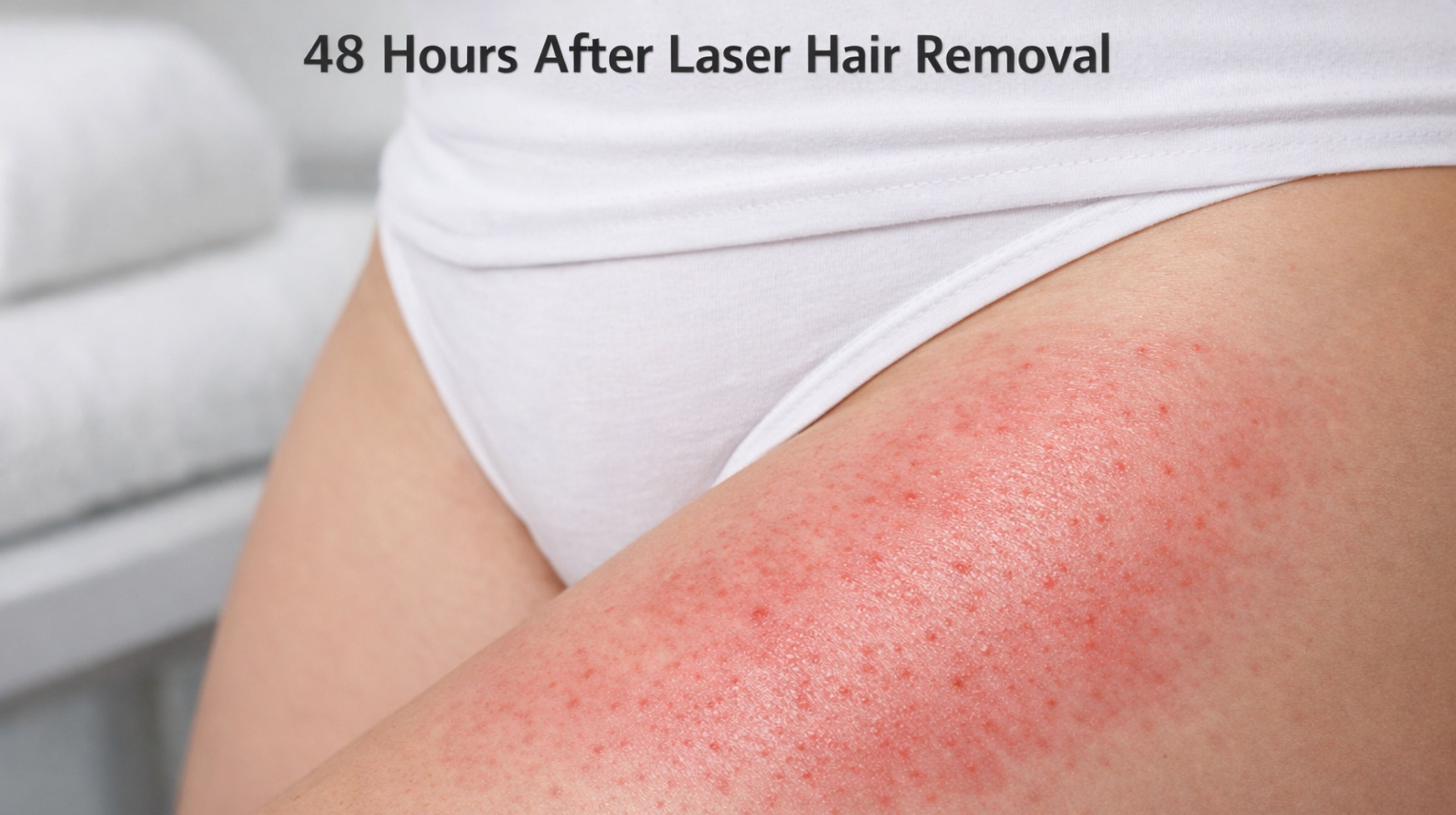


It's pretty unsettling to still see redness two days after a laser session, especially when you were told it usually fades within 24 hours. That gap between what you expect and what you see is where a lot of the worry starts—suddenly you're searching online, wondering about burns or if something went wrong. The truth is, skin is unpredictable. For a lot of people, the normal inflammatory period just lasts longer than the brochure says.
What Prolonged Redness Actually Means for Your Skin
Medically, the redness is inflammation. It's your body sending blood to the area to repair the tissue the laser's heat affected. Brochures might say it vanishes quickly, but in reality, on sensitive spots like your upper lip or bikini line, or if you have fair or reactive skin, it can definitely hang around. What's easy to miss is that this isn't just a surface thing. That lingering color often means there's still activity happening underneath as your body deals with the damaged hair follicles.
The Reality of Post-Treatment Skin Reactions in the Clinic
Even in a perfectly run clinic, variables add up. A technician might turn the power up a bit on a patch of coarse hair to make sure it works, which can mean more trauma for your skin. Sometimes clients forget to mention they got a little sun a few days before, which makes skin more sensitive. There's also this idea that "more power equals better results," which can push settings past what your skin can bounce back from quickly. That's often why a standard day-long reaction stretches into two or three, and it's a big reason clinics get those concerned follow-up calls.
Common Mistakes That Make Redness Last Longer
Honestly, the bigger risk often isn't the laser—it's what happens after. Slapping on makeup or a heavy cream too soon can trap heat. Hot showers, a tough workout, or direct sun are major aggravators that people tend to brush off. The line you need to watch for is if the redness comes with swelling, blisters, or real pain. That's not typical inflammation anymore; it could be a burn or the start of an infection, and you'd need to get it looked at. Another easy oversight? Your regular skincare. Using retinoids or acids too close to your appointment can weaken your skin barrier without you realizing it.
How to Decide If Your 48-Hour Redness Is Normal or a Problem
To figure out what to do, take a close look. Normal, prolonged redness is flat, just pink or red, and might feel a bit warm or tender. Red flags are a darker color, raised skin, a pattern that matches the laser tip, or if it's paired with noticeable swelling, pain, or itching. For normal cases, just stick to the aftercare rules: cool compresses, fragrance-free aloe or a post-laser gel, and religious sun protection. If it looks problematic, call your clinic right away—that's when you need a professional to step in. Handling more serious reactions sometimes means pulling from standard dermatology protocols, or even blending aesthetic tech know-how with wound care principles to prevent scarring.
FAQ
Is it normal for laser hair removal redness to last 3 days?
It's less common, but yes—especially if you have very sensitive skin or had a more aggressive treatment on a thick-haired area. Just keep an eye on it to make sure it doesn't get worse.
What does infected laser hair removal look like?
Look for yellow pus, pain that's getting worse, the area feeling hot, red streaks spreading out, or a fever. Redness by itself usually isn't an infection.
Can I put hydrocortisone cream on laser burns?
Only if your clinician tells you to. An over-the-counter hydrocortisone can calm mild inflammation, but don't use it on open blisters or if you think it might be infected.
How do you make laser redness go down faster?
Use cool (not ice-cold) compresses for about 10 minutes at a time, apply the soothing gels they recommend, avoid heat and sweating, and drink plenty of water.
Does redness mean the laser treatment is working?
Generally, yes. The redness shows there's inflammation, which is part of disabling the follicle. If you had no redness at all, the settings might have been too low to be effective.
When should I go to the doctor for laser side effects?
You should get medical help if you see blisters, crusting, have severe pain, or if the redness and swelling take a sharp turn for the worse after the first two days.
Why is my laser burn still red after a week?
Redness sticking around that long often points to post-inflammatory hyperpigmentation or a deeper injury. At that point, it's a good idea to have a dermatologist check it out.
Can certain medications affect laser recovery?
Absolutely. Some medications, like certain antibiotics or acne treatments, can make your skin more sensitive to light. Blood thinners can increase bruising. Both can prolong redness. That's why a thorough pre-treatment chat is so important in a professional clinical practice.