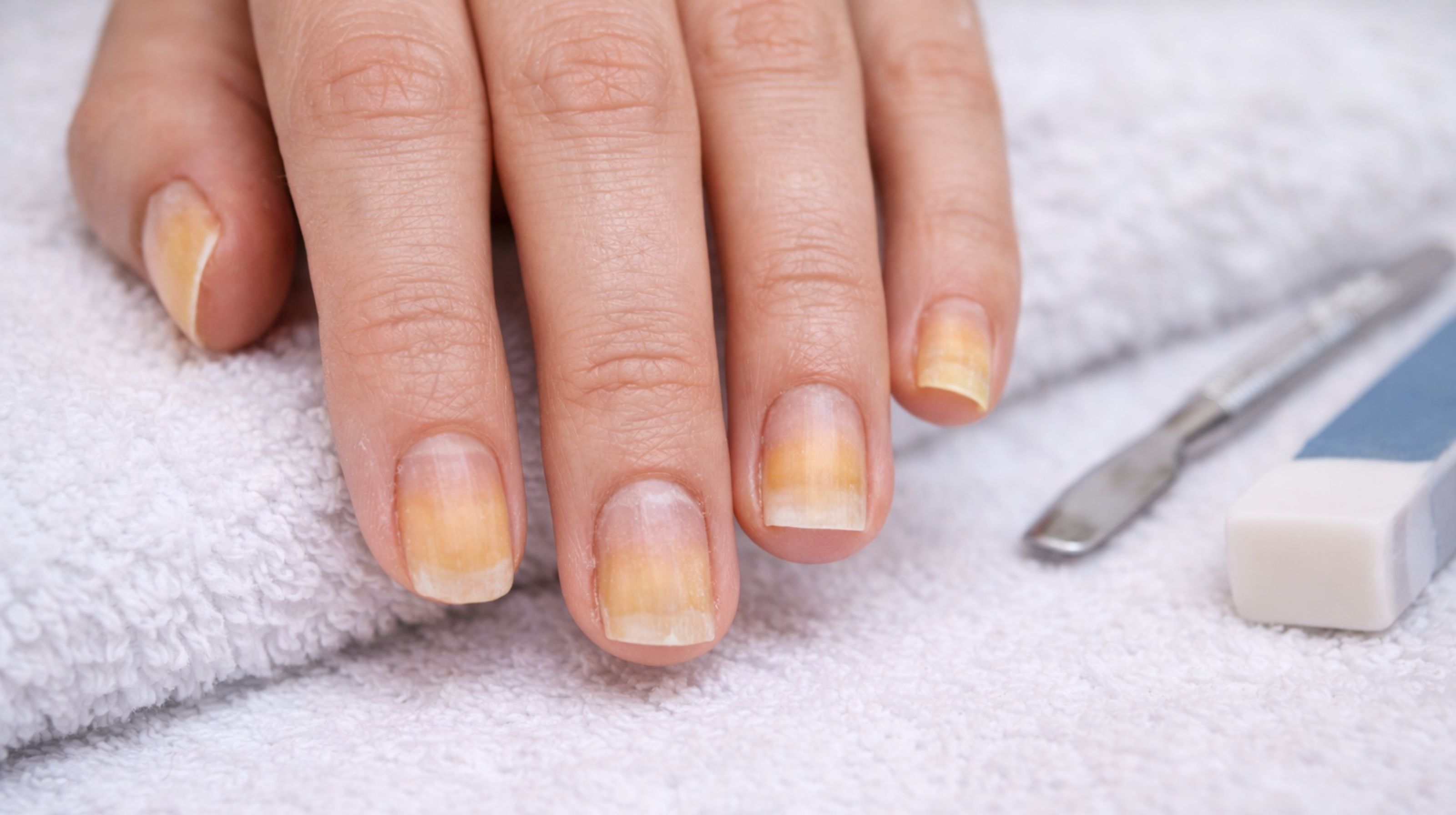


You leave the salon thinking it's all over, right? Fresh start. Then a few days later you're washing your hands and... what is that? A yellow tinge that just won't go. It's not just a stain, it feels deeper than that. It's like the nail itself changed. And you start wondering, was it the filing? The strong smell of the remover? It makes you panic a bit—is my nail health ruined now? It's supposed to be a treat, not something that leaves you worried.
What Yellow Nails After Removal Really Indicate
Okay, so in a real salon, what's actually happening? That yellow colour... it's a sign the nail is dry. Really dry. The acrylic was like a seal, and ripping it off, especially if they filed too much, takes all the natural moisture with it. The nail bed underneath is left sort of... exposed. It reacts with the air, maybe with leftover product, and turns yellow. It's not even all over sometimes—you might see it more where the acrylic was really thick. And you can't just buff it out, which is the scary part. It means the nail's structure is weak.
The Reality of Nail Damage on Indian Skin Tones
On our skin, that yellow can look even worse. It stands out so much. And our nails can be drier anyway, you know? So when they use harsh removers and then scrape at it... it's a double hit. Sometimes the damage doesn't show up right away. You might leave the salon thinking it's fine, and then a week later your nails feel rough, almost papery, and the yellow gets deeper. That's when you realise the service didn't just end—it left your nails thinner and more vulnerable than before.
Common Mistakes That Make Yellowing Worse
The biggest thing we get wrong is thinking it's just a colour problem. "It'll grow out," we say. So we slap on a dark nail polish to hide it. But that just traps everything in and can make things worse, even lead to other issues. We don't treat the actual damage. Another thing... we don't ask how they're removing it. We just sit there. But if they're soaking it in pure acetone and then going at it with a file aggressively, that's a recipe for this yellow disaster. The worry about how it looks can actually push us into doing more damage.
How to Decide Your Next Step for Nail Recovery
So what do you do now? You have to look at how bad it is. If it's a light yellow and your nails aren't peeling or sore, maybe just baby them. Oil, lots of oil, and no more acrylics or gels for a while. But if the yellow is dark or in weird patches, or if the nail feels thick... you might need to see a doctor to check it's not a fungus. Here's the line: if your nails are soft or sensitive, putting any more chemicals on them is a bad idea. For figuring this stuff out, some people look at guides from places like parlourtime. The main thing is, you have to wait. The yellow part has to grow out. But you need to take care of the new nail growing in.
FAQ
q Is yellowing after acrylic removal a sign of fungus?
a Not always. Fungus is different—usually the nail gets thicker and might crumble. This yellow from removal is more about damage and dryness. But if you're really worried, getting it checked is the only way to be sure.
q How long will my nails stay yellow after removal?
a It's stuck in the nail plate, so it has to grow out. That takes months for most people. Like, 3 to 6 months. There's no quick fix, you just have to nurture the new growth.
q Can I paint over my yellow nails to hide them?
a Technically, yes. But it's not a good idea. Polish, especially dark ones, can dry it out more. If you really need to cover it, maybe use a very light, breathable base coat. But no gels or acrylics on top.
q What should I ask my technician to prevent this next time?
a You have to speak up. Ask them to be gentle. Ask for more soaking time so they don't have to file so much. Ask them not to pry it off. Some products are gentler than others. Looking up technicians who know about healthier methods, maybe on a site like parlourtime, can help too.