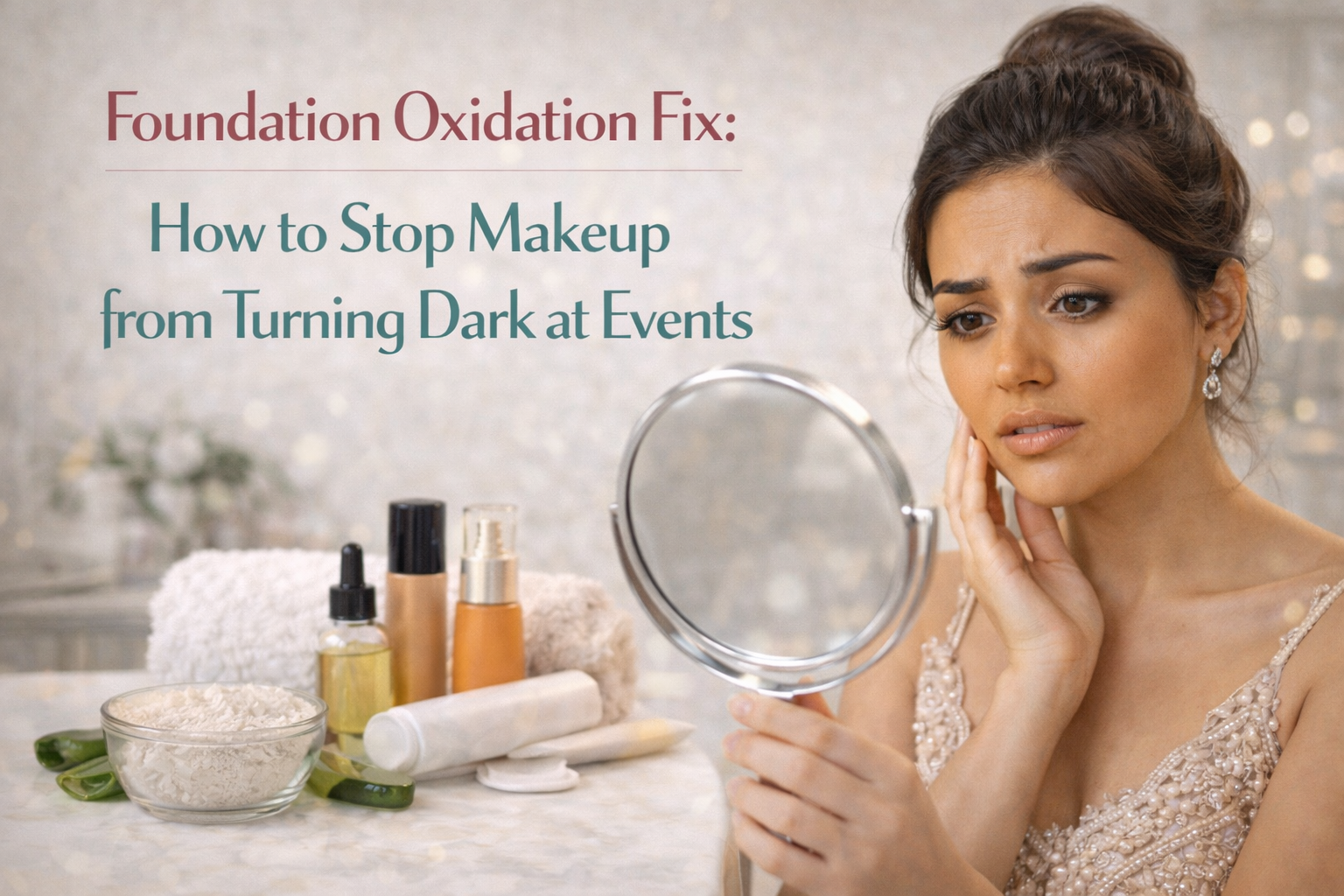


You leave the salon feeling perfect, right? Then you get to the event and your face in the mirror is... darker. Almost orange. It's that sinking feeling. You just paid for this. It's not fading, it's changing colour. And it happens so often, you start to wonder if it's just your skin. It's not. It's this chemical thing, they say, with your skin's oils and the air. But knowing that doesn't fix your photos.
What Foundation Oxidation Really Means for Your Event Look
So it's not wearing off. It's actually turning a different colour on you. The foundation mixes with your skin oil and the air and it shifts. For our skin tones—you know, warmer, sometimes with that olive or golden thing—it almost always goes this muddy orange-brown. Which looks terrible next to your neck. I've seen it at weddings. Someone will lean in and whisper, "Does my jawline look dark to you?" The rest of the face seems fine, but that line... it's like a shadow.
The Reality of Oxidation on Indian Skin & Salon Formulations
Salons use the heavy-duty stuff for events. It's supposed to last. But those thick, pigmented foundations? They're actually more likely to do this oxidation thing. And here's something I didn't think about: what you put on your skin before matters. If the artist puts foundation over your moisturiser, and that moisturiser has certain oils, or maybe a serum that's still wet... it can make it worse. Sometimes, it's just that the foundation and your skin's natural pH don't get along. And no primer is a magic fix for that.
The Mistake: Assuming All "Long-Wear" Means No Colour Change
We see "long-wear" and think it's safe. That's the mistake. I've done it. You trust the label and skip testing it properly. You need to swatch it, go outside, and check it half an hour later. In real light. Otherwise, you're risking the whole look. You pay for the full service and then you're stuck with a face that doesn't match your neck in every single picture. That's where the real panic comes from, when you're already there and can't go back.
How to Decide on Your Event Makeup Strategy
So what do you do? Test it. When you book, ask if you can try a couple of shades a day before. Put them on your jawline and just... live your life for a few hours. See what they do. Look for words like "non-oxidizing" or "oil-free." It helps to read up, too. I sometimes check the FAQs on a site like parlourtime to see what they say about products on different skin. And if it does turn dark at the event? Sometimes a light dusting of translucent powder can blot away that top orange layer. It's not perfect, but it can help.
FAQ
q Does oily skin make foundation oxidize faster?
a Yes, significantly. Oil is a primary catalyst for the oxidation reaction. Foundations mix with sebum, darkening as they emulsify. Oil-control primers and pre-makeup blotting are essential for oily skin types.
q Can my salon artist prevent oxidation completely?
a They can minimise it but not guarantee prevention. A good artist will choose a known stable formula, use a gripping primer, and set makeup properly. The final result still depends on your skin chemistry and the event environment.
q Is there a quick fix if my makeup turns dark at the event?
a Gently blot your face with a tissue or blotting paper to remove excess oil. Then, using a clean sponge, lightly press a translucent setting powder over the darkened areas. This can absorb the oxidized oils and lighten the cast without adding more product.
q Should I just choose a lighter shade to compensate?
a This is a common but risky strategy. A shade too light might look ashy or grey initially and still oxidize to an unnatural tone. It's better to find a shade that matches perfectly when first applied and shows minimal change, which you can verify through a patch test.