

You leave the salon looking perfect, right? But then a few hours in, at the event, you catch a glimpse in a mirror and your face has this dull, ashy look. Especially here, around the nose and forehead. It feels like the makeup just gave up. And in photos? It's worse. It's not just annoying, it makes you wonder if the salon did something wrong. It's actually this thing with your skin's oils and how the makeup is put on.
What "Grey Foundation" Really Means for Your Salon Visit
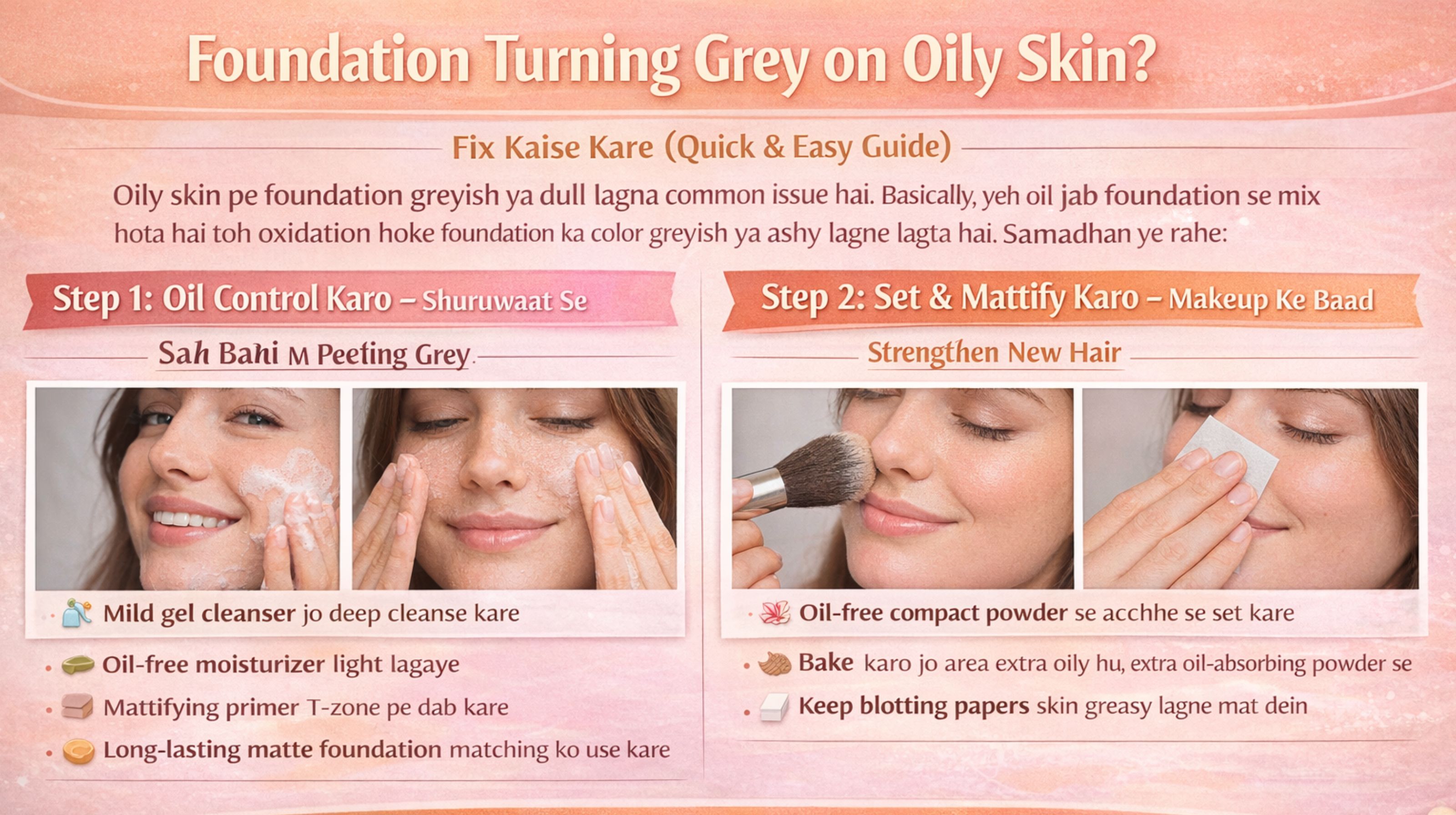
So when we say it turned grey, it's this chemical thing—oxidation. The makeup reacts with your skin's oil and the air. In the salon, under those bright lights, everything matches. But step outside, or when the camera flashes... that's when you see the real colour. Or lack of it. You'll notice it most where you get oily. So by the end of the night, your face isn't one colour anymore, it's patchy. The salon might not see it happen, but you have to live with it.
The Reality of Foundation on Oily Indian Skin
Our skin, Indian skin, it usually has these warm, golden undertones. But a lot of foundations you find? They can have a pink or neutral base. Cooler. So when our natural oil mixes with that, it speeds up that reaction and pulls out these greyish, ashy colours. And another thing people don't think about—what you put on your skin before. A heavy moisturizer or a slick primer can make the foundation just sit on top, not sink in. Then it separates faster when the oil comes through, making that grey look even more obvious.
The Mistake: Assuming It's Just the Wrong Shade
The big risk is thinking, "Oh, they gave me too light a shade, I need darker." So you ask for a darker one next time. But if it's a warm-toned darker foundation, it might look orange next to the patches that have already turned grey. Then you have two different wrong colours on your face. The thing is, if the makeup person doesn't prepare oily skin properly first—with stuff that controls oil—then even a great foundation will change colour. The formula has to be right for oily skin. It's not just the shade. If you're unsure what to even ask for, sometimes looking at a salon's frequently asked questions can give you the words to use.
How to Decide on Your Next Salon Makeup Session
Before you book, you have to mention this worry. Say you have oily skin and your foundation has turned grey or ashy before. Ask them straight: do you use long-wear, oil-free formulas made for warm, oily skin? Maybe even ones called "anti-oxidant"? A good thing to do is ask for a test. Put a little on your jawline, blend it, and then go check it in actual daylight after half an hour. See what it does. The real trick is to focus on how they prepare your skin, not just the brand of the foundation bottle. Oh, and something I heard—using a translucent powder with a slight yellow tone to set everything can help cancel out any greyness trying to come through. It's a small detail, but it helps. A lot of artists now, especially on booking platforms like parlourtime, know to look out for this.
FAQ
q: Can a salon fix grey foundation during the application?
a: They can, if they know how. Using a colour corrector underneath—like a peach or yellow one—can neutralize the grey before it even starts. Then setting it all with a warm-toned powder locks it in. It's about stopping it before you see it.
q: Is powder foundation better for oily skin to avoid turning grey?
a: You'd think so, but not necessarily. Powders can oxidize too, and sometimes they just look thick and cakey. A better bet is often a matte, oil-free liquid foundation that's made for oily skin, and then *lightly* setting it with powder. That combo tends to last better and look more natural.
q: Will using more primer stop my foundation from turning grey?
a: Only if it's the *right* kind of primer. A water-based, oil-controlling one can help. But if you pile on a heavy, silicone-based primer, it can actually make things worse—the foundation slides around and separates faster. It's a common mistake, using more product thinking it will help, and then it just creates a bigger mess.
q: How can I check if a foundation will oxidize on me before a big event?
a: Test it yourself. Put a stripe on your jaw, blend it, and don't put powder over it. Check the colour in daylight right away. Then go about your day and check again after an hour or two. If it's turned darker or ashy or grey, then yes, it will oxidize on the big day. This is why talking to your artist beforehand and maybe even doing a trial is so important. You don't want to find out at the event.