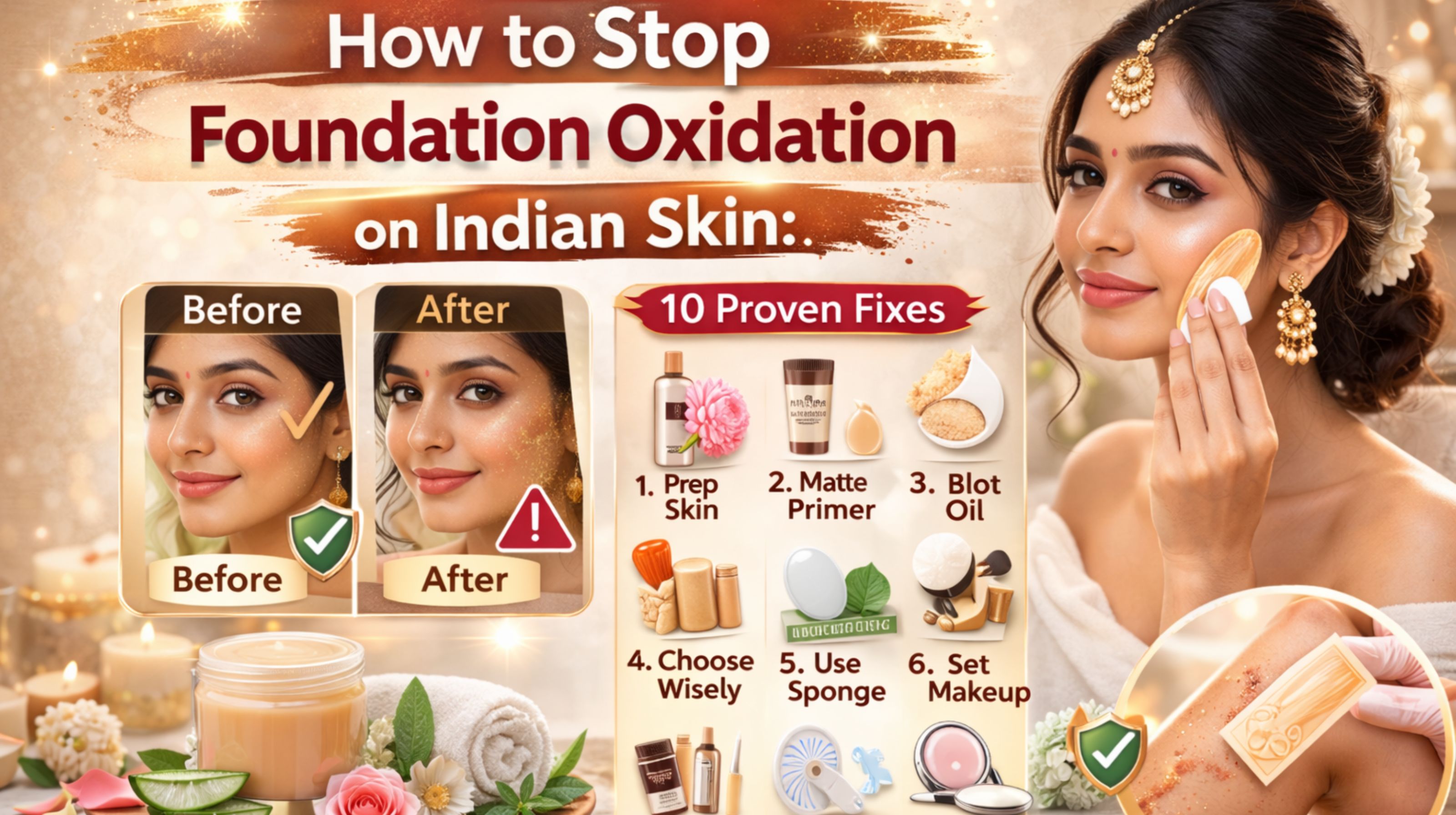


You leave the salon with a perfect match, only to look in the mirror hours later to find your foundation has turned a strange orange or ashy grey. This is foundation oxidation, a chemical reaction between your skin's oils, the makeup formula, and the air. For indian skin with its unique olive or golden undertones, the wrong base can oxidize dramatically, leading to a noticeable mask-like line at the jaw or a burnt sienna cast that looks nothing like your neck. The dissatisfaction isn't just about colour; it's the wasted money and the anxiety of your makeup breaking down before an important event. You know, that sinking feeling when you're getting ready for a wedding and you see it happening.
What Foundation Oxidation Really Looks Like in Real Life
In the salon chair under bright, neutral lights, the foundation shade looks like a seamless match. The real test comes hours later. A common observation is clients returning frustrated, pointing out a distinct orange ring around the nose and mouth where oils break down the product fastest, while the perimeter of the face turns a dull grey. This isn't just "makeup fading"; it's a full chemical change. A detail most overlook is that oxidation can start the moment you blend, especially if you use a silicone-heavy primer with a water-based foundation, creating a reactive layer that accelerates the colour shift. I've done that, layered products without thinking, and then wondered why my face looked off by lunch.
The Reality of Makeup Chemistry on Indian Skin Tones
It's not just about being "oily." Indian skin often has a natural yellow or olive undertone. Many mass-market foundations are formulated with iron oxides that are too red or pink. When these pigments mix with the skin's natural sebum and acidity, they turn a rusty orange. Conversely, foundations meant to "brighten" can have white bases that turn grey on deeper melanin-rich skin. The boundary where this stops is your skin's pH; if it's highly acidic or you've used a strong AHA toner, the reaction is almost guaranteed. For more on skin care prep, check our beauty blogs. It's like the foundation is fighting with your skin instead of working with it.
The Biggest Mistake That Guarantees an Orange Face
The most common misunderstanding is buying a foundation that matches your skin *after* it has oxidized in the bottle or on a tester. You swatch a shade, wait 10 minutes, see it turn orange, and think "This is my colour now," so you buy it. You're essentially matching to the problem. Another major risk is using a powder that's too light to "set" a deeper liquid foundation; the combination creates a chalky, ashy finish as the layers interact. Salon clients often don't realize their moisturizer with SPF contains avobenzone, which can react with foundation ingredients, causing rapid darkening. I've made that powder mistake, trying to 'brighten' and ending up looking dusty.
How to Actually Decide on a Foundation That Stays True
Start by testing foundation not on your hand, but on your jawline, and then leave the store. Observe it in natural sunlight after 30 minutes. The right shade should blend away, not sit on top of your skin. Look for brands that specify "oxidation-resistant" or use encapsulated pigments. A non-obvious step is to apply a thin layer of primer and let it fully set for 60 seconds before applying foundation. If you're struggling to find reliable information, many professionals share insights on platforms like parlourtime courses. The key is to prioritize your skin's undertone over its surface darkness level. It's a bit of a hassle, but better than the alternative.
FAQ
q Does oily skin make oxidation worse?
a Yes, significantly. Oil acts as a catalyst for the chemical reaction. Using an oil-control primer and blotting papers are crucial first steps, not just touch-ups with more powder. Which, honestly, can sometimes make it look worse.
q Can setting spray prevent foundation from turning orange?
a A good setting spray creates a protective film, slowing down the process. However, it cannot stop oxidation caused by a fundamental mismatch between your skin's chemistry and the foundation's formula. So it's a help, not a cure.
q Should I buy a lighter foundation to compensate for darkening?
a Never. This is a guaranteed path to an ashy, grey cast. Always match to your skin at its best, and use correctors and techniques to prevent the darkening, not anticipate it. I learned this the hard way.
q How can I tell if a foundation will oxidize before buying it?
a Swatch it, let it dry completely, and wait 10-15 minutes. Compare the dried colour to your skin nearby. If it changes tone, it will oxidize. Researching reviews from people with similar undertones, such as on community apps like ParlourTime, is also very helpful. Because someone else has probably already tested it.