

You're booking a facial and see an "AI skin analysis" add-on. It sounds high-tech, but will it just give generic advice or actually spot your specific pigmentation or sensitivity issues before the treatment starts? Many find the report confusing if the therapist isn't trained to explain it for Indian skin tones.
What an AI Skin Diagnostic Really Means for Your Salon Visit
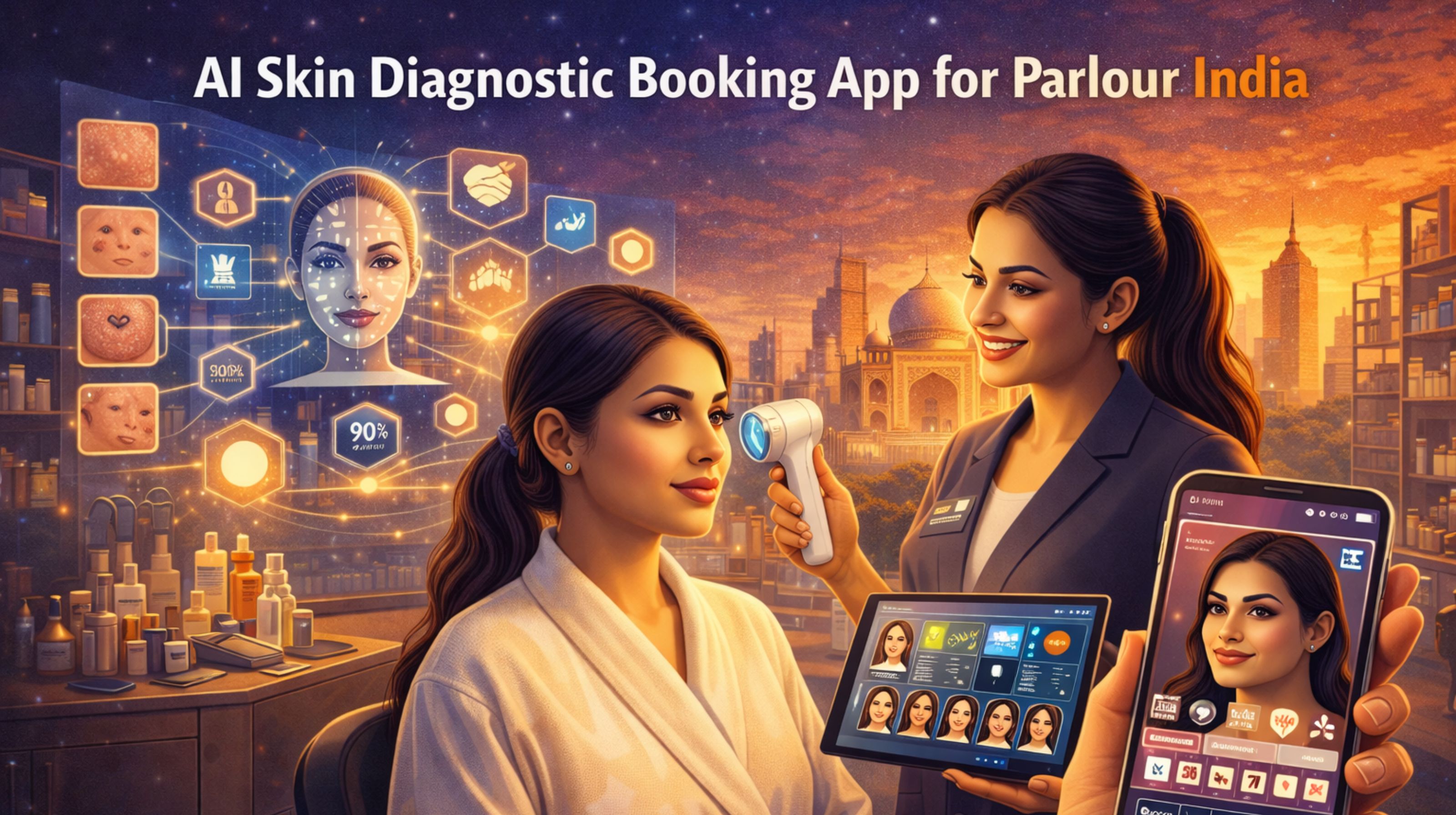
In a real Indian salon, this is often a handheld scanner or tablet camera the therapist uses for a few minutes before your service. The goal is to show you "proof" of concerns like pores, dryness, or UV damage. However, the most common salon observation is a rushed analysis where the therapist quickly points at the screen saying "see, you have dryness," but doesn't connect it meaningfully to the facial they're about to perform. A non-obvious detail people overlook is that these apps primarily analyze surface-level moisture and texture; they often can't accurately assess deeper dermal health or hormonal pigmentation common in Indian skin.
The Reality of AI Results on Indian Skin Tones and Hair
The technology is calibrated on diverse datasets, but in practice, lighting in the salon room dramatically affects the reading. On deeper skin tones, erythema (redness) from sensitivity or mild inflammation can be misread as "radiance" or vice-versa. The boundary where the service stops working is with conditions like melasma or post-inflammatory hyperpigmentation (PIH); the AI might highlight dark patches but cannot diagnose the cause or recommend a safe treatment pathway, which requires a dermatologist. A common misunderstanding causing dissatisfaction is expecting a medical-grade diagnosis, when you're actually getting a marketing tool for upselling serums or higher-tier facials.
The Mistake: Assuming AI Overrides the Therapist's Skill
The biggest risk is blind trust. The AI suggests you need "hydrating" products, but the therapist proceeds with a strong exfoliating scrub because it's the salon's protocol for the day. The tech becomes a gimmick, not a guide. Another service blind spot is hair analysis; an AI scan of your scalp might show flaking, but it cannot differentiate between product buildup, dryness, or early-stage dermatitis, leading to the wrong scalp treatment. This mismatch between the high-tech report and the standardised service applied is a core reason for post-treatment dissatisfaction.
How to Decide If You Should Add the AI Scan to Your Booking
Use it as a conversation starter, not a decision-maker. Before your appointment, note your primary concern (e.g., "my cheeks get red and hot with new products"). If the AI scan highlights that area, ask the therapist specifically how the chosen facial will address it. If their answer is vague, the tech isn't adding value. For tracking progress over months, a consistent scan with the same device can be helpful, but only if interpreted by the same knowledgeable professional. Platforms like parlourtime that aggregate salon menus can help you see which outlets list trained technicians for these services, setting realistic expectations before you book.
FAQ
q Is the AI skin scan safe for all Indian skin types?
a Yes, it's generally safe as it's just a camera or scanner. The risk isn't the scan itself, but the potential misdiagnosis leading to an overly aggressive treatment for your sensitive or pigmentation-prone skin.
q Will it tell me my exact skin type?
a It will categorize you (e.g., "combination"), but these categories are broad. The real value is in seeing the *degree* of oiliness or dryness in specific zones, which a good therapist can use to customize product application during your facial.
q Can the scan detect acne or allergies?
a It can detect visible acne lesions and redness, but it cannot diagnose allergic reactions or hormonal acne causes. It's a visual tool, not a substitute for medical advice, a crucial boundary many customers misunderstand.
q Should I book the scan for every visit?
a Not necessarily. It's most useful for a first visit to establish a baseline or if you're starting a new treatment series. For regular maintenance facials, the therapist's manual assessment is often sufficient. For more on service specifics, you can browse common questions.