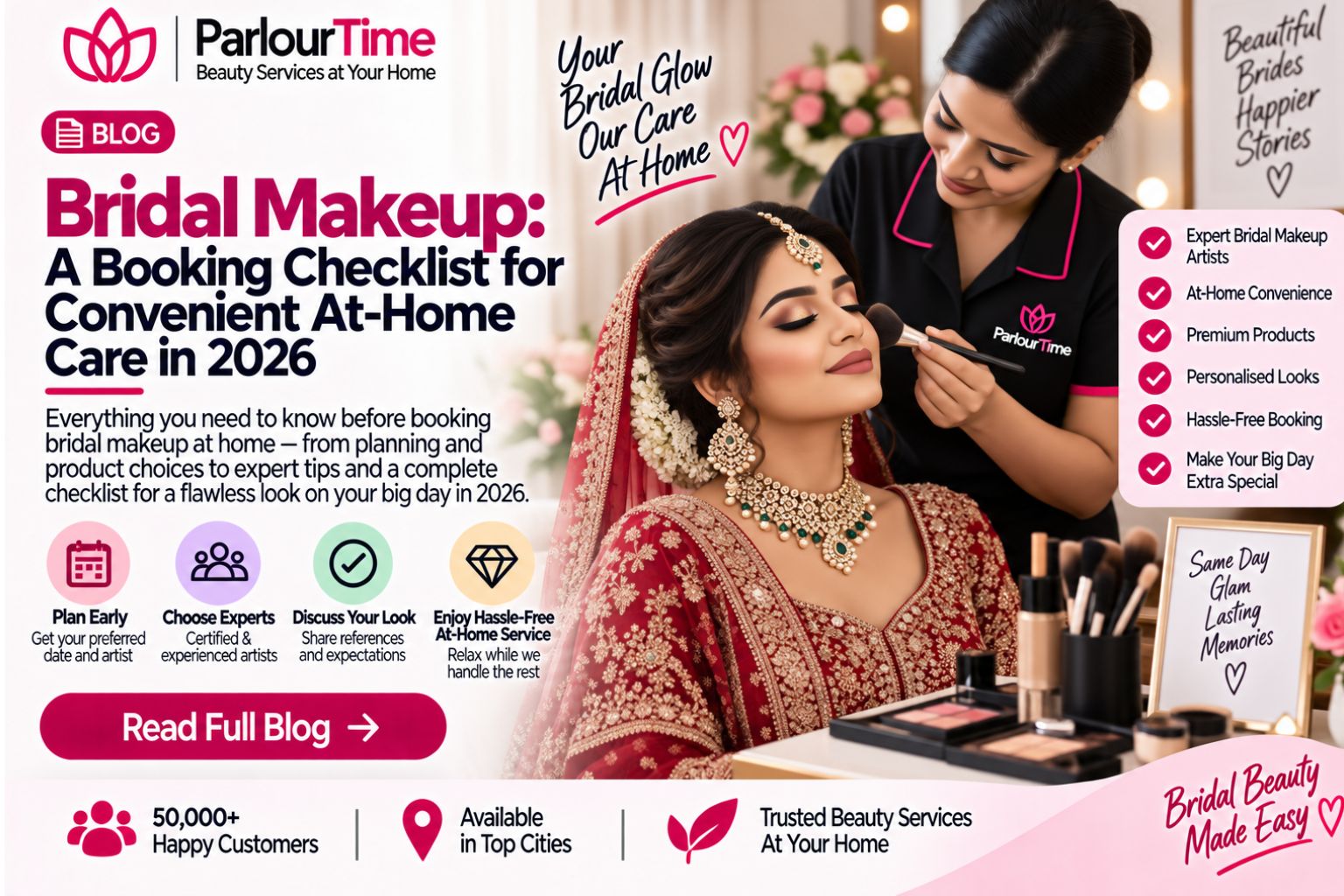


Bridal makeup bookings in 2026, honestly, start weeks or months before the wedding. And most brides I know are comparing at-home service options against traditional salon visits, sometimes right up until they confirm. The confusion usually starts when the trial look fades differently than expected. Or when the wedding day finish just doesn't match the photos that were shared during booking. It's a pattern many brides describe: the trial glow looks perfect, but by the reception the base feels heavy or patchy. Bridal makeup isn't really a single service. It's more like a sequence of decisions, skin preparation, timing, product compatibility, aftercare that continues well past the wedding day.
Why Bridal Makeup Bookings Feel Uncertain Before The Event
The first sign of confusion usually shows up during the trial session. Brides notice the base looks slightly different under indoor lighting compared to daylight. Some feel tightness after the trial. Others see the foundation settling into fine lines within a few hours. These early signals matter, because they hint at how the skin might behave on the wedding day itself. Bridal makeup involves layering primer, base, concealer, setting products, and each layer responds differently depending on skin type, hydration, and recent treatments. Brides who had a facial or cleanup just days before the trial often notice uneven absorption, which makes the finish look patchy in certain areas.
Timing also creates uncertainty. A trial done three weeks before the wedding may not reflect how the skin behaves on the actual day, especially if humidity, stress, or sleep patterns change. Many brides book at-home bridal makeup assuming the artist will manage everything. But skin preparation and aftercare still depend on the bride's routine. This gap between expectation and reality is where doubt usually begins. Understanding this early helps brides ask better questions during beauty service questions and avoid last-minute adjustments that rarely improve outcomes.
What Actually Happens During At-Home Bridal Makeup Sessions
At-home bridal makeup sessions usually involve a portable kit, adjusted lighting, and a compressed timeline compared to salon setups. Artists working at home often carry fewer product variants, so the base may be matched from a limited range. Brides with sensitive skin or recent chemical exposure may notice slight redness or irritation during application, particularly if exfoliation happened too close to the session. The finish can look flawless immediately. But long-wear behavior depends on skin texture, oil production, and how products interact with any skincare layered underneath.
Results also vary based on the season. Summer weddings tend to show faster melting around the T-zone. Winter ceremonies often reveal dry patches that weren't visible during the trial. Monsoon weddings bring humidity-related frizz and base slippage. In many cases, brides who had a hair spa or smoothening treatment shortly before the wedding notice that scalp oil or product residue affects how the makeup sits near the hairline. A common observation is that the base looks heavier by hour six. Not because the products failed, but because the skin's natural behavior changed through the day.
One overlooked detail, at-home convenience doesn't reduce the need for skin preparation. Brides who skip a patch test or ignore mild reactions during the trial often face more noticeable issues on the wedding day. This is where realistic expectations matter more than product claims.
Common Mistakes That Affect Bridal Makeup Outcomes
A frequent assumption is that an expensive bridal package guarantees a longer-lasting finish. In practice, longevity depends more on skin condition, product compatibility, and aftercare than on the price of the service. Brides who schedule a facial or cleanup two days before the wedding often see temporary redness or sensitivity that interferes with base application. Others repeat the same trial look without adjusting for weather or venue lighting, which leads to visible mismatch on the actual day.
Another blind spot is ignoring maintenance between the trial and the wedding. Skin that was well hydrated during the trial can become dry if the routine is dropped for even a week. Similarly, brides who use new skincare products close to the event sometimes experience breakouts or patchy absorption that wasn't present earlier. Hair-related services like keratin or smoothening also influence bridal makeup indirectly, since scalp oil and product residue can affect how the base sits along the hairline and neck.
The most common mistake is treating bridal makeup as a standalone service. It rarely is. Skin sensitivity, service history, and timing before the event all shape the final result. Brides who review hair care resources alongside makeup planning often spot these dependencies earlier and adjust their schedule accordingly.
How To Decide Timing And Next Steps Before Booking
Deciding when to book bridal makeup depends on how much flexibility the skin and schedule allow. A trial done four to six weeks before the wedding gives enough time to observe how the skin reacts and adjust the routine if needed. If mild redness or tightness appears after the trial, waiting a week before the next session usually helps. If the concern is base longevity rather than skin reaction, the issue may be product compatibility or aftercare rather than the service itself.
There are clear boundaries worth respecting. Repeating the same trial multiple times rarely improves the outcome if the underlying skin condition hasn't changed. Additional facials close to the wedding can increase sensitivity instead of improving glow. Very damaged or reactive skin may not achieve the flawless finish seen in reference photos, regardless of the artist's skill. Event deadlines also reduce recovery time, so last-minute treatments often create more risk than benefit.
When results feel inconsistent across sessions, professional reassessment becomes more useful than booking another service. Some customers use parlourtime to compare service timing before confirming bridal appointments, since spacing between facial, cleanup, and makeup sessions matters as much as the products used. If redness, patchiness, or tightness continues beyond a few days, stepping back to evaluate skin condition is more practical than adding more treatments.
Frequently Asked Questions
q How early should bridal makeup be booked for a wedding in 2026?
a Booking four to six weeks in advance usually allows enough time for a trial, skin observation, and schedule adjustments before the wedding day.
q Why does bridal makeup look different on the wedding day compared to the trial?
a Skin hydration, weather, venue lighting, and stress levels often change between the trial and the event, which shifts how the base settles.
q Can a facial close to the wedding affect bridal makeup results?
a A facial done two or three days before the wedding can cause temporary redness or sensitivity that interferes with smooth base application.
q Does at-home bridal makeup last as long as salon bridal makeup?
a Longevity depends more on skin type, product compatibility, and aftercare than on whether the service happens at home or in a salon.
q Why does bridal makeup become patchy after a few hours?
a Oil production, dry patches, and layering of skincare products underneath the base commonly explain why the finish breaks down unevenly.
q Should hair treatments be scheduled before or after bridal makeup trials?
a Hair spa and smoothening treatments are usually best scheduled at least a week before the trial so scalp residue does not affect the base.
q When should a bride consider changing her bridal makeup plan?
a If skin reactions repeat across trials or the base consistently fades early, reassessing skin condition is more useful than repeating the same service.
q How can brides avoid last-minute bridal makeup problems?
a Spacing treatments well before the event, maintaining a steady skincare routine, and discussing maintenance expectations during consultation usually reduces last-minute issues.