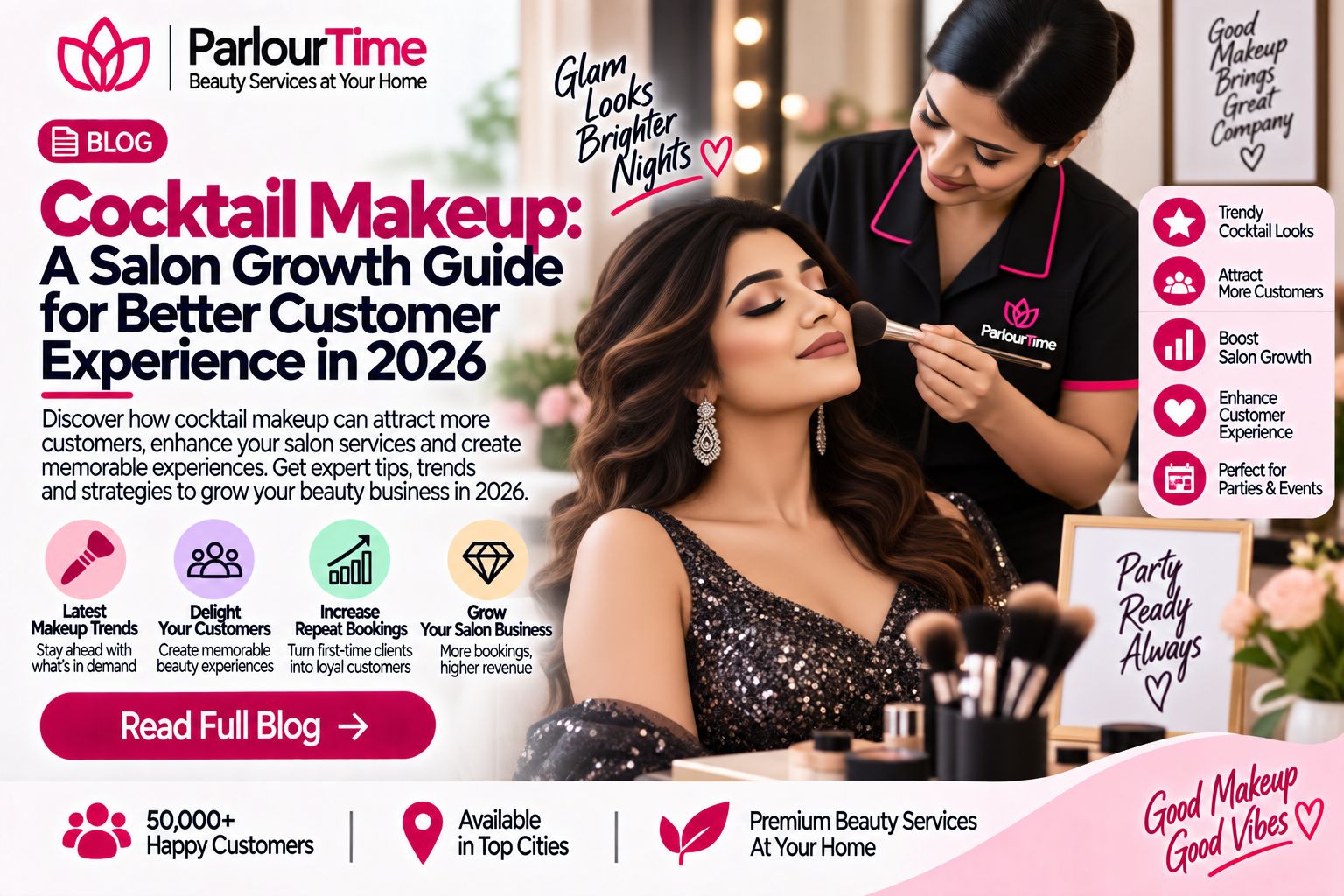


Cocktail makeup sits in this odd space between everyday grooming and full bridal styling. Customers book it before receptions, sangeet nights, office parties, family celebrations — expecting something polished that photographs well and actually holds through the evening. What many discover instead is that the result depends heavily on skin condition, product compatibility, and how the service is timed before the event. In 2026, salon teams are noticing that customer satisfaction with cocktail makeup often hinges on expectation setting rather than the makeup itself.
What Cocktail Makeup Really Means During a Salon Visit
The first thing customers usually notice during a cocktail makeup session is how quickly the base goes on. Unlike bridal makeup, which allows two to three hours, cocktail makeup is often squeezed into 60 to 90 minutes. So the artist works faster, layers less product, skips certain prep steps that bridal services include. Customers who expect the same finish as a wedding look often feel let down when the glow appears lighter or the coverage feels thinner. Understanding the difference between cocktail and bridal intensity — that helps set realistic expectations from the start.
Why Cocktail Makeup Results Vary on Indian Skin
Indian skin tones range widely, and undertones shift depending on humidity, sun exposure, seasonal dryness. A cocktail makeup look that appears flawless indoors can look ashy or patchy under event lighting. Many customers notice their base starts separating within two hours, especially around the nose and forehead. This commonly happens when the skin hasn't been prepped with the right primer, or when the moisturiser underneath doesn't match the foundation base. Oil control, hydration balance, product layering — these matter more than the brand of makeup used.
Common Mistakes That Affect Cocktail Makeup Satisfaction
A frequent mistake is booking cocktail makeup on the same day as a facial or cleanup. Exfoliation opens the skin, and applying makeup immediately after can cause stinging, redness, uneven absorption. Another blind spot is choosing a look based on social media filters rather than real lighting conditions at the event venue. Customers also overlook that sweat, humidity, long travel hours affect makeup longevity. When expectations are built around filtered images, dissatisfaction escalates quickly, even when the salon has done technically sound work.
How to Decide Before Booking Cocktail Makeup
Timing is where most cocktail makeup decisions either succeed or fail. If the event is in the evening, booking makeup at least three to four hours before allows room for touch-ups and settling. Customers with sensitive skin should request a patch test at least 48 hours earlier, especially if a new foundation or setting spray is being used. When skin is already reactive or heavily textured, a lighter look with minimal layering often works better than full coverage. Some customers use parlourtime to compare service timing and prep expectations before booking event makeup, which helps reduce last-minute confusion.
Frequently Asked Questions
q How long does cocktail makeup usually last?
a Cocktail makeup commonly lasts four to six hours, depending on skin type, humidity, and the setting products used during application.
q Why does cocktail makeup look patchy after a few hours?
a Patchiness often occurs when the base does not match the primer, or when the skin is not adequately prepped before application.
q Can I book cocktail makeup right after a facial?
a Booking makeup immediately after a facial can cause irritation, so a gap of at least one day is generally safer for most skin types.
q Is cocktail makeup different from party makeup?
a Cocktail makeup is typically lighter and faster than party makeup, which often includes heavier coverage and more detailed eye work.
q Does cocktail makeup suit oily skin?
a Oily skin can carry cocktail makeup well when mattifying primers and long-wear foundations are used instead of heavy creams.
q Why does my makeup look different in photos than in person?
a Event lighting, camera flash, and the amount of highlighter used can change how makeup appears in photos compared to indoor mirrors.
q Should I carry touch-up products to the event?
a Carrying blotting paper, compact powder, and lipstick helps manage shine and fading during longer events without needing a full redo.
q When should I consider a different makeup service instead?
a If the event requires long wear, heavy photography, or traditional styling, bridal or engagement makeup may suit the occasion better than cocktail makeup.