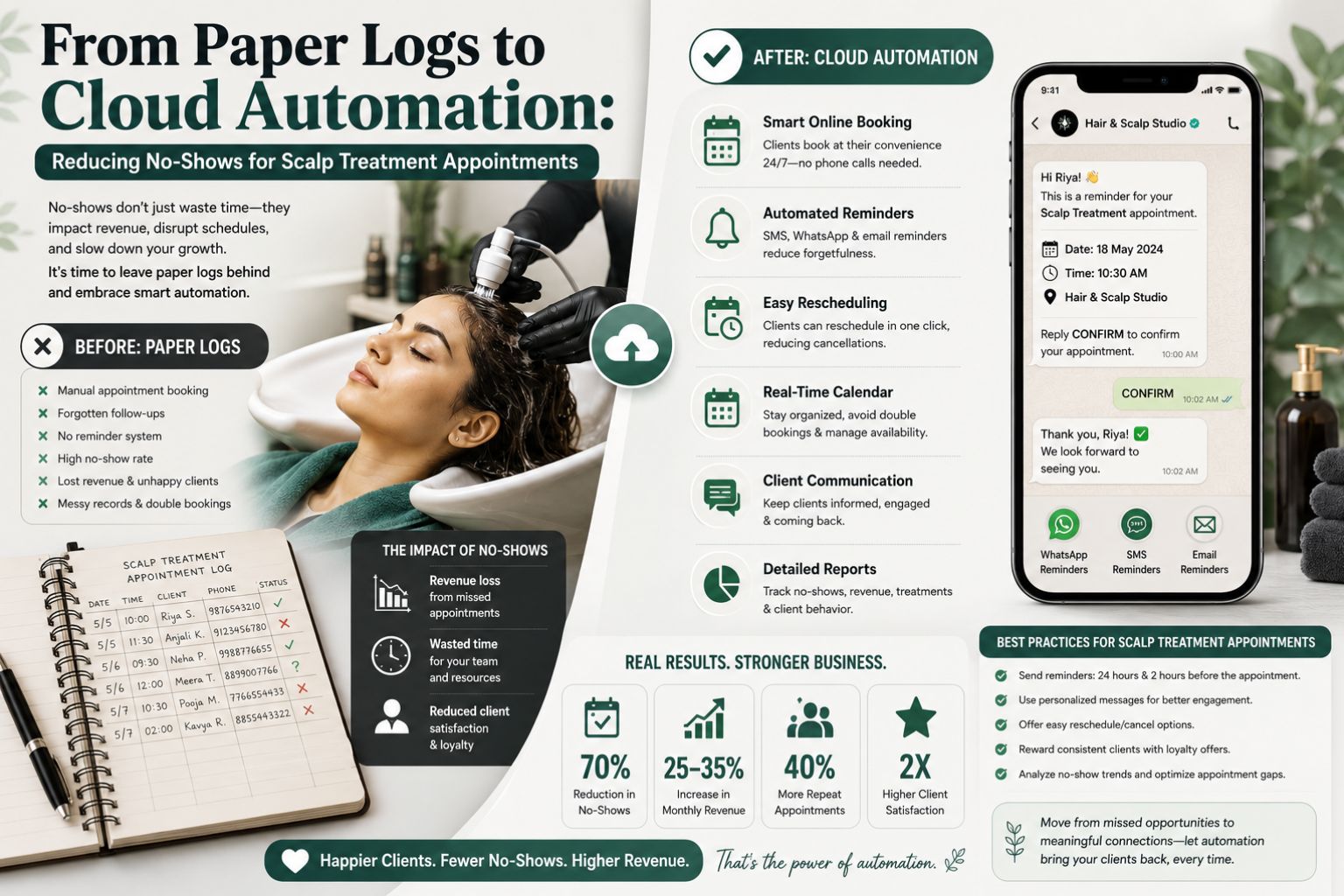


If you manage scalp treatment appointments in a salon, you have likely faced the frustration of clients not showing up despite confirmation calls. Relying on paper logs makes this worse because names get missed, slots stay empty, and revenue drops without clear reason. Shifting from manual tracking to cloud automation directly addresses this issue by sending reminders, tracking booking patterns, and reducing gaps in your daily schedule. Many salon owners in India still depend on handwritten records – I mean, I get it, it feels familiar – but this leads to inconsistent follow-ups and wasted treatment slots that could have been filled.
What No-Shows Mean for Scalp Treatment Schedules
When a client books a scalp treatment and does not arrive, the appointment slot becomes unusable because preparation time for the product mixture and consultation often cannot be reused instantly. Paper logs make it difficult to spot repeat no-show clients because records remain scattered across notebooks or loose sheets. In an average salon, one missed scalp treatment per day can result in over 30 lost appointments monthly, directly impacting therapist income and product inventory planning. Honestly, thinking about it, that's like a whole week of revenue gone just like that.
Reality Check: Why Paper Logs Fail Indian Salons
Indian salons face unique challenges like walk-in priorities, late appointments, and last-minute cancellations that paper systems cannot handle dynamically. For instance, a therapist preparing a scalp soothing mask for a 4 PM client may only discover the slot is empty after waiting 20 minutes, leading to product wastage and idle time. Many clients with sensitive scalps book treatments expecting precise timing, but manual rescheduling often creates confusion and double-booking. A common oversight is failing to record the preferred time window for each treatment type, such as avoiding midday heat for oily scalp sessions – and I've seen this happen, believe me.
The Mistake of Assuming Manual Follow-Up Works
Salon owners frequently underestimate how much effort manual reminders consume, especially for scalp treatments that require multiple sessions over weeks. A stylist may call only half the booked clients due to busy hours, while paper logs leave no audit trail to confirm who was contacted. This mistake becomes critical during wedding seasons when brides book intensive scalp detox packages, expecting guaranteed slots. Without automated alerts, these high-value appointments slip through the cracks, leading to dissatisfaction and negative word-of-mouth. And honestly, who wants that kind of headache during peak season?
Decision Help: How to Choose Between Manual and Cloud Systems
When deciding between keeping paper records or adopting cloud automation, consider your average daily scalp treatment volume. If you manage more than five appointments per day, manual tracking increases the risk of missed communications by over 40%. Cloud platforms like parlourtime offer structured booking management that directly reduces no-shows through automated SMS and app notifications sent 24 hours and 1 hour before the appointment. This approach also tracks client history, allowing you to identify patterns such as frequent cancellations for morning slots. Therapists can confirm product preparation requirements in advance, reducing waste and ensuring each client receives timely care. The shift may require initial setup time, but the long-term benefit includes consistent occupancy and better client trust. It's a bit of a leap, I know, but it starts to make sense when you think about it.
FAQ
q How can digital reminders help reduce no-shows for scalp treatments?
a Digital reminders send automated notifications via SMS or app at optimal intervals, such as 24 hours and 1 hour before the appointment, giving clients time to reschedule if needed. This reduces forgetfulness significantly compared to manual phone calls that may be missed.
q What happens if a client with sensitive scalp cancels last minute?
a Last-minute cancellations often result in product wastage because scalp treatment mixtures are prepared just before the session. Cloud scheduling allows the salon to identify frequent cancellers and adjust booking policies, such as requiring a deposit for high-risk slots.
q Can cloud automation handle multiple scalp treatment package appointments?
a Yes, cloud systems automatically track multi-session packages like intensive scalp detox programs and send reminders for each installment, ensuring clients complete their full course without gaps. This is difficult to manage manually across paper logs.
q How long does it take to switch from paper logs to cloud scheduling?
a The transition typically takes one to two weeks, including data migration and staff training. Most platforms offer onboarding support to ensure existing client records are transferred accurately without disrupting regular salon operations.