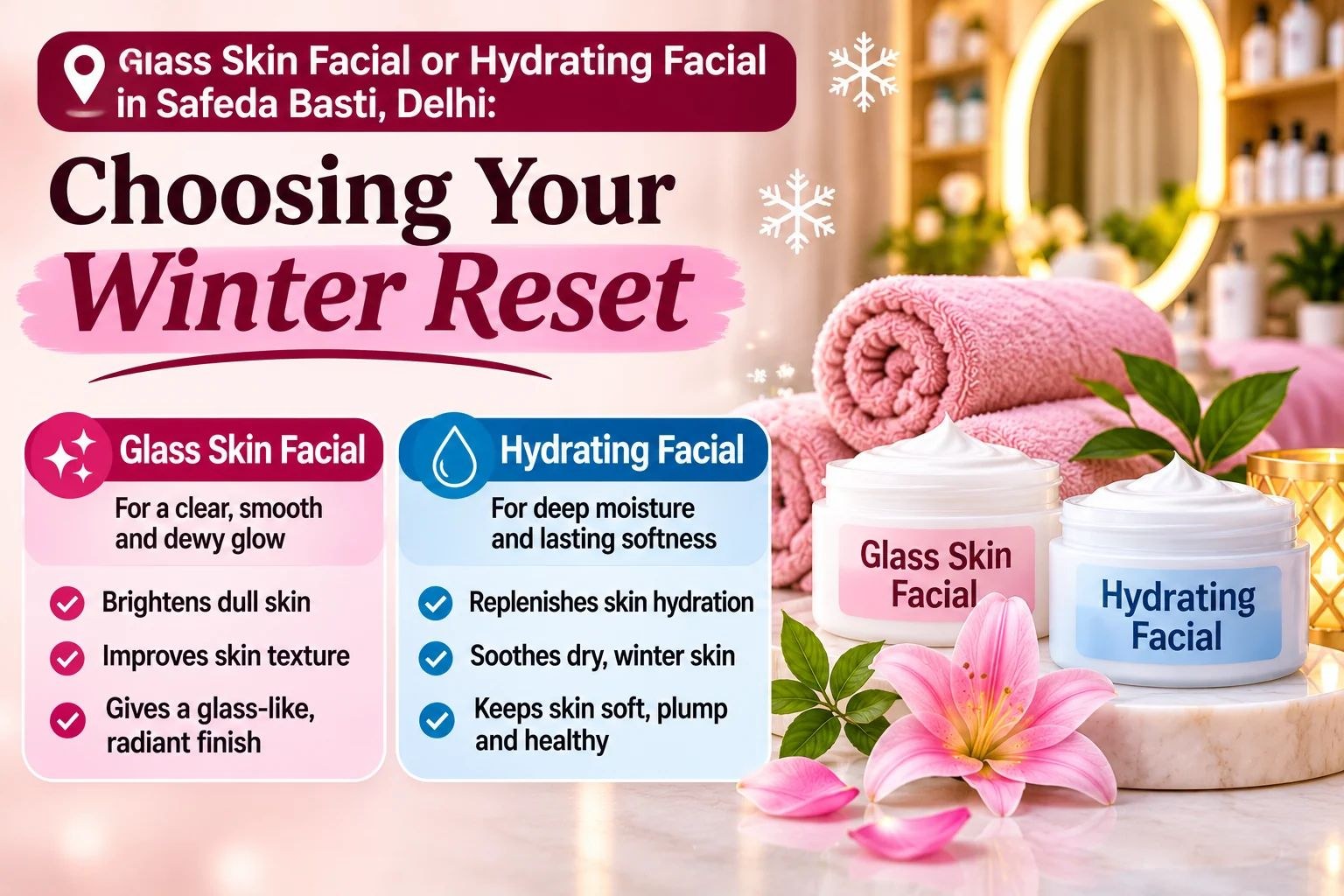


If your skin feels tight and flaky in winter, start with a hydrating facial. If it feels dull and rough but comfortable, a glass skin facial is the more sensible first step. The two are not rivals. Glass skin describes a surface finish, and it is a descriptive term rather than a clinical one. A hydrating facial works on moisture and barrier comfort. The right pick depends on what your skin is doing this week, not on which facial sounds better.
Safeda Basti sits in the middle of Delhi's winter belt, where colder air outside meets indoor heating inside. Both tend to leave skin drier than it feels in other seasons. That is general seasonal context, not a diagnosis. If your skin stings, flakes constantly, or reacts after every treatment, stop comparing menus and get your skin assessed by a professional.
What each facial is designed to do
A glass skin facial is designed for surface polish. Exfoliation and finishing steps aim to leave skin looking smoother and more light-reflecting, which is why people book it before weddings, festival dinners, and photo-heavy evenings. A hydrating facial is designed for comfort. Its steps focus on cooling, calming, and layering moisture, with the goal of reducing tightness rather than adding shine. Glass skin is about the look of texture. Hydration is about how skin feels. When someone books glass skin hoping to fix dryness, the mismatch shows up quickly, because the service was never built for that job.
Which skin types suit glass skin versus hydrating versus brightening
Dry skin suits a hydrating facial first. Glass skin steps on dry skin can leave it feeling tighter rather than smoother, since exfoliation lands on a barrier that is already under strain. Oily skin with visible texture often handles a glass skin approach better, though it still needs moisture support in winter. Combination skin usually does well with hydration on dry zones and lighter work elsewhere. Sensitive skin calls for caution: a hydrating or calming route is the safer start, and strong exfoliation is best avoided until your skin settles. Brightening facials target uneven tone rather than finish or moisture, so they answer a third question and should not be used as a stand-in for either.
Prep to do at home in the days before
Skip strong exfoliants for two to three days before a facial. Stop retinol and acid-heavy products a few days ahead if your skin is already dry. Keep cleansing gentle and moisturise morning and night, so the beautician is not working on a stripped barrier. Drink water through the week, though this is supporting care and not a substitute for skin products. If you are booking near an event, mention the date when you book so the service can be planned around it. In Safeda Basti, Preeti Makeover is the verified parlour listed for the area, and you can check its location before planning a visit. There is no guarantee that every service discussed here is offered there, so confirm directly.
Aftercare for the first 48 hours
Keep the first two days simple. Use a gentle cleanser and a plain moisturiser, and skip exfoliants, retinol, and strong actives. Avoid long hot showers and heavy makeup where you can, especially right after glass skin steps. Do not judge the result in the first few hours. Skin can look flushed straight after a session and settle later, and winter dryness makes that settling slower for some people. If redness or stinging grows instead of easing, stop your routine, keep the area calm, and speak to a professional before your next facial.
How to space repeat facials through winter
Leave enough gap for skin to settle before the next session, and give more room when your skin feels dry. A practical approach is to alternate rather than stack. Pair a hydrating facial earlier in the season and a glass skin facial closer to your event, with several weeks between them. Do not repeat a facial just because you liked the first result. Check how your skin behaved on days three to five before booking again. If you are comparing service types, the ParlourTime blog carries salon and facial guides, and the Delhi at-home services pages set out how doorstep bookings are described. ParlourTime is a beauty booking platform, and availability depends on the provider you choose.
Choose the hydrating facial if your skin is tight, flaky, or stinging, or if an event is less than a week away. Choose the glass skin facial if your skin is comfortable but dull and you have time for it to settle before photos. Choose neither, for now, if your skin reacts after every treatment or has been flaking for weeks. In that case, a professional skin assessment comes before any booking. Use this guide as general comparison, and collect your own checklist of current skin condition, event date, and products you already use before you decide.