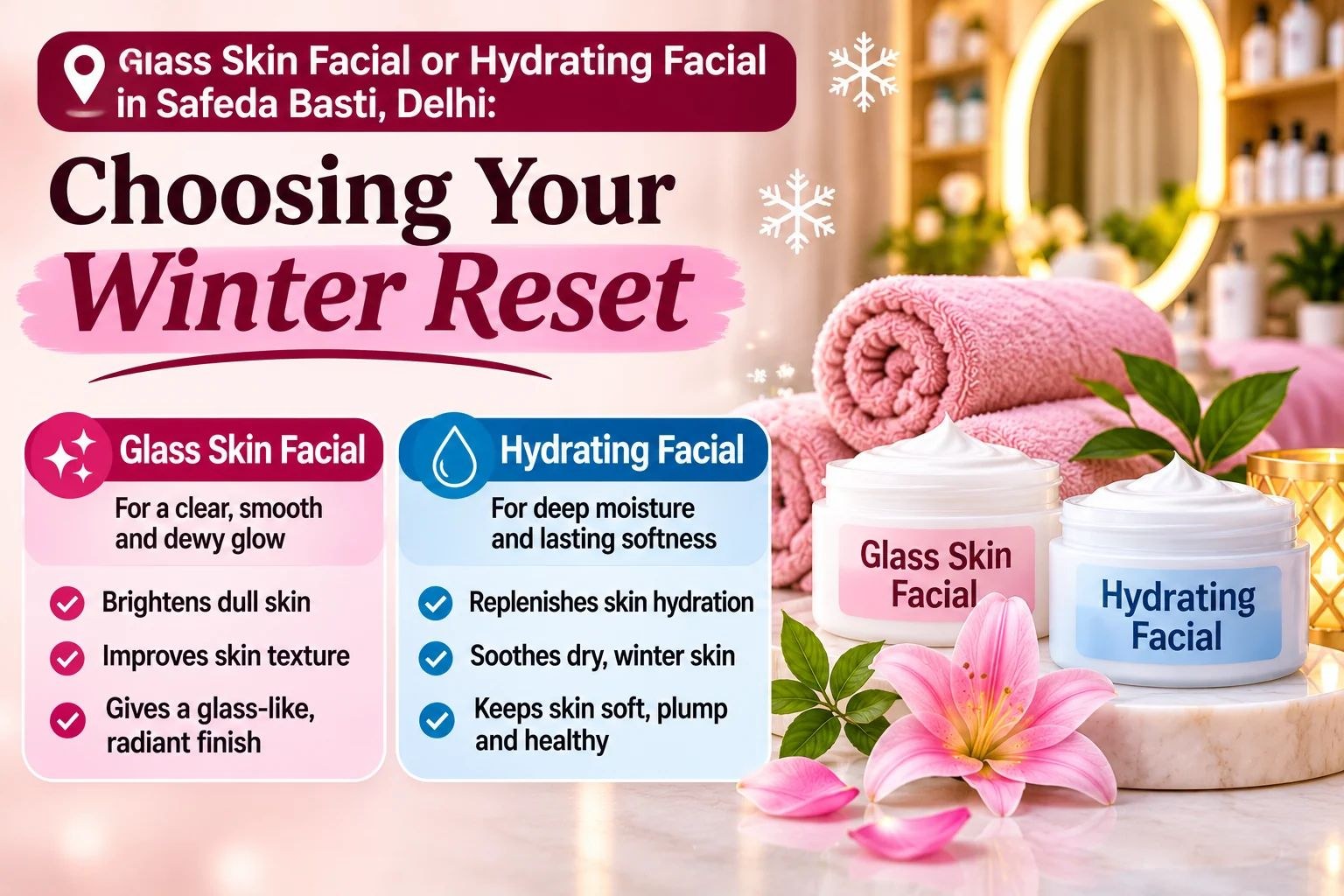


A hydrating facial in Jahangir Puri is a moisture-focused treatment for skin that feels tight, rough or flaky, and it works best when it is planned into your routine before wedding-season functions rather than squeezed in at the last minute. The sections below cover why winter skin tightens, what this facial does, how often to repeat it, and how to prepare for an appointment at home.
Why Winter Skin Feels Tighter
Cold air and indoor heating pull moisture from skin, and cheeks usually show it first. The face may feel tight after washing, foundation can cling to dry patches near the nose, and the jawline may look flaky under indoor light. Some people notice stinging when they apply their usual moisturiser, which is a sign the skin barrier is stressed.
The confusing part is a mixed pattern. An oily T-zone can sit alongside rough cheeks, which makes many people assume they need a stronger cleanup. A cleanup or de-tan session may brighten the face briefly, yet dry areas can feel tighter within a day or two. That is usually when a hydrating option becomes the more sensible choice.
What a Hydrating Facial Addresses and What It Does Not
A hydrating facial mainly works on moisture retention and calming. It replenishes the surface and soothes tight, dull skin instead of relying on deep exfoliation, which suits winter dryness better than an aggressive scrub. One session can soften the surface and improve comfort, but it will not reverse weeks of dryness.
Results are not uniform because the state of your skin on the day matters more than the name of the service. Skin with active irritation, recent threading or a history of sensitivity may show temporary redness during massage or mask stages. A rich cream that helps dry cheeks can feel heavy on an oily forehead. People often notice the glow the next morning rather than straight after. Beauty Care in Jahangir Puri, Delhi lists Hydrating Facial among its services, so you can check that listing before planning anything.
This is where a decision boundary helps. A hydrating facial supports comfort and surface softness. It does not replace daily cleansing, moisturising and sun protection, and it is not a treatment for persistent redness, painful breakouts or unusual reactions. If those appear, a professional skin assessment comes before another appointment.
How Often to Repeat a Hydrating Facial Before Functions
No fixed rule fits every face, but a cautious sequence works for most planning. Try one hydrating facial well before the busy stretch, then watch how skin behaves over the following week. If it stays comfortable and makeup sits better, gentle maintenance at a steady interval is reasonable. If tightness returns quickly, daily routine gaps are usually the cause rather than the service itself.
First appointment: keep a clear gap before any family function so you can see how your skin responds.
Next session: schedule it only once skin feels calm and comfortable between appointments.
Close to an event: avoid a first-time treatment when there is no room for skin to settle.
Home routine: keep up moisturiser after washing, since hot showers and skipped cream undo hydration faster than any single facial restores it.
A facial cannot compensate for dry skin built up over weeks of neglect, so treat it as steady care rather than emergency repair.
Preparing for a Home Facial Appointment
Most of the preparation is about giving clear information, especially when the appointment happens at home and space has to be set up. Share your skin history honestly and mention anything that may affect how skin reacts.
Disclose recent waxing, threading or bleach, because layering treatments too closely can cause sensitivity that later gets blamed on the facial.
Describe your skin in plain terms: tight cheeks, oily T-zone, flaking near the nose, or stinging when you apply moisturiser.
Set up a clean, well-lit space with a steady surface if you are hosting at home.
Ask about the products planned for your skin type, so a rich cream is not applied across an oily forehead.
Keep the rest of the day light after the session and avoid adding another skin treatment on the same day.
Practical Checks Before You Go Ahead
Timing pressure: if a function is very close, gentle hydration at home is usually safer than a first-time facial, because skin needs room to settle.
Signal to wait: skin that stings with regular moisturiser needs calming, not scrubbing, so choose gentle hydration over a cleanup.
Symptom to act on: tightness that returns within a few days of a facial usually points to daily routine gaps rather than poor service quality.
Clear expectations: a more expensive session does not promise better results than a simple one matched to your skin that day.
Reassessment point: repeated reactions, persistent flaking or unusual breakouts after any session deserve a professional skin review before another treatment.
Next step for planning: check the beauty services directory and the blog to match a facial to your skin type and build a simple routine you can keep up at home.