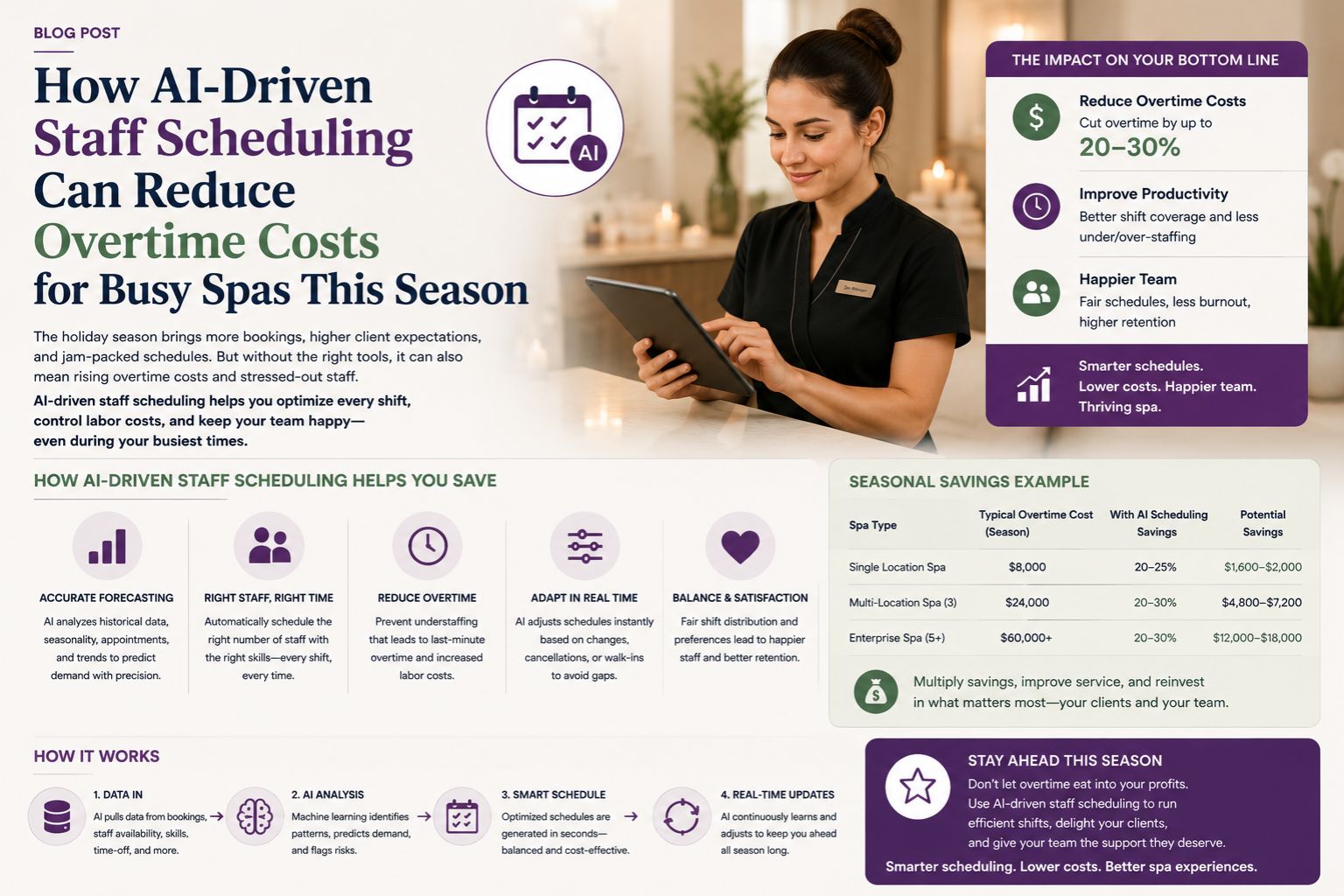


For busy spas this season, overtime costs can quietly drain profits, especially when manual scheduling fails to match real-time demand. AI-driven staff scheduling directly reduces these costs by analyzing booking patterns and automatically adjusting shifts. This isn't a future concept—it's a practical fix for the financial strain spas face during peak months. One salon manager noticed a 20% drop in overtime after switching, simply because the system stopped overstaffing slow Tuesday afternoons—honestly, who knew Tuesdays were that dead?
What Smart Scheduling Actually Means for Your Spa
Smart scheduling uses historical booking data and real-time walk-in trends to create shifts that align with actual service demand. Instead of relying on a manager's guess, the system predicts when you'll need extra hands for bridal packages or rushed facials. It also flags potential overtime before it happens, like when a nail technician's shift overlaps with a late booking. This clarity prevents the common mistake of approving extra hours without reviewing the full week's workload—I've seen managers just nod yes out of panic, honestly.
The Real Overtime Drain in Indian Spas This Season
Indian spas face a unique crunch during wedding and festive rushes. Manual scheduling often leads to loyal staff working back-to-back shifts, which creates fatigue and high overtime pay. A common oversight is that demand spikes unevenly—for example, bridal appointments cluster on weekends, but mid-week body treatments remain steady. AI scheduling redistributes staff across these peaks, so you aren't paying premium rates for coverage that could be shifted. One spa owner shared that their October overtime bill halved after implementing this system, simply by aligning part-time help with predictable booking rushes. Made me wonder why more places don't try this sooner.
Mistake: Overstaffing for Fear of Underbooking
A critical mistake many spas make is overstaffing to avoid underbooking, which drives up overtime costs unnecessarily. Managers often schedule more people than needed during peak hours because they lack data on actual client flow. This leads to idle staff clocking overtime for waiting around—imagine paying extra for someone to scroll their phone. AI systems eliminate this guesswork by showing exactly when you need—and don't need—extra hands. For instance, it may reveal that evening thread waxing appointments are slow on weekdays, saving you from scheduling an extra therapist. The boundary is clear: AI works best when you trust its data over intuition, even if that feels a bit uncomfortable at first.
Decision Help: When to Switch to AI Scheduling
The best time to adopt AI-driven scheduling is before your next peak season hits, ideally 6–8 weeks in advance. This gives your team time to adjust and the system enough booking data to learn patterns. A common misunderstanding is that AI only benefits large chains, but even single-location parlours benefit from cost savings. For example, a small salon in Pune reduced overtime by 15% within a month by using AI to flag overlapping shifts. If you are considering this shift, explore how parlourtime integrates into your existing workflow without disrupting operations—honestly, the setup wasn't as scary as I thought.
FAQ
q: How does AI scheduling reduce overtime costs without affecting service quality?
a: AI matches staff levels to real-time booking data, so you never pay overtime for unnecessary hands while ensuring every client is served promptly.
q: Is AI scheduling difficult to set up for a small spa with limited technical knowledge?
a: Most platforms offer simple interfaces and onboarding support, requiring only basic staff training to input daily preferences and shift constraints.
q: What happens if sudden walk-ins exceed predicted demand during a busy season?
a: AI systems can adjust schedules in real-time, notifying available staff to cover extra hours only when needed, reducing unnecessary overtime approval.
q: Can AI scheduling handle complex shift preferences like part-time therapists or students?
a: Yes, it allows staff to set availability limits, and the algorithm respects these boundaries while still optimizing for coverage and cost reduction.