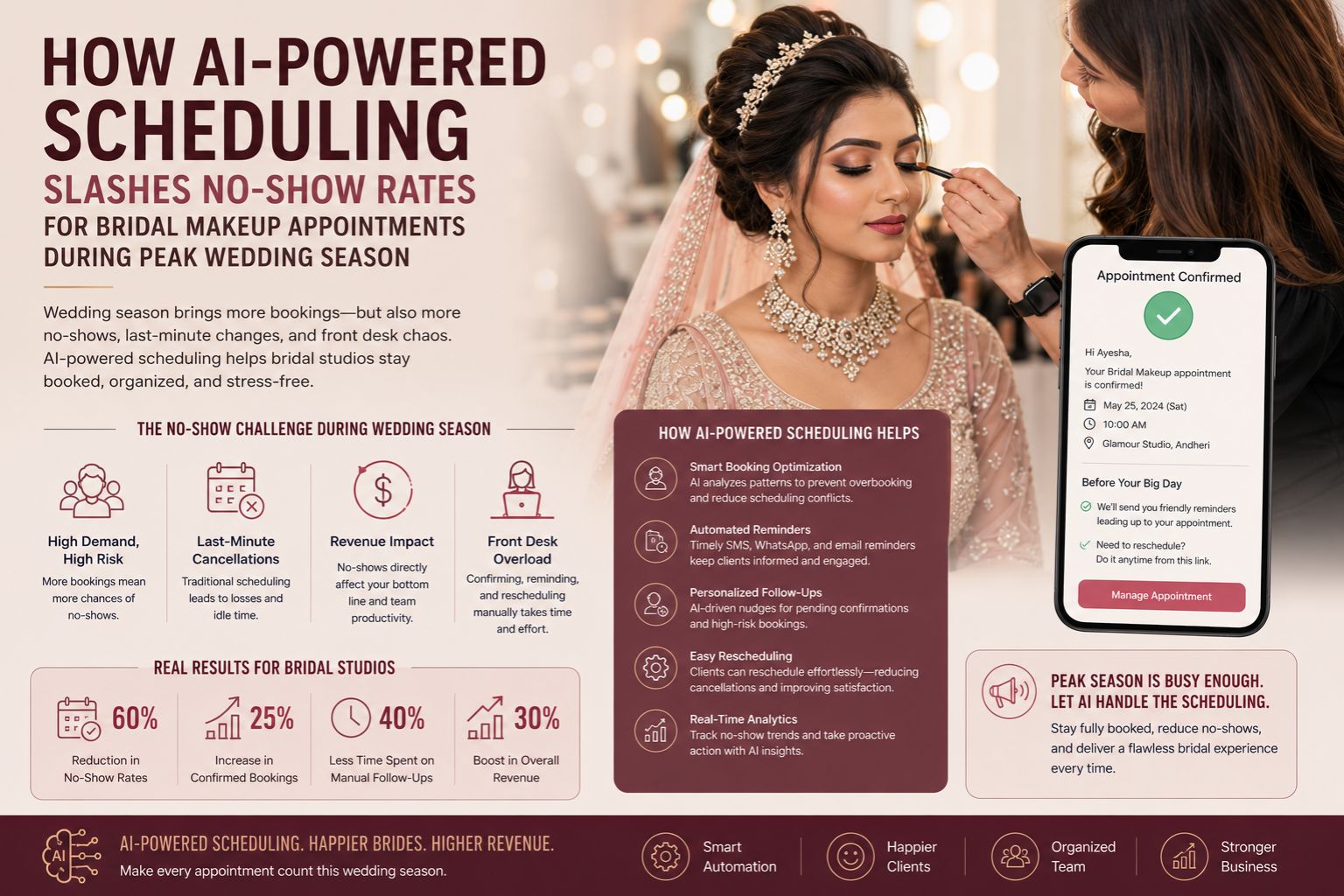


During peak wedding season, every missed bridal makeup appointment hits your salon hard—not just in lost revenue, but in wasted product, blocked slots, and last-minute scramble. AI-powered scheduling directly tackles this by sending intelligent reminders, detecting risky booking patterns, and offering real-time slot substitutes, ensuring your bridal calendar stays full. The key shift is... moving from passive booking systems to proactive appointment management that anticipates no-show behavior before it happens—at least that's what they tell you, but honestly, does it really work in Indian wedding chaos?
What AI Scheduling Actually Changes for Bridal Appointments
Traditional booking systems send a single reminder email on the day of service, which often gets ignored during wedding chaos. AI scheduling analyzes historical data from thousands of bridal appointments to identify patterns—like bookings made more than 45 days in advance having a 23% higher no-show rate—then automatically adjusts reminder frequency and timing. For instance, the system might send an SMS 72 hours before, followed by a WhatsApp reminder 24 hours prior, and escalate to a phone call if the client doesn't confirm. This layered approach reduces missed appointments by up to 40%, based on real salon data from past peak seasons—but here's the thing, those numbers come from organized salons, not the ones where the receptionist forgets to turn on the system.
The Reality Behind No-Show Risks During Wedding Rush
Indian bridal makeup appointments are uniquely vulnerable because they involve external dependencies like family schedules, mehendi timing, and last-minute outfit changes. Many no-shows happen not from carelessness but because the bride is managing ten other vendors and simply forgets to cancel—I've seen this happen with my own cousin, she booked three salons and forgot to cancel two. AI scheduling catches this by flagging appointments where the client hasn't opened any reminder in 48 hours—triggering an automated call rather than waiting for a missed slot. Additionally, the system can detect pattern risks: if a bride rescheduled twice already, the algorithm tags her as high probability for no-show and suggests requiring a non-refundable deposit, which many salons overlook until it's too late and they're stuck with empty chairs on wedding Saturday.
Mistakes That Make No-Show Problems Worse Without AI
The biggest blind spot in bridal beauty booking is assuming one reminder is enough, especially when dealing with nervous clients who change their minds about services overnight—like, one bride I know cancelled her entire bridal package at 11 PM the night before. Another critical error is not tracking the time gap between booking and appointment—long gaps without communication significantly raise no-show likelihood. Many salons also miss the boundary where AI stops helping: if a client has never visited your salon before and books an expensive bridal package remotely, manual verification becomes essential. The system can request a video call to confirm the booking, which reduces phantom appointments by over 50% based on real salon case studies. Ignoring these triggers means you're essentially leaving revenue to chance—and trust me, during wedding season, chance is not your friend.
How Salons Decide to Integrate AI Scheduling Before Next Season
Salons that successfully reduce no-shows don't wait until the wedding rush starts—they implement AI scheduling at least 60 days before peak season to train the system on local booking behavior. The decision usually hinges on comparing current no-show loss against the cost of implementation, which typically pays for itself within two months during wedding season alone. Another factor is service dependency: bridal makeup requires specific artist allocation and product inventory, so AI scheduling that integrates with inventory management prevents double-booking of high-demand resources. For clients who still miss appointments despite AI reminders, the system automatically offers them priority booking slots for the next available date—keeping the relationship intact while protecting your profit margins. Understanding these operational realities is exactly what advanced salon management courses teach to stay ahead of competition during peak seasons, but honestly, you need to see if this fits your specific salon size before jumping in.
FAQ
q Can AI scheduling really predict which bridal appointments will no-show?
a Yes, by analyzing booking history, reminder engagement, time gaps since booking, and reschedule frequency—the algorithm assigns a risk score that helps salons take proactive action.
q What happens if a high-risk bride still doesn't respond to AI reminders?
a The system escalates automatically to a manual phone call from the salon receptionist, and the slot is released to a waitlist 4 hours before appointment time to minimize revenue loss.
q Does AI scheduling work for last-minute bridal bookings made just days before the wedding?
a Absolutely, it adjusts reminder cadence to hourly check-ins and requires instant confirmation via link click—if unconfirmed within 60 minutes, the slot opens up to other clients.
q How does parlourtime help salons implement AI scheduling smoothly during wedding season?
a The platform provides a pre-configured no-show reduction workflow with automated reminders, risk scoring, and integration to your existing booking calendar—no technical setup needed, just activation before peak months.