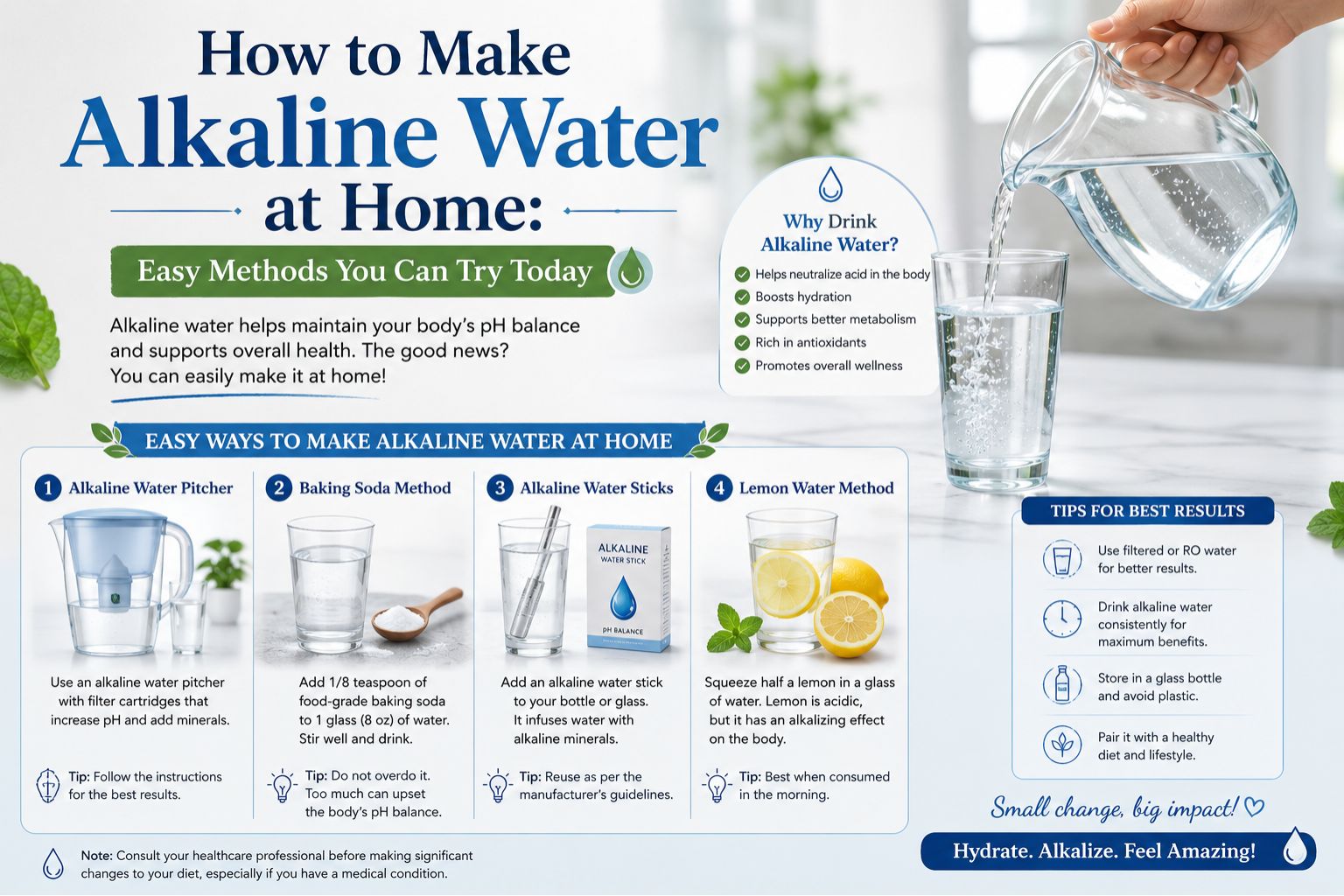


Making alkaline water at home might sound simple—adding lemon juice or baking soda to water is a common kitchen experiment—but many people don't realize that this DIY approach often fails to produce any significant pH change or lasting health benefit. During a recent visit to a Mumbai salon, a client mentioned trying alkaline water for better skin, only to face delayed glow and patchy results after her facial, which is a non-obvious sign that homemade alkaline solutions rarely interact well with salon-grade skin treatments. Honestly, she was so disappointed and I could see why—she'd been drinking this stuff for weeks expecting miracles.
What Alkaline Water Really Means for Your Daily Routine
When you search for how to make alkaline water at home, the first thing to understand is that the pH level of tap water is already around 7, and adding a pinch of baking soda or lemon juice may only shift it temporarily by 0.5 to 1 point—far below the therapeutic range of 8.5 to 9.5 that commercial ionizers claim. One salon observation in Delhi showed that clients who consumed homemade alkaline water before a bridal preparation session reported no difference in skin hydration or shine, which is a common misunderstanding that leads to dissatisfaction with both home remedies and salon outcomes. I mean, if you're spending on a big bridal package, you don't wanna mess it up with some random kitchen experiment, right?
The Reality Check: Does Homemade Alkaline Water Work on Indian Skin?
For Indian skin types, which are often sensitive and prone to pigmentation, the reality of making alkaline water at home is that the baking soda method can cause a burning sensation if ingested frequently, and the lemon juice trick actually makes water acidic (pH below 3) before digestion alkalizes it, so the net effect on skin health is negligible. One non-obvious detail people overlook is that your body's pH is tightly regulated by your kidneys and lungs, so drinking slightly altered water does not change your skin's pH or improve the results of a salon facial. That part really surprised me—I always thought what you drink directly affects your face, but I guess our body is smarter than that.
Common Mistake: Believing DIY Water Can Replace Salon Treatments
The biggest mistake people make when learning how to make alkaline water at home is assuming it can fix issues like dull skin, hair damage, or uneven tone without professional intervention. A major service blind spot is that alkaline water, even if properly prepared at home with a water filter or ionizer, cannot reduce skin sensitivity or repair hair damage from chemical treatments—those problems require targeted beauty services like hydrating facials or keratin-based hair repair treatments. One common misunderstanding is that drinking alkaline water will make your scalp less oily, but in reality, it has zero effect on sebum production or dandruff conditions. Trust me, I tried it for a month and my hair was just as greasy as before—what a waste of effort.
Decision Help: How to Choose Between Home Methods and Salon Care
If you are still considering how to make alkaline water at home, the decision boundary is simple: DIY methods are fine for casual hydration but not for achieving any measurable beauty or health outcome. For real results with Indian skin conditions or hair concerns, you should time your appointments around a service like a hydrating facial or deep conditioning treatment, and only use homemade alkaline water as a neutral drink—not a treatment solution. One event constraint to remember is that during bridal preparation or festival season, avoiding any drastic dietary or water changes—including alkaline water experiments—is crucial to prevent skin reactions on the day of your event. If you need professional guidance, visiting Parlourtime's beauty blogs can help you understand how treatment timing and service dependencies affect your skin.
FAQ
q Is making alkaline water at home safe for daily drinking?
a Drinking homemade alkaline water (using baking soda or lemon) is generally safe in small amounts, but excessive baking soda intake can cause a burning sensation in the stomach or disrupt your body's pH balance, so it's best used only occasionally—never as a daily beauty hack.
q Can alkaline water improve my skin tone or acne?
a No, there is no clinical evidence that drinking alkaline water changes skin tone or reduces acne; such issues are better addressed through a salon facial tailored to your skin sensitivity and a proper skincare routine, not water pH alterations.
q How much baking soda should I add to a liter of water to make it alkaline?
a Typically, 1/4 teaspoon of baking soda per liter of water can raise pH from 7 to around 8, but this level is still far from therapeutic alkaline water and may not offer any measurable benefit for hair or skin health.
q What is a better alternative to homemade alkaline water for beauty purposes?
a A better alternative is to focus on proper hydration with filtered water and pair it with professional treatments; for personalized advice, you can explore the Parlourtime FAQ section to see how services like hydrating facials and hair treatments deliver real, visible results without relying on pH adjustments.