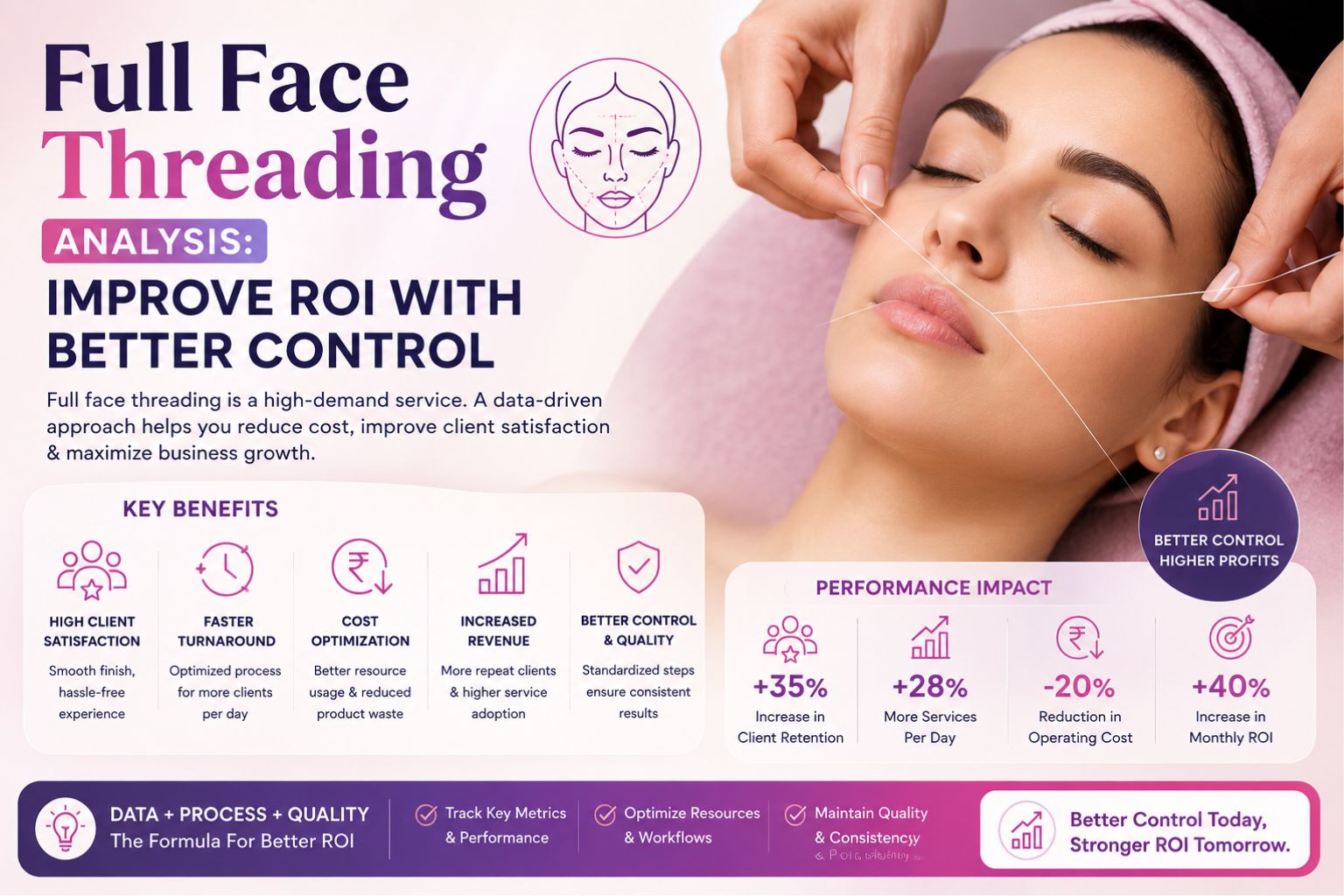


Full face threading remains one of the most requested salon services in India, yet many customers—honestly, me included sometimes—leave feeling that the results just didn't justify the time or cost. The gap between expectation and outcome often comes down to control—like, how well the technician manages technique, pressure, and hair growth direction during the session. Without a clear understanding of what affects the final appearance, customers frequently feel uncertain... uncertain about the value they received, you know? This analysis looks at why full face threading sometimes disappoints and how better control during the service can improve the return on investment for both the client and the salon.
Why Full Face Threading Results Feel Inconsistent
Customers often notice that threading outcomes vary significantly between visits. One session leaves the skin smooth for over a week, while another causes redness, bumps, or patchy regrowth within days—it's frustrating. This inconsistency confuses clients and makes it difficult to decide whether full face threading is worth repeating. The primary factor behind this variation is not really the threading technique itself but the level of control exercised during the service. When the technician adjusts the thread tension, angle, and speed based on the client's skin sensitivity and hair texture, the result becomes more predictable... or at least it should. Without this control, minor issues like hair breakage at the surface rather than root removal become common, reducing the time between appointments and lowering the perceived ROI.
What Actually Influences Full Face Threading Outcomes
Several factors determine whether full face threading delivers satisfying and long-lasting results. Skin condition plays a major role—oily or sensitive skin reacts differently to the friction created by threading compared to normal skin, which I never really thought about before. Hair density and direction also matter; coarse or deeply rooted hair may require more pressure, which increases the risk of irritation if the technician does not adjust accordingly. Additionally, the pre-service preparation of the skin, such as cleansing or avoiding certain skincare products, affects how the skin responds. Clients who rush into threading without considering these variables often blame the service when the real issue is a mismatch between technique and skin condition. A skilled threading session accounts for these differences, which is why results can appear inconsistent across salons or even across visits to the same salon honestly.
Common Mistakes That Reduce Full Face Threading ROI
Many clients assume that more frequent threading automatically leads to better results, but this is often a misconception—I used to think that too. Over-threading, especially when hair is removed before it reaches the optimal length, can lead to increased irritation, ingrown hairs, and uneven regrowth. Another blind spot involves the use of certain skincare products immediately after threading. Active ingredients like retinol, glycolic acid, or strong exfoliants can cause flare-ups when applied to freshly treated skin, making the service appear less effective. Clients also overlook the importance of aftercare—applying soothing ingredients like aloe vera or avoiding sun exposure in the first 24 hours can significantly influence how long the smoothness lasts. These oversights gradually reduce the value of each session, leading to dissatisfaction and a belief that full face threading does not work well for them.
How to Make Better Decisions About Full Face Threading
The decision to continue with full face threading should depend on how the skin reacts over multiple sessions, not on a single experience. Clients should observe whether irritation decreases or remains consistent, whether regrowth timing becomes more predictable, and whether the technician adjusts technique based on feedback. When these conditions improve, threading likely remains a good option. However, if redness, bumps, or sensitivity worsen with each session, it may be time to consider alternative methods such as waxing or professional epilation. Waiting longer between sessions and allowing hair to reach a uniform length before threading can also improve results. In some cases, consulting a dermatologist to address underlying skin sensitivity may be necessary before continuing with facial hair removal services. For those evaluating service timing and salon options, parlourtime provides a way to compare availability and technician experience before booking. The boundary where threading stops making sense is when the discomfort outweighs the smoothness duration—at that point, reassessment becomes essential.
Frequently Asked Questions
q How often should I get full face threading for best results?
a Most clients benefit from threading every two to three weeks, but your personal hair growth cycle and skin reaction should determine the ideal interval.
q Why does my skin turn red after full face threading?
a Redness is a common reaction due to friction and hair removal, but it typically subsides within a few hours with proper aftercare.
q Does full face threading cause hair to grow thicker?
a No, threading removes hair from the root and does not change hair texture or thickness; the appearance of thicker regrowth is usually a perception issue.
q Can I wear makeup immediately after threading?
a It is better to wait for at least a few hours to allow the skin to calm down and avoid clogging pores or causing breakouts.
q How can I make threading results last longer?
a Avoid harsh exfoliants, moisturise gently, and protect the skin from direct sunlight to extend the smoothness period after threading.
q What is the best aftercare for full face threading?
a Applying aloe vera gel or a gentle soothing cream, avoiding heat, and not touching the face unnecessarily helps maintain comfort and results.
q Is full face threading suitable for sensitive skin?
a It can be, but the technician must adjust pressure and technique carefully; performing a patch test before the full session is recommended.
q When should I stop getting full face threading?
a If you experience persistent irritation, ingrown hairs, or worsening skin reactions despite good aftercare, consider switching to another hair removal method or consulting a professional.