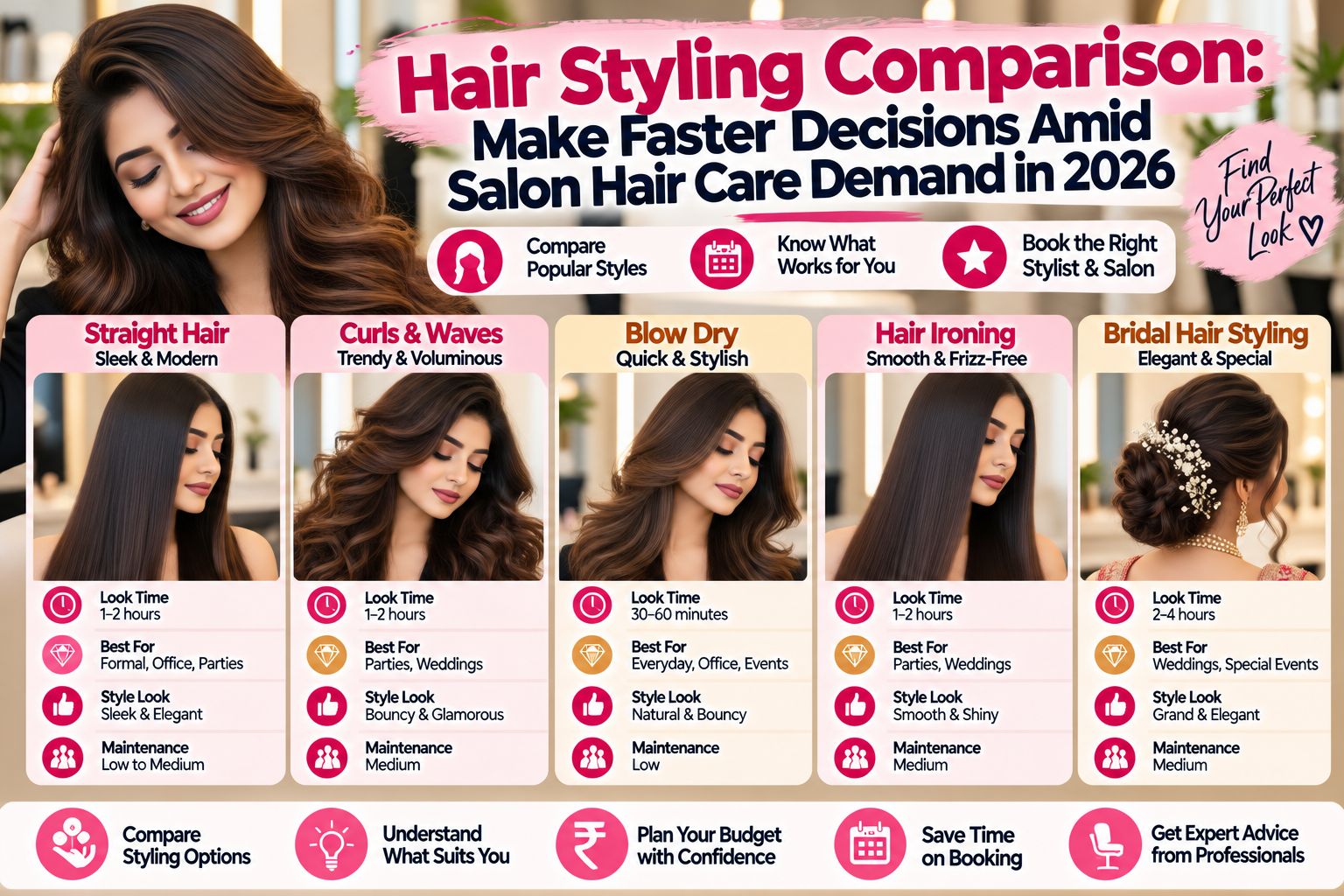


When a client returns within a week saying the smoothness has faded, the usual first reaction is to blame the iron or the product. That reaction rarely fixes the problem, because hair ironing service quality usually breaks down across several small variables at once, and most of them are checked before the iron ever touches the hair. This piece is written for stylists and salon owners who want a repeatable way to find the real cause instead of guessing, so the next booking holds better and the consultation stays honest.
Start the diagnosis at the chair, not the iron
Before checking the tool, check what you recorded about the strand in front of you. Thick, coarse hair and hair with prior color, keratin, or smoothening history respond differently to the same heat setting, so the same routine will not perform equally on two clients sitting side by side. Moisture level matters just as much. Hair that is still damp at the core, or hair that has been stripped dry by a strong cleanser, will not hold the finish for long either way. Ask about wash routine, last chemical service, and how the hair behaves between appointments. If a client cannot recall these details, that gap itself is a finding, because it means the consultation was never completed properly the first time.
Check technique and sectioning before changing products
Most fade complaints trace back to how the hair was sectioned and how many passes each section received, not to the product shelf. Sections that are too thick take heat unevenly, so one part of the strand over-processes while the next stays under-processed, and the result looks patchy within days. Repeating passes over the same section is the other common fault. It can feel like a way to lock in smoothness, but it usually pushes fragile strands toward dryness and split ends instead. Watch how the client's hair is combed between passes and whether the tension stays consistent. Flat iron technique is largely a discipline question, so the practical check is simple: can you name the section size and pass count you used, or was it done by feel alone?
Tool condition is a quiet cause of fading results
Plates accumulate product residue, and residue changes how heat transfers to the strand. A plate that no longer glides evenly can drag, create hot spots, and produce a finish that looks fine on day one and rough by day three. Temperature consistency is the other variable. If the iron is not holding the set temperature, the stylist compensates by slowing down or adding passes, which is exactly the pattern that leads to heat damage. Build a simple routine into the working week. Wipe plates after each client, check the temperature reading against a known setting, and retire a tool once it stops gliding cleanly. None of this is glamorous, but it removes one whole category of guesswork from your heat damage assessment.
Separate strand damage from aftercare failures
Once technique and tool are ruled out, the remaining causes split into two groups. The first is structural damage the client arrived with, where the cuticle can no longer hold a smooth surface no matter how well the service is performed. The second is aftercare that actively works against the finish, such as harsh cleansers, heavy oils applied too soon, or frequent home heat use. The two look similar on the surface, so the separating question is timing. If the finish collapses within two days even after a fresh, well-executed service, treat it as a strand condition issue and recommend professional reassessment before booking again. If it fades gradually across a week, aftercare fit is the more likely gap, and a gentler wash routine with lighter leave-in products is usually enough. Leaving at least two weeks between intense heat services gives the hair room to recover in either case. If you are planning spacing across multiple bookings, the salon FAQs are a reasonable reference point.
Run this self-audit after your next ironing service
The short answer is that most fade complaints come from sectioning and pass discipline, not from the iron or the brand. Run the audit in order and stop at the first failure you find, because fixing a later step will not cover an earlier one.
Confirm the consultation captured texture, moisture level, and chemical history, since a missing record means you are diagnosing blind. Verify section size and pass count were deliberate rather than habitual, because uneven heat distribution shows up as patchy smoothness within days. Check plate cleanliness and whether the tool held its set temperature through the service, as residue and drift both change how heat reaches the strand. Confirm a patch test was offered where the client has sensitive skin or a recent reaction history, since redness or tightness after the service is a stop signal for further heat work. Then review the aftercare you recommended, because if you did not specify a wash routine, the client is guessing. A vendor with a managed-review workflow would call this a service checklist, but on the salon floor it is simply the order in which you check things so the next result lasts longer than the last one. You can also compare how other salons structure maintenance advice in the hair care resources section.
Written by: Parlour Time Editorial Desk
Published: 04 October 2026, 12:24 AM IST | Updated: 04 October 2026, 12:24 AM IST
Powered by: Parlour Time