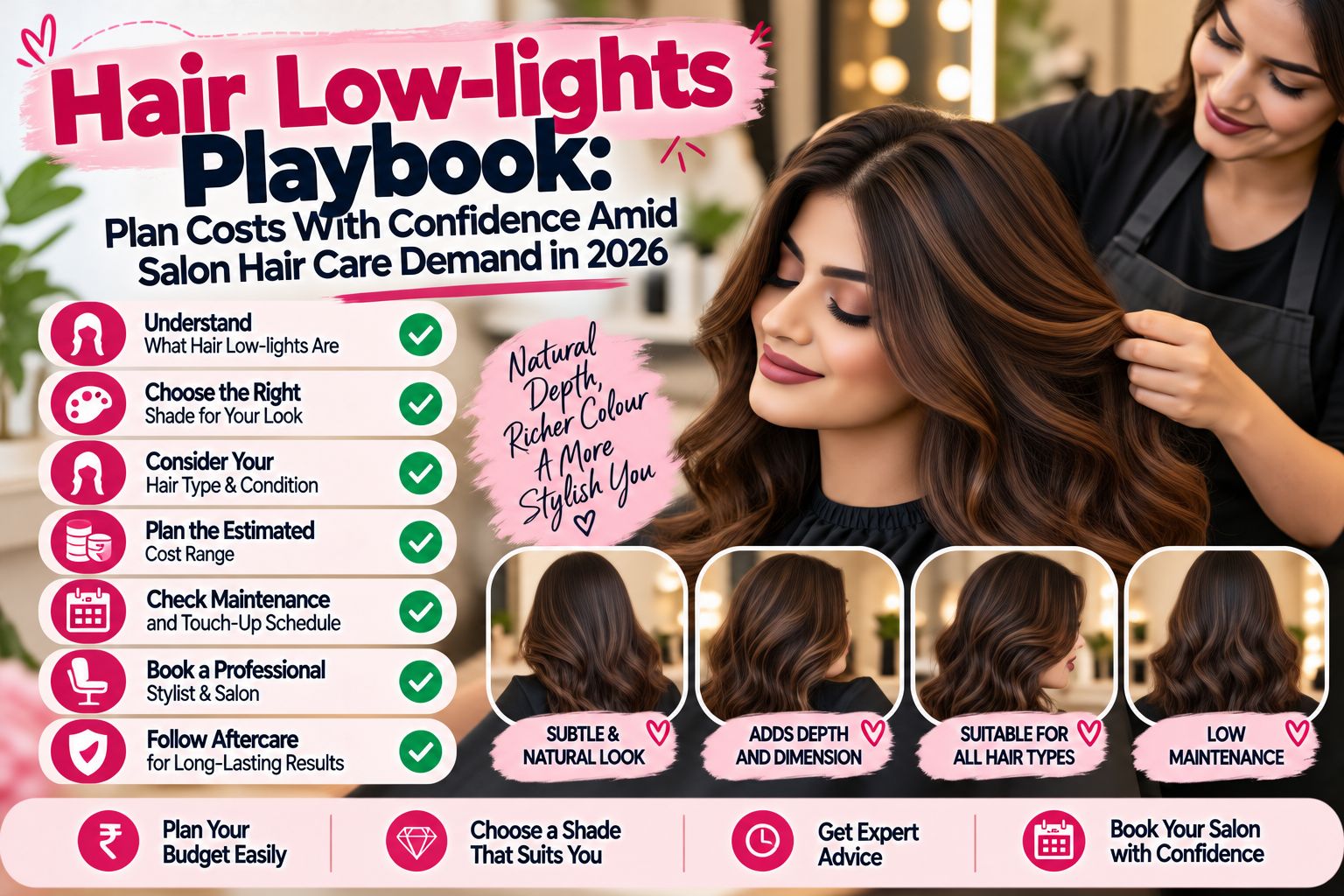


Hair low-lights are strands woven darker than your base shade to add depth, and they sit between a full global color and highlights. The exact problem readers bring to this page is simple: the quote at the salon rarely matches the final bill, and nobody explains why. The practical outcome here is a repeatable way to set a realistic budget for hair low-lights cost, compare quotes line by line, and know when to pause before booking. By the end, you should be able to walk into a consultation and ask the right things, not guess.
What Hair Low-lights Cost Confusion Looks Like During Real Salon Visits
Hair low-lights differ from highlights and global color in one clear way. Highlights lift strands lighter than your base. Global color changes the whole head to a single tone. Low-lights add darker strands for dimension while leaving most of the base intact. Because the placement is selective, the work depends on how much of your head needs sectioning, so a fixed rate card rarely applies.
The uncertainty usually starts at the consultation. The stylist names a figure, and you are not sure whether that covers the application alone or everything that follows. Ask directly whether toner, wash, styling, and aftercare are part of the quote or charged separately. Some salons include these, and some do not, so the only reliable answer comes from the salon in front of you.
A gap between the estimate and the final bill is common enough that you should treat any verbal figure as a starting point, not a total. Ask for the estimate in writing, including what happens if the result needs a correction. That single request removes most of the discomfort.
Why Hair Low-lights Pricing Varies on Indian Hair
Indian hair often runs thick and warm in tone, and many clients arrive with previous color, henna, or chemical treatments already on the strands. Each of these can change how much product and chair time a low-light service needs. Rather than assume a pricing method, ask how the salon builds the quote.
Useful questions include: is the price based on the number of foils, the amount of lightener, or total time? Does the quote change if the hair needs a filler or bonding step before color? Is a follow-up gloss part of the service or a separate visit? Clear answers on these points tell you more about the total spend than any single number.
Length and density matter too. Long, thick hair takes longer to section and uses more product, and most salons reflect that in the quote. This is not a hidden charge; it is a cost driver you can ask about upfront. When a stylist cannot explain the drivers, that is your signal to slow down.
Mistakes That Make Hair Low-lights Feel More Expensive Than Expected
The most common mistake is comparing quotes without comparing what each one includes. One salon may quote only the application, while another folds in toner, wash, and blow-dry. The lower figure is not automatically the smaller bill. Build a short checklist and mark what each quote covers: application, toner, wash, styling, aftercare, number of sessions, and correction policy.
Ignoring the maintenance horizon is another blind spot. Low-lights can fade or shift tone over time, and the refresh timeline varies by hair type, water, and home care. Ask how the salon schedules a refresh and what it typically costs, then treat that as part of the real budget rather than a surprise later.
Two more traps are worth naming. Assuming one session will match a photo exactly can lead to extra appointments and a higher total. Separating the one-time service cost from the maintenance horizon and the aftercare spend gives you a truer picture of what you are committing to.
Practical Decision Points for Planning Hair Low-lights With Confidence
Request a written estimate before booking. Ask what it covers and what it excludes, and keep the reply. If the figure keeps rising with each add-on and the stylist cannot explain the breakdown, pause and get a second consultation instead of repeating the service.
Set your budget in three parts: the one-time service cost, the maintenance horizon you can realistically keep, and the aftercare spend at home. A look you cannot maintain will cost more over a year than a slightly higher initial quote you can upkeep.
Confirm the number of sessions the salon expects. If the target shade needs more than one visit, ask for the cost of each before you start. A two-week buffer before a wedding or festival leaves room for a follow-up if the tone shifts.
Time the appointment so you are not rushing into an event. Color work benefits from a settling period, and a correction is easier to arrange when the calendar is not tight. Salon faqs and beauty service questions on a salon's own site often list these policies, and some readers compare timing and aftercare guidance using hair care resources before booking color appointments.
Common Field Signals and What to Check Next
Discomfort during application is a stop signal, not something to sit through. Tell the stylist right away, ask them to check the product, and let a professional decide whether to continue. Do not try to diagnose the cause yourself.
Uneven or striped placement showing up early usually points to sectioning or foiling technique. Raise it at the next visit and ask how placement will be adjusted before more color is applied.
Tone shifting sooner than you expected can have several causes, from home care to water to the original formula. Ask the salon to review your aftercare routine rather than assuming one reason.
Dry or brittle ends after the service are worth mentioning before your next appointment. Ask whether a trim or a protective step makes sense first, and confirm any added cost in writing.
A bill noticeably above the estimate is a prompt to ask for the line items, not a conclusion about why it happened. If the difference is not explained, treat that as a reason to compare another consultation.
Cost drivers are the factors that change price, not the price itself. Application, toner, wash, styling, aftercare, and the number of sessions are the items to confirm. When any of them stays vague, wait.
Written by: Parlour Time Editorial Desk
Published: 04 October 2026, 12:21 AM IST | Updated: 04 October 2026, 12:21 AM IST
Powered by: Parlour Time