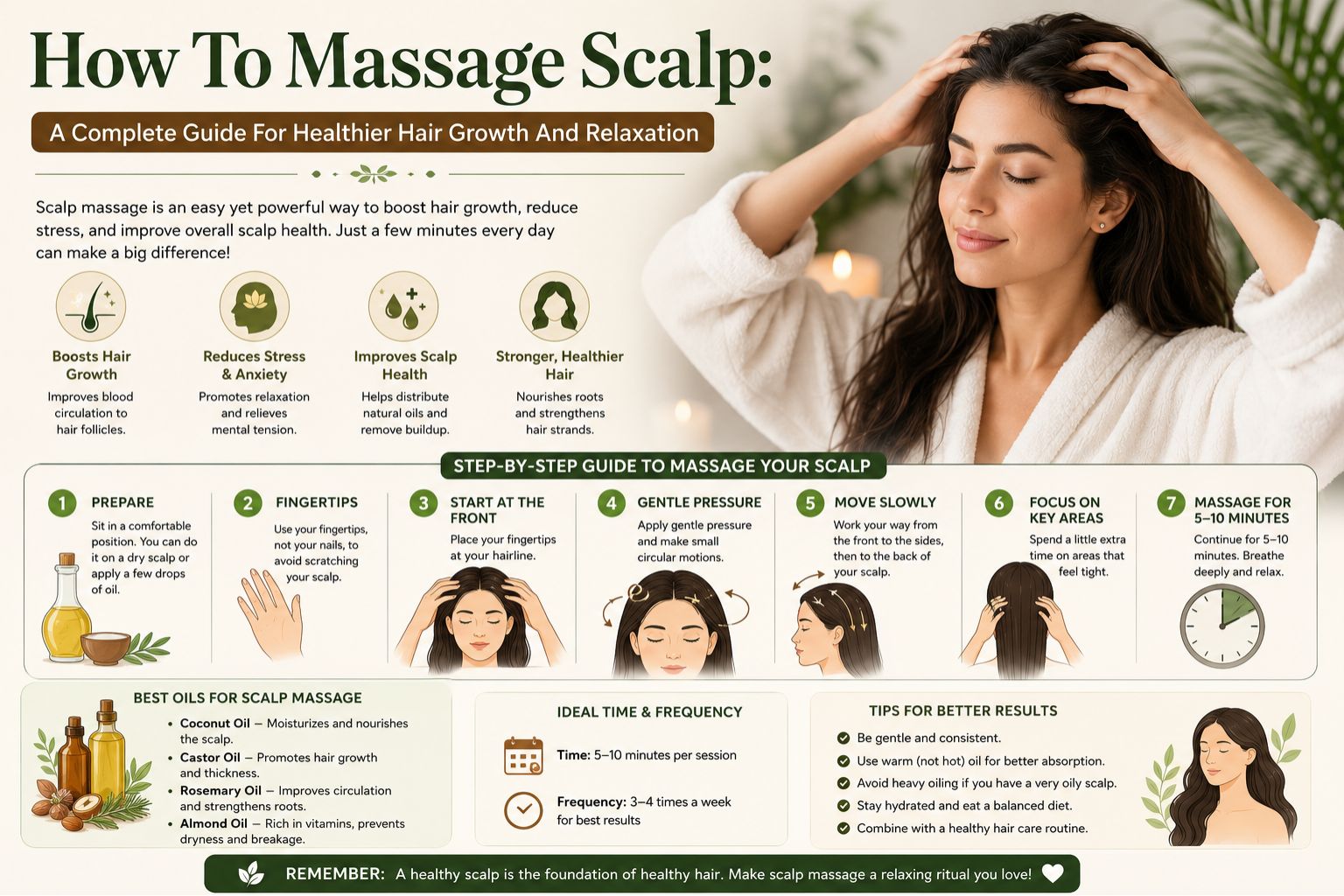


Many people search for how to massage scalp, hoping to boost hair growth and relax after a long day, but without knowing the right technique, you might end up pulling your hair or causing unnecessary friction on your scalp. This is a common salon concern where customers come in with complaints of hair fall or a tight scalp, expecting quick results from a simple massage. But honestly, the reality is that many individuals overlook the need for proper pressure and direction, often rubbing aggressively like they're scrubbing a pan rather than gently stimulating circulation. After a long week, a scalp massage at home can feel like a mini spa treatment, but without understanding the correct method, you could worsen your hair condition or just miss out on the relaxation benefits entirely.
What Scalp Massage Actually Means For Your Hair
When you go to a salon for a salon facial or hair treatment, the therapist often begins with a gentle head massage, which is not just about comfort—it is a technique to improve blood flow to your hair follicles, which can support hair growth. During a real salon visit, the therapist will use their fingertips, not nails, and move in small circles across the scalp. This helps loosen dead skin cells and product buildup that can clog follicles. A non-obvious detail many people overlook is that the massage should last at least 5 to 10 minutes to be effective, not just a quick rub while washing your hair. If you are trying this at home after reading how to massage scalp, start at the base of your neck and work upward, applying only light to moderate pressure—don't go overboard thinking harder is better.
Reality Check: What Actually Works On Indian Hair And Skin
For Indian skin and hair types, which are often oilier and more prone to dandruff, scalp massage must be done carefully. A common observation from salon visits is that clients with skin sensitivity experience redness or itching if the massage is too vigorous, especially when using heavy oils like coconut or mustard oil. The reality is that people assume more pressure means better results, but this can actually lead to hair breakage or even temporary thinning if you are already dealing with fragile strands. A boundary where the service stops working is when you have an active scalp infection or open wounds—in such cases, a massage can spread bacteria and worsen the condition. Instead, focus on gentle, consistent movements two to three times a week, not every single day.
Common Mistake: Wrong Assumptions About Technique And Timing
One major mistake people make when learning how to massage scalp is thinking it is a substitute for a proper scalp cleansing routine. In fact, removing buildup through a targeted hair treatment is often more effective than any massage alone—so don't skip your shampoo. Another misunderstanding is that the results are immediate—reality shows that noticeable hair growth from massage only appears after months of consistent effort, not after one or two sessions. During a salon visit, I have seen clients get impatient with their beauty service timing, expecting thicker hair within weeks, which leads to disappointment and sometimes giving up altogether. The truth is that scalp massage works best when combined with a healthy diet and appropriate hair care products, not as a standalone miracle cure that fixes everything overnight.
Decision Help: How To Choose The Right Timing And Next Steps
If you are planning a scalp massage before a special occasion like a wedding or festival, consider your bridal preparation schedule. Ideally, a gentle scalp massage two to three days before an event can improve blood flow without causing excessive oiliness or fallout on the big day—trust me, you don't want greasy hair when the photographer is clicking. However, if you have an event rush where you need immediate relaxation, a quick 5-minute massage with your fingertips while your hair is dry can calm nerves without disturbing your hairstyle. When the service stops working effectively is if you develop breakouts or excessive scalp flaking—this signals that you need to consult a dermatologist or switch to a gentler method. As part of your skin care routines and overall wellness, integrating a proper technique is worthwhile, and resources on parlourtime can help you understand more about service timing and product choices. Always remember that a scalp massage is a complementary practice, not a replacement for medical advice or professional hair damage repair treatments, especially if you're already losing hair.
FAQ
q How long should I massage my scalp for effective hair growth?
a You should massage your scalp for at least 5 to 10 minutes per session, 2 to 3 times a week. Many people stop too early, but consistency is key for noticeable results—don't expect anything from a 30-second rub.
q Can scalp massage cause hair fall if done incorrectly?
a Yes, aggressive rubbing or using nails can cause hair breakage or temporary shedding. Always use gentle circular motions with your fingertips to avoid damaging the scalp or follicles, and stop if it hurts.
q Will a 2-minute daily scalp massage help with dandruff?
a A short massage alone may not clear dandruff, but it can help loosen flakes before shampooing. For dandruff relief, combine it with an anti-dandruff shampoo and exfoliating scalp treatment—don't rely on just your fingers.
q Should I massage my scalp before or after applying oil?
a It is generally better to massage a clean scalp before applying oil, as this improves absorption. However, if using oil, massage it gently in to avoid product buildup and clogged pores, and consult parlourtime for detailed service guidance if you're confused.