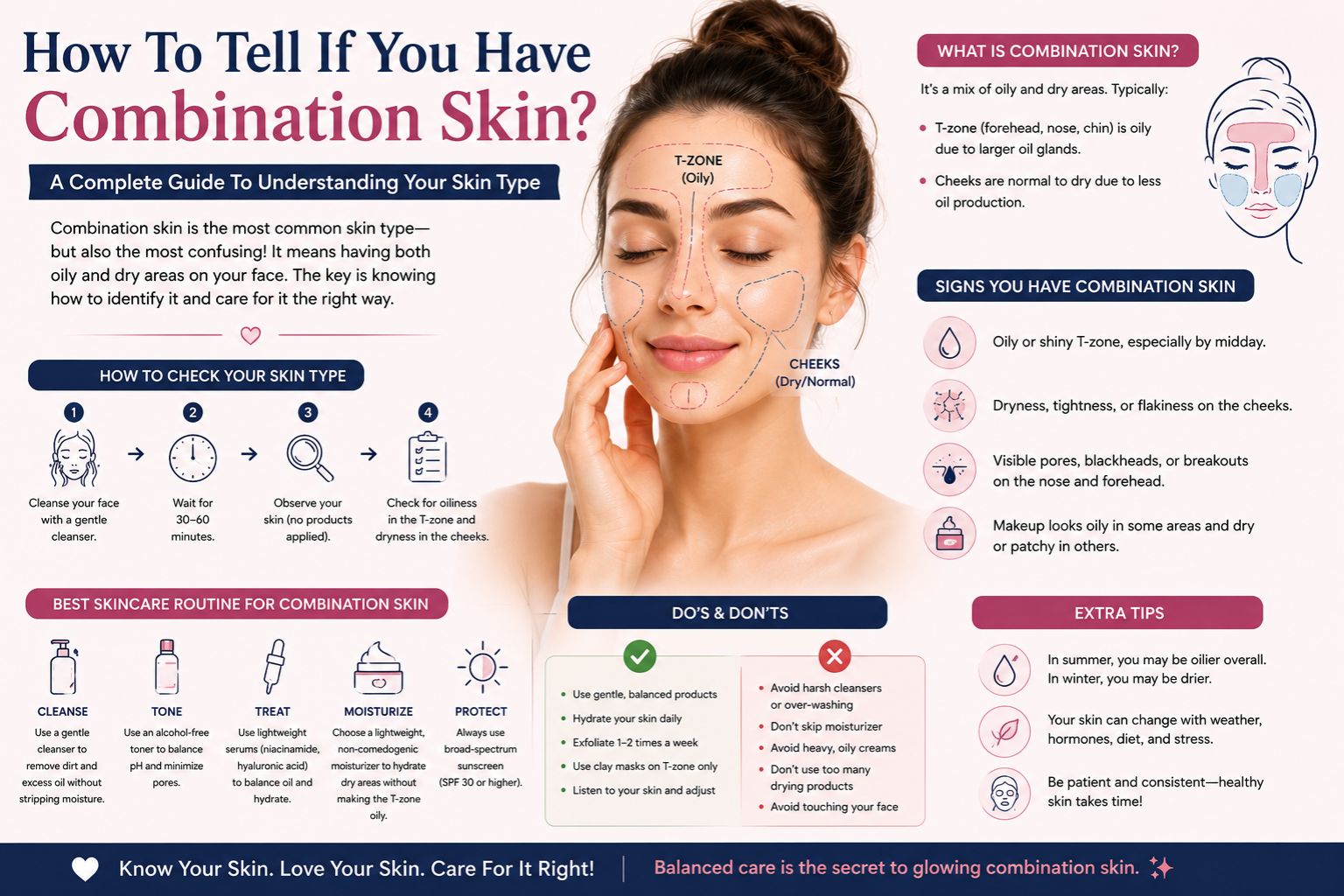


Wondering how to tell if you have combination skin? You are not alone, as this is one of the most common skin types in India, yet it is frequently misunderstood. Many women leave a salon facial thinking their skin is just oily, only to discover dry patches on their cheeks later. The truth is—combination skin means your T-zone (forehead, nose, and chin) is oily while your cheeks and jawline feel normal or dry. This split behavior, honestly, is the primary clue to understanding your skin type.
What Does Combination Skin Actually Look and Feel Like?
When you look in the mirror after washing your face, notice how your skin behaves differently in distinct zones. A common observation at a salon is that the esthetician might comment your nose is shiny but your cheeks look tight or flaky. You might also experience breakouts on your forehead or chin while your cheeks remain clear. This is not a bad skin day; it is a clear signal of a dual skin type. Many people overlook this and treat their entire face the same way, which ends up over-drying the oily parts or not hydrating the dry parts enough—I see it all the time.
The Reality: Why Your Skin Feels Both Greasy and Tight
The science behind combination skin is simple: your sebaceous glands produce different amounts of oil in different areas of your face. In India, humidity and heat can make the T-zone appear even oilier, while pollution or harsh cleansers can strip the cheeks, causing dryness. A non-obvious detail people often miss, and I only realized this myself after a few bad salon sessions, is that your skin care routine itself can create this imbalance. For example, using a strong anti-acne face wash all over your face can make your cheeks feel tight and irritated, while your nose remains greasy. This service dependency is why a single-product approach rarely works—it never did for me.
Common Mistake: Treating Your Whole Face as One Type
The biggest mistake is applying a single lotion or serum to your entire face. If you use a heavy moisturizer meant for dry skin, your T-zone will become congested and shiny. If you use a gel-based oil-control product all over, your cheeks will feel stripped and dull. A common misunderstanding causing dissatisfaction is believing that combination skin means your skin is confused or broken. In reality, it is a natural variation that requires targeted care. For instance, avoid booking a deep-cleansing facial on a day your cheeks feel sensitive—I once did that and my cheeks really burned—so the strong products can cause a burning sensation on already dry areas.
Need Help Deciding Your Next Step? Here Is What To Do
If you are still unsure how to tell if you have combination skin, the best test is the bare-faced test. Wash your face with a mild cleanser, wait one hour without applying anything, and then observe. If your nose and forehead feel greasy but your cheeks feel tight or normal, you have combination skin. This simple timing constraint helps you avoid confusion after a salon visit. Understanding this boundary is essential because no single service or product works equally well on both zones. For more personalized guidance, consider exploring resources on parlourtime to understand beauty service timing and skin routines better.
FAQ
q What is the quickest way to identify if I have combination skin?
a The quickest way is to observe your bare face one hour after washing. If your T-zone looks shiny but your cheeks feel dry or normal, you likely have combination skin.
q Can my skin type change from oily to combination over time?
a Yes, factors like weather changes, hormonal shifts, and even your skincare routine can shift your skin from purely oily to combination. This is very common in India during the transition from summer to winter.
q Is it possible to have combination skin that feels oily everywhere?
a No, true combination skin has distinct oily and dry zones. If your entire face feels oily, you likely have oily skin. The presence of tight or flaky patches on the cheeks is a key differentiator.
q How should I choose a salon facial if I have combination skin?
a Always tell your esthetician exactly which parts of your face are oily and which are dry. Request a custom facial that uses different products on the T-zone versus the cheeks to avoid unbalanced results.