

Monsoon humidity has a way of making cracked heels feel even more ragged, and sure, the idea of a quick salon fix is tempting. But here's the thing—actually trying to heal skin when it's constantly damp? That's a whole different story.
What a "Medicated" Pedicure Actually Means Here
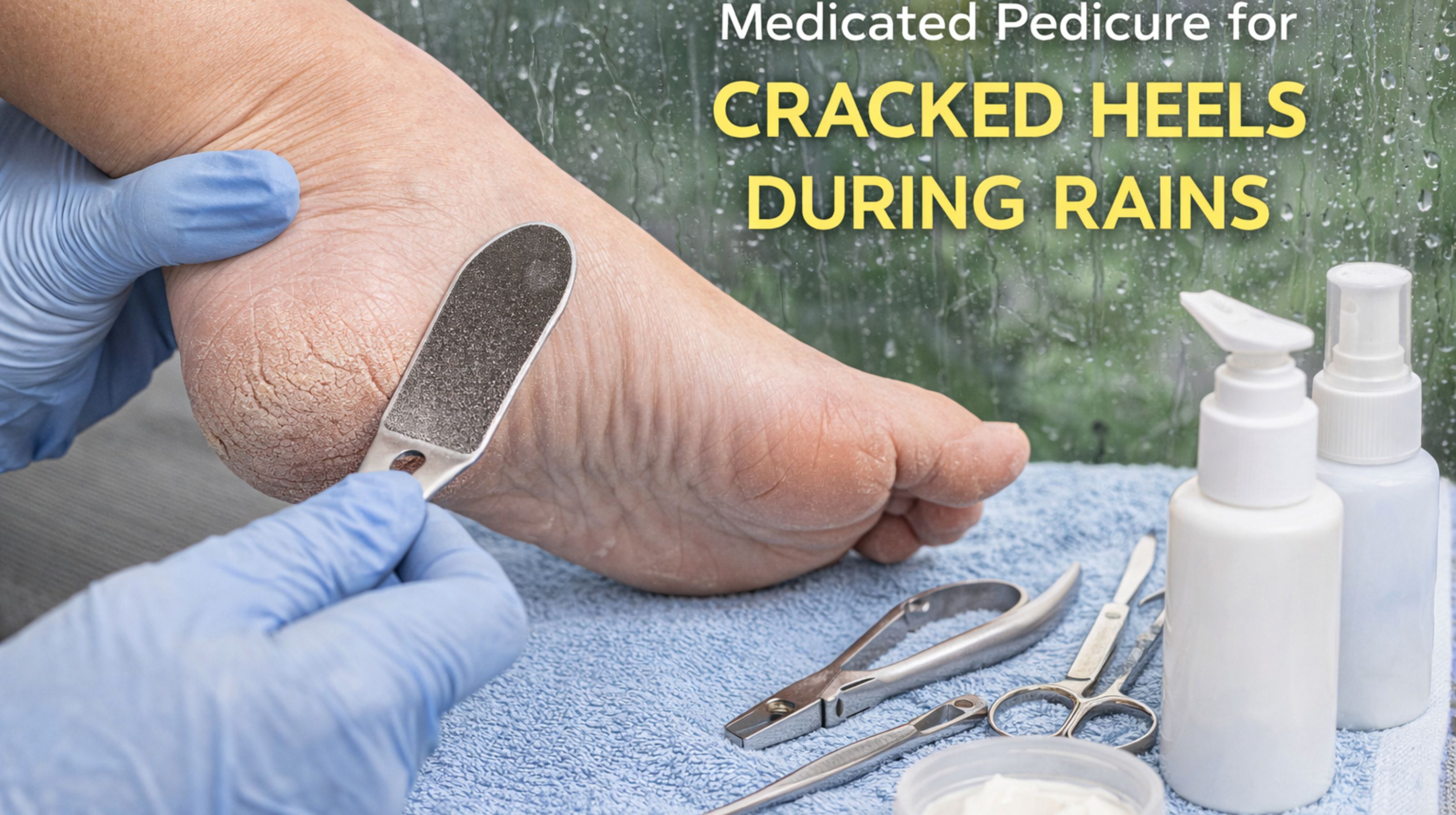
Don't think of it as just a fancy polish change. In reality, it's a treatment where they use stronger creams, usually with urea or salicylic acid, and the filing is more aggressive. They're working on skin that's already soft and waterlogged from the humidity, which allows them to go at the calluses harder than they ever would on dry feet.
The Reality of Healing Cracked Skin in Humidity
You'll get that immediate smoothness from the filing, of course. But the real problem is that damp skin macerates—it breaks down easily. So if your aftercare cream gets washed off in the next rain shower, new cracks can form almost as fast as the old ones were filed away. It's a frustrating cycle I've watched people get stuck in.
The Common Mistake with Wet Weather Foot Care
There's a common misunderstanding that softer skin from the rain means it's "easier to fix." That line of thinking often leads to over-filing, which just strips away the skin's protective barrier. Then, once your feet dry out a bit between showers, you can end up with deeper, more painful cracks than you started with.
When This Makes Sense Versus When It Doesn't
Look, a medicated pedicure can be a sensible jumpstart if your cracks are severe and painful, and you can genuinely commit to keeping your feet completely dry and slathered in cream for a solid 48 hours afterwards. But it's probably a waste of money if you know you'll be in wet shoes every day. Those active ingredients just won't have a stable, dry environment to actually do their job.
FAQ
Will the cracks come back faster in the rainy season?
Usually, yes. That constant back-and-forth between wet and dry weakens the skin's surface, so re-cracking is likely unless you're religious about your barrier cream routine.
Is it more painful during the rains?
It can be. If the fissures are deep and have been exposed to dirty water, the filing and the medicated creams might sting more on that sensitized skin. It's a detail a lot of salons don't think to mention.
Can I just use a foot peel instead?
I'd steer clear of chemical foot peels during monsoon. The ongoing dampness can really mess with the controlled peeling process, and it raises the risk of infection or just patchy, uneven results.
What's the most important aftercare step?
Keeping your feet absolutely dry right after the treatment. The practical step everyone seems to skip? Making absolutely sure your feet are bone-dry—especially between the toes—before you apply a thick medicated ointment and put on cotton socks. Even when it's muggy out.