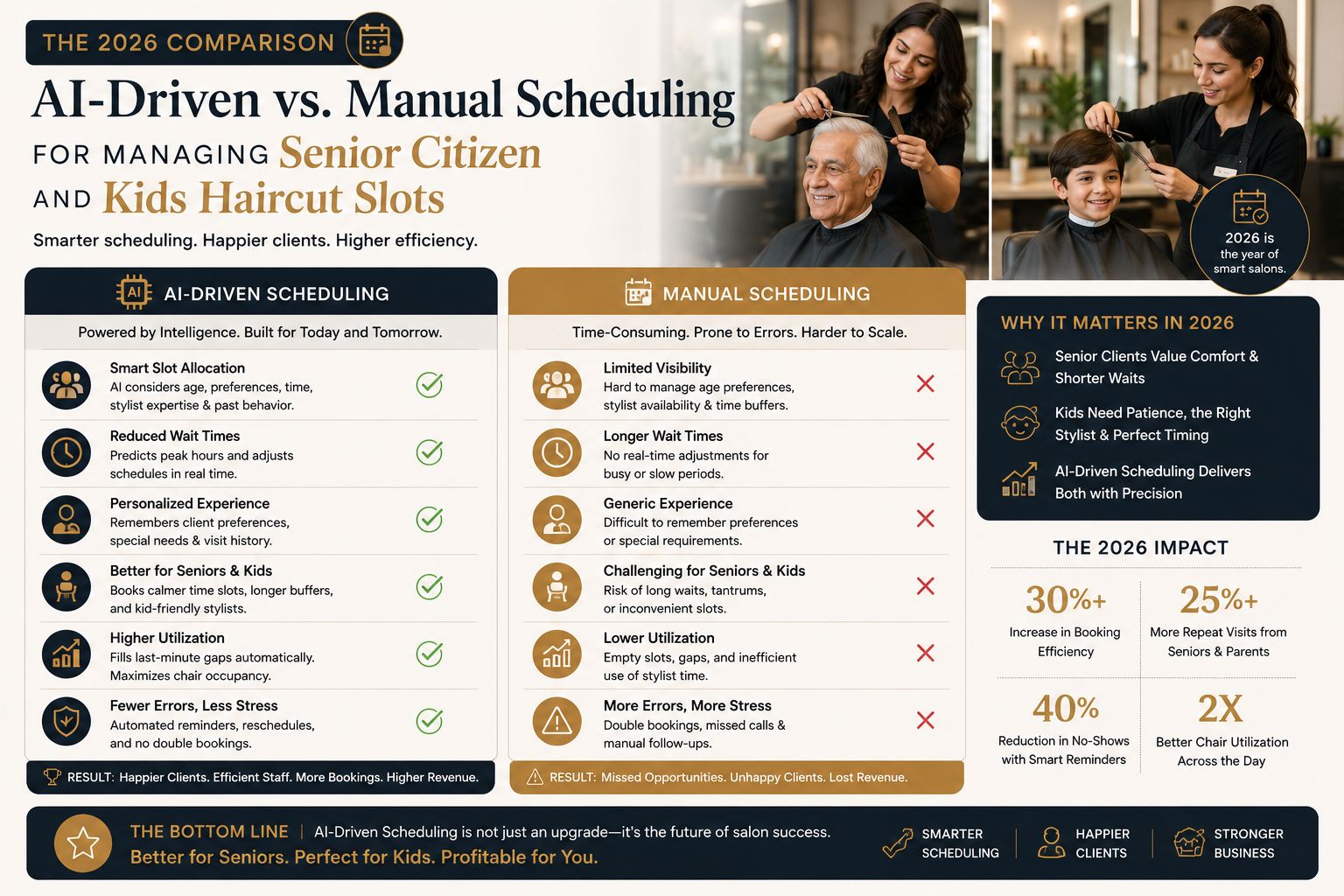


Managing haircut slots for senior citizens and children in a busy Indian salon... honestly, it often feels like chaos. You book a slot manually, but arrive to find the stylist is running an hour late or the chair is double-booked for a keratin treatment—and you're just standing there with your toddler. This comparison highlights why clinics and salons are shifting from manual booking to AI-driven scheduling in 2026 to avoid such stress.
What Does Scheduling for Seniors and Kids Actually Mean?
Booking a haircut for a senior citizen or a child isn't just about picking a time, you know. Seniors may need a quieter environment and a slower pace, while kids often require short, distraction-free slot durations. Manual scheduling often fails to account for these specific service blocks—like, it just doesn't think about it—leading to rushed treatments or uncomfortable waits.
Reality Check: Why Manual Booking Fails for Family Slots in India
In a typical neighbourhood salon, the receptionist juggles walk-ins and phone calls for hair smoothening and basic cuts simultaneously. A common misunderstanding is that a 30-minute slot works for everyone. In reality, a child's first haircut might require a 45-minute window for calming down, while a senior might need extra time due to skin sensitivity or mobility issues. Manual systems miss these non-obvious details, causing slot conflicts that leave you frustrated.
Common Mistake: Overlooking Service Boundaries in Scheduling
Salon owners often assume a single booking software handles all needs—but that's not really true. Manual scheduling breaks down when a senior citizen's appointment overlaps with a bridal preparation slot. Another hidden mistake is ignoring that children’s cuts cannot be grouped with chemical services like hair smoothening in the same chair sequence. This boundary leads to dissatisfaction when the service stops working because of timing mismatches—you've seen it happen, right?
Decision Help: How to Choose Between AI-Driven and Manual Scheduling
For families booking haircuts for both grandparents and toddlers, evaluate the slot conflict rate. AI-driven systems automatically consider service type, child-friendly time blocks, and senior citizen preferences. Manual booking requires constant human oversight—like, someone has to keep an eye on it all the time. If you are deciding, track how often a single appointment is missed or delayed. You can explore more on service timing strategies on Parlourtime blogs for real-world examples. For deeper clarity on common scheduling pitfalls, check the Parlourtime FAQs.
FAQ
q Why do senior citizens face longer wait times for haircuts?
a Manual booking often fails to reserve extra time for slower service due to skin sensitivity or reduced mobility, causing delays.
q Is AI-driven scheduling safe for managing kids' haircut appointments?
a Yes, AI can block shorter, distraction-free slots and avoid double-booking with chemical services, reducing event rush anxiety.
q Can manual scheduling handle both senior and child appointments together?
a Only with full-time supervision; manual slots often clash when one stylist is assigned back-to-back, leading to slot conflict.
q What is the common misunderstanding that ruins family salon bookings?
a Many salons overlook that kids need a dedicated chair sequence separate from adults, which AI systems like parlourtime can automate.