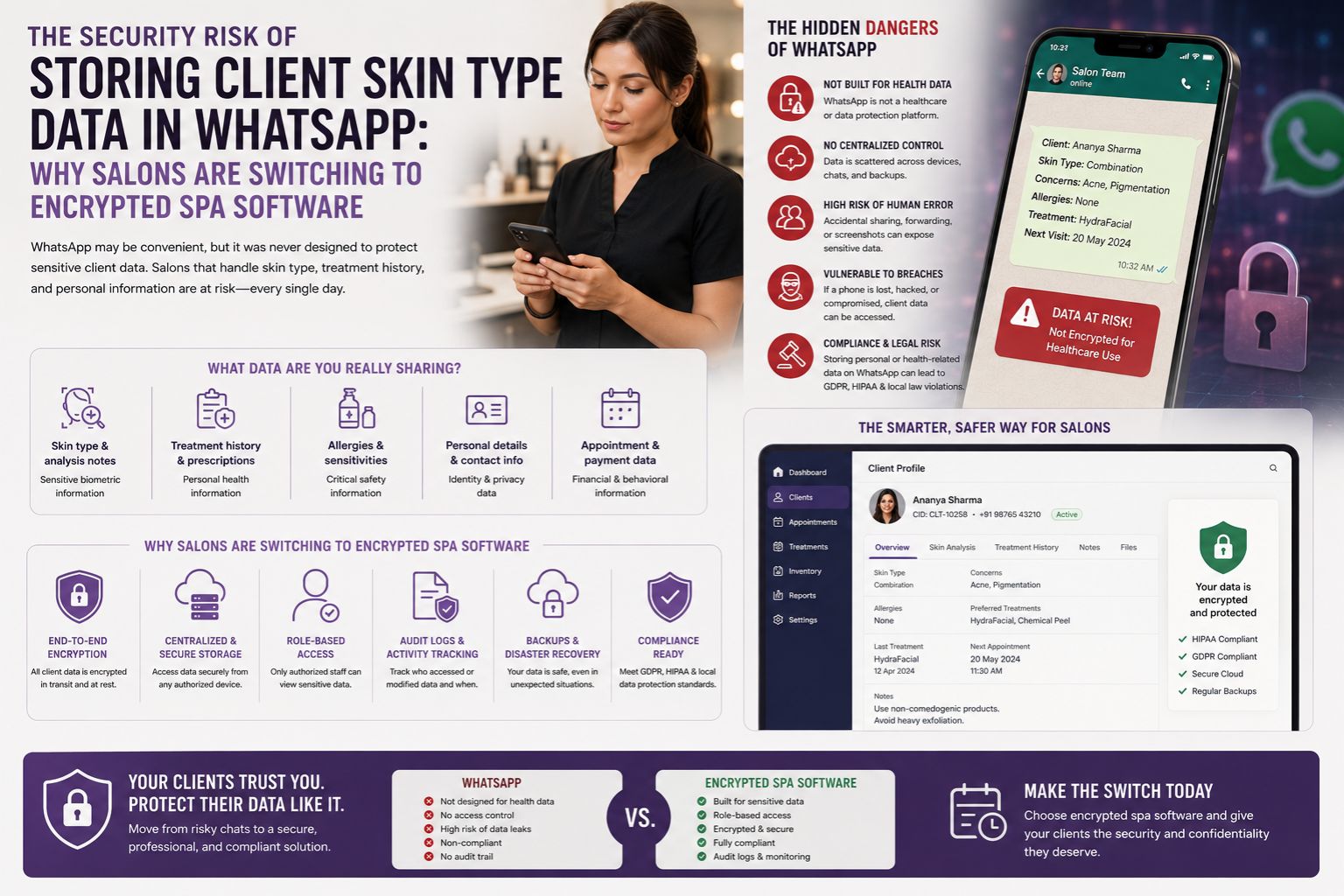


Many salon owners in India unknowingly expose sensitive client skin type data by using WhatsApp for booking and record-keeping. While convenient, storing treatment histories and allergy notes in unencrypted chat threads creates a real data breach risk that most beauty professionals don't fully consider until—you know, after an incident actually happens. Then it's panic time.
Why WhatsApp Falls Short for Client Data Security
WhatsApp's end-to-end encryption protects messages in transit, sure, but once a message with client skin type data is saved on your phone or computer, that protection ends. Like completely. Anyone with physical access to your device sees full treatment records, skin sensitivity notes, and allergy details without any additional security layers in place. Your phone is basically an open diary.
What Actually Happens When Skin Data Is Leaked
Indian salons have reported situations where a technician's stolen phone exposed decades of client skin condition records. One Mumbai salon discovered that a former employee had exported entire WhatsApp conversations containing client photos and skin reaction histories to personal devices—creating a permanent privacy violation that could not be undone. Imagine explaining that to your regular client who trusted you with her rosacea history.
The Mistake of Relying on Consumer Apps for Professional Records
Salon owners often overlook that WhatsApp groups and individual chats mix client data with personal conversations, marketing broadcasts, and supplier messages. This makes it nearly impossible to properly delete or isolate sensitive information when a client requests their data to be removed, violating emerging digital privacy expectations in India's beauty industry. It's just messy, honestly.
How Encrypted Spa Software Protects Client Trust
Switching to dedicated encrypted spa software allows salons to store skin type data, treatment history, and allergy information within a secure system that requires individual login credentials for each staff member. This ensures that only authorised technicians access client records, and all data remains encrypted both during transmission and while stored on servers. No more relying on "hope he doesn't scroll through my chat."
FAQ
q Can WhatsApp really expose my clients' skin type data to hackers?
a If your phone is lost, stolen, or accessed by someone with device credentials, all WhatsApp messages containing skin type data become readable without additional password protection. It's that simple.
q Is it legal to store client medical notes like skin allergies on WhatsApp?
a While not explicitly illegal in all Indian jurisdictions, it violates emerging data protection principles and client trust expectations, especially when clients expect professional confidentiality from their salon. You kind of know it's wrong, right?
q How do encrypted spa software systems handle existing WhatsApp client records?
a Most encrypted platforms offer data migration tools that transfer client names, skin type notes, and treatment histories from WhatsApp exports into secure, access-controlled databases with proper encryption. So you can clean up your act without starting from scratch.
q What is the first step for a small salon to move away from WhatsApp data storage?
a Begin by auditing all existing WhatsApp chats for client skin type data, then choose encrypted spa software that offers a free trial for small teams, allowing you to test security features before full migration. Many salon owners find parlourtime's encrypted booking system a practical starting point for securing client records.