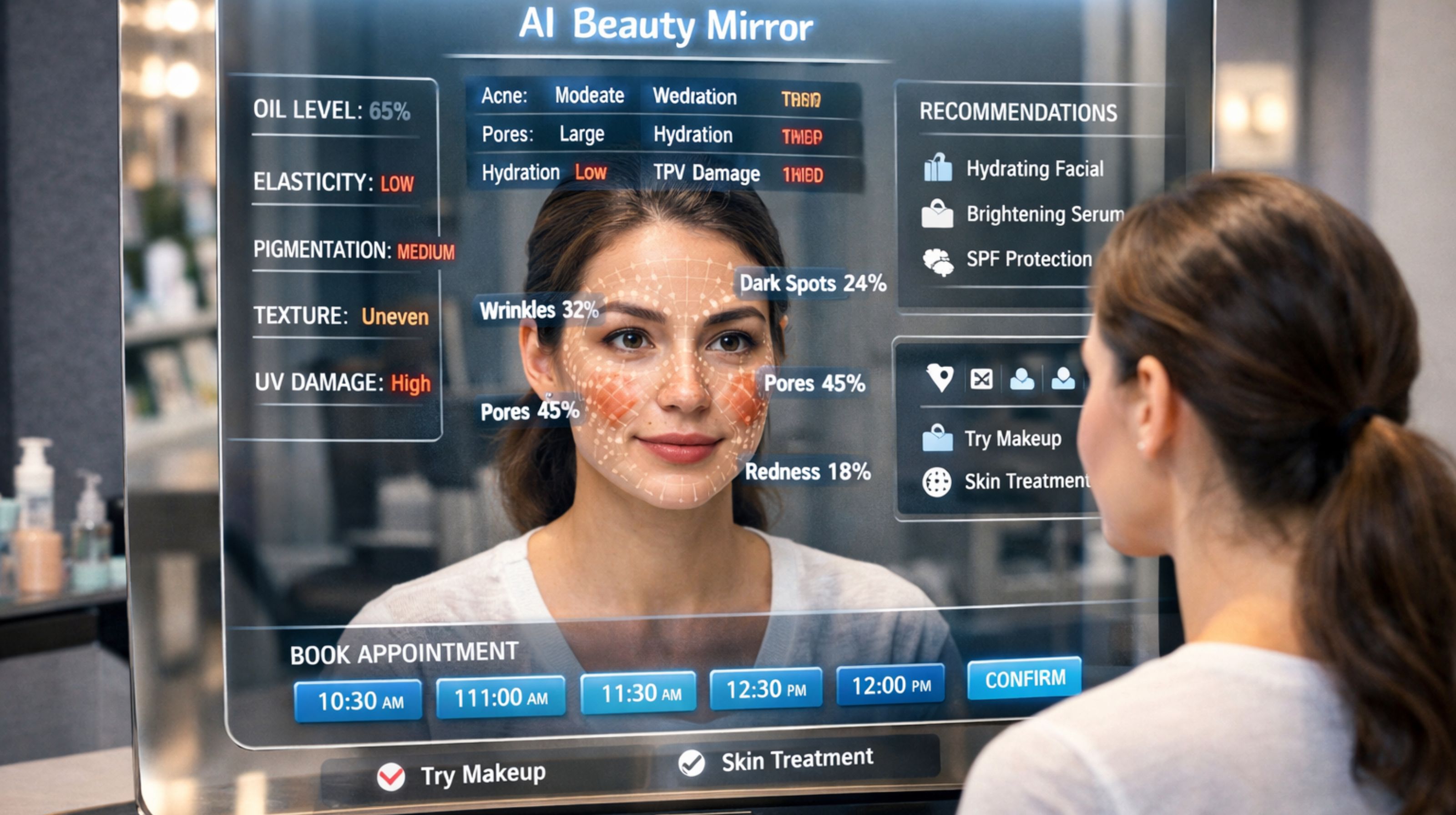


You see that high-tech mirror and you just... wonder. It looks impressive, but will it really get my skin? Indian skin has its own things, you know—the pigmentation, the oiliness in this heat. They promise it's personalized, but what if it's just a show? A fancy thing they do before giving everyone the same hydrating facial. I want to believe it helps, but I also don't want to pay extra for a printout that gets my treatment completely wrong. That worry is real when you're booking.
What an AI skin diagnostic actually does in a real salon
Okay, so in most salons here, it's not a doctor. It's a tool. It takes pictures with special lights to look at what's on the surface—pores, dry patches, that kind of thing. Then the person doing your facial looks at the report, but they also look at you and ask questions. Sometimes it feels a bit... obvious. The machine says "you have texture" and you think, yes, I know, I can feel it. But here's something I didn't realize: it's a snapshot of that exact moment. If you came in after being in the sun or skipping your moisturizer, the reading can be totally off. So that "high dryness" score might just be because you took an auto-rickshaw to the salon.
The reality of AI analysis on pigmented and textured Indian skin
They say the tech is trained on all skin types, but I have my doubts. With our deeper tones and common issues like melasma or post-acne marks, does it really see everything properly? What usually happens is the technician uses their own eyes and experience. They might see the AI flag "wrinkles" on someone young and know it's probably just temporary dehydration lines, not actual aging. The big limit is it can't see *inside*. For things like hormonal acne or real sensitivity, it just sees the redness on top. You'd need a dermatologist for the root cause. It's good to remember that. For more on how to think about salon services, you can look at some blogs.
The risk of trusting the scan over your own skin's signals
This is the scary part. If you and the technician treat the AI report like a final verdict, you could end up in trouble. Imagine it suggests a strong peel because it sees "dullness," but your skin is actually sensitive and fragile that week. The mistake is thinking this machine will *fix* you. It doesn't cure anything; it just gives some numbers for that day. The real risk is if the person doing your facial doesn't double-check by actually touching your skin. They might go ahead with a treatment full of active ingredients that leaves you red and burning, not glowing.
How to decide if the AI diagnostic is right for your next appointment
I think the key is to use it to start a talk, not end one. Before you even sit for the scan, be clear in your own head about what's bothering you. Maybe even write it down. After you get the results, ask the technician to feel your skin. Ask them, "Do you agree with what it says here? Why?" Make it a conversation between their experience and the machine's data. That's how you get somewhere good. Places like parlourtime can help find professionals who know how to use these tools properly, not just follow them blindly.
FAQ
q Is the AI skin scan safe for all skin types?
a It should be, since it's basically a camera. But if your skin is very inflamed or you have rosacea, those bright lights might sting a bit. Just tell your technician if your skin is super sensitive that day.
q How accurate is it for detecting sun damage on brown skin?
a It can pick up on dark spots and uneven tone pretty well. But the deeper damage, the kind that changes the skin's feel over years, or telling apart different types of brown spots... that might not be so clear. The system might just lump it all together as "pigmentation."
q Will the scan work if I'm wearing makeup or moisturizer?
a No, it won't work right. Your face needs to be completely clean. They'll usually give you a cleanser to use first. If there's any product left, it might say your skin is oilier or drier than it really is.
q Can the AI diagnostic tell me which facial is best?
a It can point to a direction, like "you need hydration" or "brightening." But the final call? That has to consider how your skin is feeling now, the weather, and what the technician sees and feels. It's one piece of information, not the whole answer. If you have more questions, our FAQs might have something.