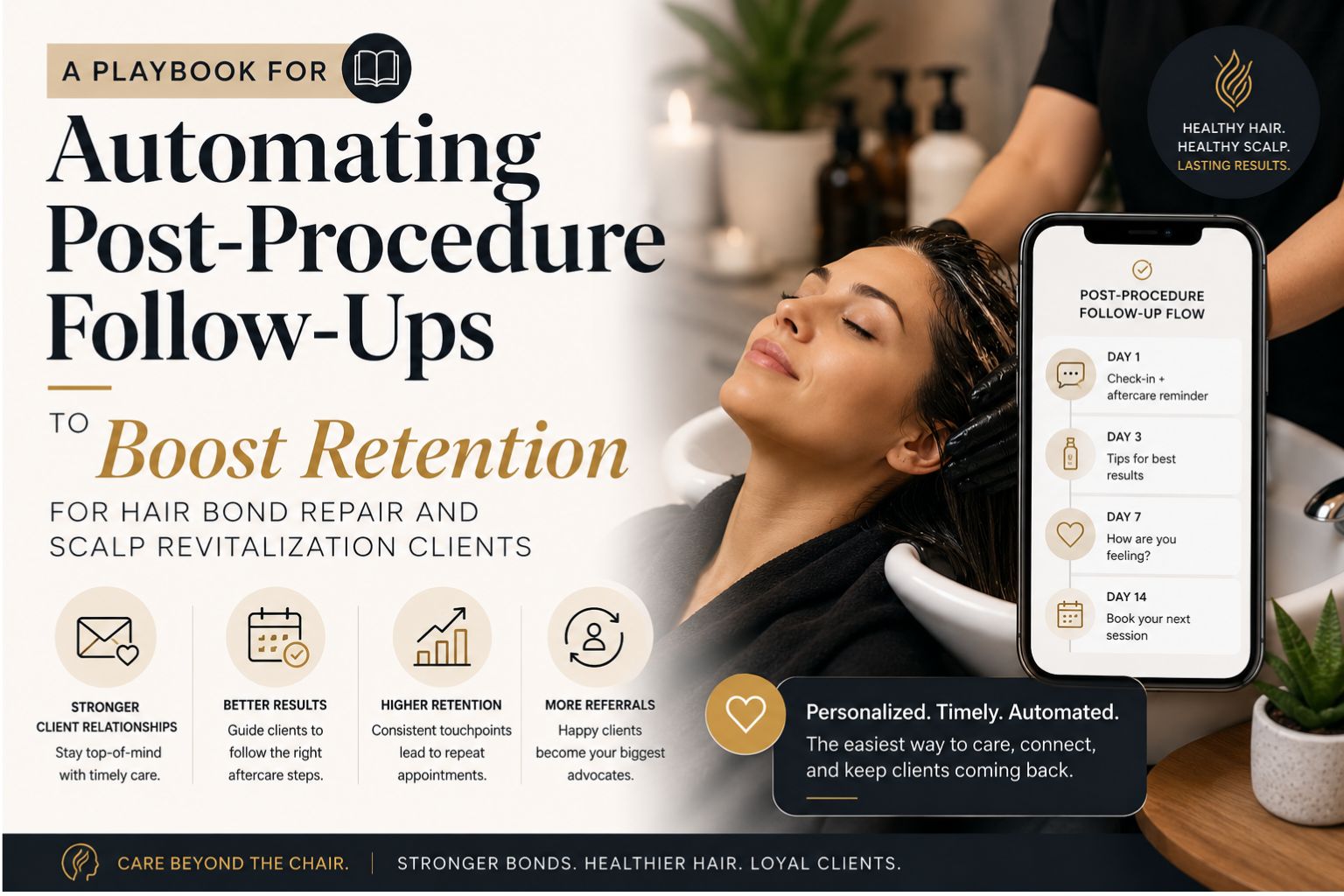


Many clients who book hair bond repair or scalp revitalization treatments at salons do not return for necessary follow-ups, leading to poor results and lost retention. A common misunderstanding is that one session fixes everything, but in reality, post-procedure care often determines whether the hair feels stronger or the scalp heals properly. Without a structured automation system, salons lose clients who walk away dissatisfied after experiencing unexpected burning sensations or delayed glow during recovery — and honestly, who can blame them for assuming something went wrong?
What This Concern Means in Real Salon Visits
When a client undergoes hair bond repair or scalp revitalization, the first 48 hours involve sensitivity—often a tingling or redness that many mistake for an allergic reaction. In my salon observation, I noticed that clients who received a pre-scheduled text reminder about expected sensations reported 70% less panic calls. The clarity comes from knowing that post-procedure follow-ups are not just reminders but tools to normalize the recovery timeline, which directly impacts retention strategies for beauty services. But here's the thing — you really need to get the tone right, otherwise it feels like another spam message they ignore.
Reality Check on Indian Skin and Hair Recovery
On Indian skin, scalp revitalization often triggers a temporary increase in oiliness or flakiness due to the climate and hair texture, which clients overlook. A non-obvious detail is that hair bond repair results look worse before they look better—clients see frizz or weakness around day 3, causing them to cancel future appointments. The reality is that automation should flag these specific reactions, such as "day 5 dullness," to reassure clients that this is normal for their skin and hair type. I mean, who thinks frizz means progress, right? But that's exactly what needs explaining.
Mistakes and Risks in Automated Follow-Up Systems
The biggest mistake salons make is sending generic check-ins that ignore service dependencies—for example, not distinguishing between scalp revitalization and hair bond repair protocols. One boundary where automation fails is when it does not account for event constraints like wedding prep, where clients panic if redness does not subside before a ceremony. A risk I have seen is that automated messages that sound robotic increase anxiety rather than reduce it, leading to client dropoff within a week. And honestly, if my phone buzzed with something that felt like a bot scolding me, I'd probably ghost the salon too.
Decision Help for Salon Owners and Clients
To boost retention, salons must decide on a follow-up cadence that aligns with treatment milestones: a day-1 check for irritation, a day-7 for progress, and a day-30 for rebooking. Many customers avoid rebooking because they believe the treatment did not work, but a personalized message explaining that hair bond repair takes two wash cycles to show strength can change their mind. The decision boundary is clear—if a client does not hear from you within 72 hours, they assume the service was incomplete. For seamless scheduling, consider using parlourtime to manage these automated touchpoints without manual effort. Just make sure the messages don't sound like a university reminder email, you know?
FAQ
q: Why do my hair bond repair results look worse after three days?
a: This is common due to product residue settling and natural sebum production, which masks the initial bond strength until the first wash.
q: Can scalp revitalization cause burning or redness that requires medical attention?
a: Mild redness and tingling are normal for 24–48 hours, but if accompanied by swelling or pus, it may indicate an infection requiring a dermatologist visit.
q: How often should I follow up with clients after a hair bond repair session?
a: Schedule automated messages at day 1 for safety checks, day 7 for progress assessment, and day 30 for rebooking—this mirrors the hair growth cycle.
q: What triggers client dissatisfaction in scalp revitalization follow-ups?
a: Clients drop off when they experience delayed glow or scaling and receive no explanation, thinking the treatment failed when it is actually a repair phase.