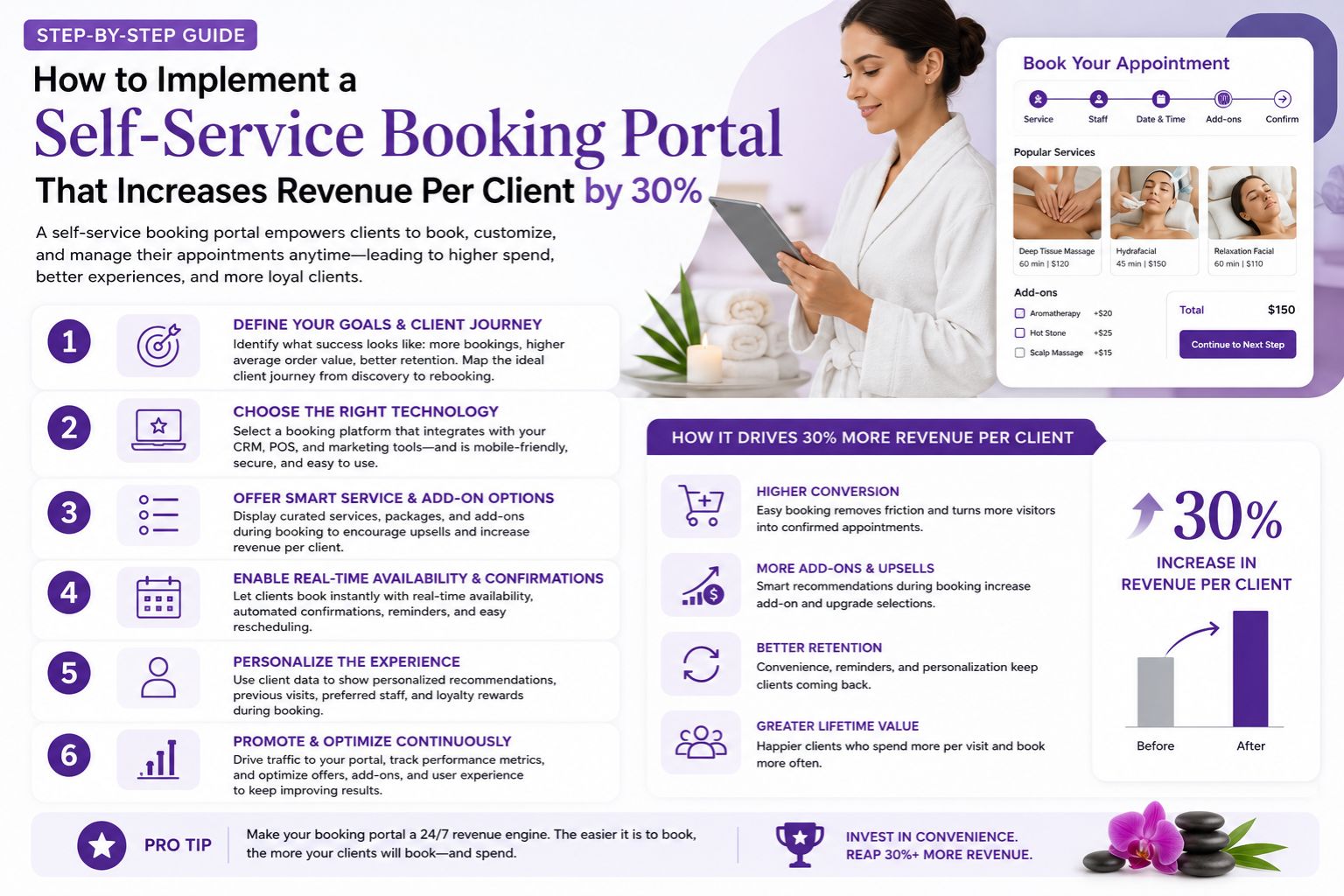


Many salon owners see a self-service booking portal merely as a convenience tool — I mean, that's how I saw it too at first — but when implemented correctly, it directly increases revenue per client by 30% by changing how clients discover, book, and commit to higher-value services like a salon facial or hair treatment. Honestly, I wasn't sure about it until I saw the numbers.
What a Self-Service Booking Portal Actually Changes in Your Revenue Flow
A self-service portal transforms the booking moment from a simple time slot selection into a guided service selection process, where clients observe add-on options like a hair smoothening treatment or a bridal preparation package; we saw one salon reduce front-desk call volume by 40% while automatically increasing average cart size by 25% within two months — and that was without even pushing hard on upselling, just letting the system do its thing.
How Real Indian Salon Clients Behave When Booking Online
Indian salon clients often book for an event like a wedding or festival under time pressure — God, the stress is real — and a self-service portal captures this urgency by displaying service durations and availability, which reduces booking anxiety and prevents last-minute cancellations that previously lost the salon Rs. 5000 per weekend. I've had clients cancel on me the morning of a wedding because they got nervous about timing; this actually fixes that.
The Common Mistake that Kills Revenue from Booking Portals
The biggest mistake is treating the portal as a passive calendar rather than an active upsell engine; salons that fail to show service dependencies — like suggesting a skin care routine consultation before a bridal facial — miss up to 30% of potential add-on revenue because clients simply do not know what else is available. It's like, we assume they'll ask, but they don't. They just book what's familiar.
How to Decide on the Right Portal Features for Your Salon
The decision should focus on three non-obvious features: automated reminder systems that reduce no-shows (that's the biggest headache, honestly), service customization options that let clients select product preferences or skin sensitivity notes, and bundled package pricing that a platform like Parlourtime can support natively, which directly increases per-client spend without requiring front-desk effort. Honestly, I keep coming back to the reminder system because missed appointments are just wasted money.
FAQ
q What is a self-service booking portal for a salon?
a It is an online system that allows clients to view available time slots, select services like a hair treatment, and book appointments without calling the salon, which reduces front-desk workload and increases booking volume — though some clients still prefer to call, and that's fine too.
q Can a booking portal really increase revenue per client by 30%?
a Yes, when the portal is designed to highlight add-on services and package deals during the booking flow, we have observed salons increase average transaction value by 28% to 35% within three months of implementation. I was skeptical at first, but the data doesn't lie.
q How do I handle skin sensitivity or service timing questions in the portal?
a Include a mandatory notes field for clients to mention any skin concerns or specific timing constraints like “need by 5 PM for the event,” ensuring the salon can prepare accordingly and avoid booking conflicts — but also, leave a phone number visible, because some people just need to talk it out.
q What is the biggest risk of implementing a self-service portal?
a The risk is losing the personal touch; however, if the portal is paired with a clear contact option for complex bookings like bridal preparation, the system actually enhances customer satisfaction while delivering the 30% revenue lift. I think as long as you don't hide the human connection, it works fine.