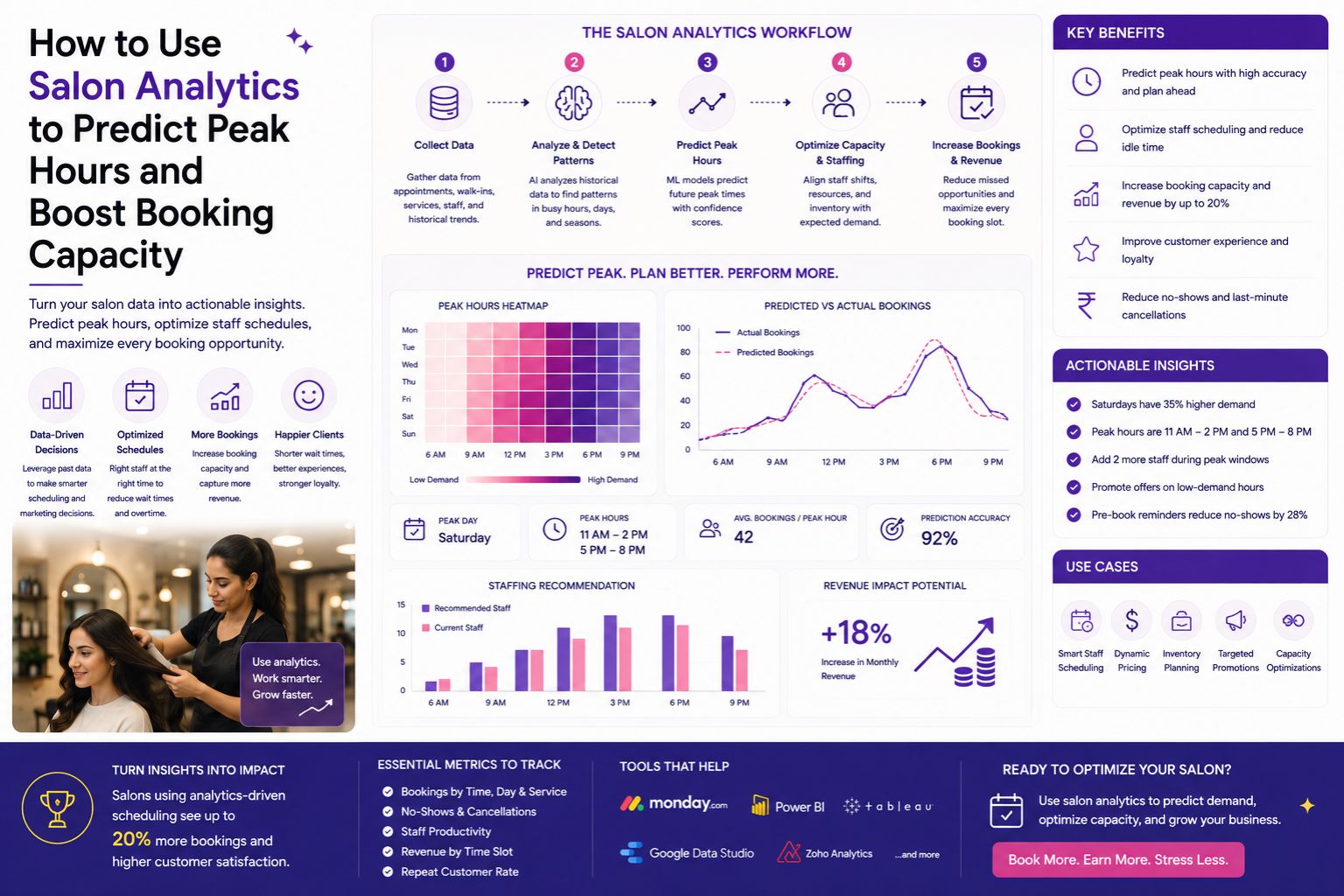


Look, every salon owner I talk to—whether it's in Pune or Delhi—they all say the same thing. Unpredictable rushes, specially during wedding season or weekends... it's chaos. Staff gets overwhelmed, clients are waiting, and honestly it feels like you're just reacting all the time. Using salon analytics to predict peak hours is not some fancy tech thing anymore, it's becoming a practical way to actually understand your own booking patterns. You stop guessing and start knowing. That helps avoid overbooking mistakes and honestly boost capacity without adding more chairs. That's real. That impacts your bottom line directly.
What Peak Hour Prediction Means for a Real Salon
Peak hour prediction basically means you take your historical booking data and figure out when demand really spikes for specific services like facials, haircuts, or those expensive bridal packages. I know a Mumbai salon—they realized 60% of their bridal trial appointments happen between Thursday and Sunday. That creates a huge bottleneck, but meanwhile other service slots just sit empty. Missing this pattern? Yeah, then you're stuck with chaotic scheduling and clients walking away because they got tired of waiting. Lost revenue, simple as that.
The Reality of Predicting Demand for Indian Beauty Services
Indian salons have their own weird challenges, right? Last-minute wedding cancellations, festival rushes, and the fact that some services take wildly different times than others. Standard software just ignores all that. But analytics can actually show you that threadings and waxing peak during evening hours while hair treatments fill up around midday. That means you can stagger your staff breaks properly. There's this Bangalore owner I read about—she offered express facials during 11 AM-1 PM slots and reduced wait times by 40%. Without hiring anyone extra. Imagine that.
Common Mistakes That Waste Your Booking Capacity
The biggest mistake I see is treating every time slot like it's the same, when actually certain services just bottleneck everything. Overbooking during peak hours without adjusting service duration estimates? You'll get delays and unhappy clients guaranteed. Another thing people ignore—seasonal shifts. I heard about a Delhi salon that lost 15% of potential bookings during wedding season because they kept static schedules. Instead of using analytics to predict the late October rush for bridal packages, they just kept doing the same thing. Big mistake.
How to Use Analytics to Decide Your Optimal Schedule
So how do you actually start? Export your last three months of booking data from your POS or salon management app. Then categorize by service type, time of day, and day of week. Just look for patterns. Maybe there's a 30% jump in eyelash extension bookings every Friday evening—then allocate your most experienced technician to that slot. Tools like ParlourTime have built-in analytics dashboards that highlight your specific peak windows and even suggest capacity adjustments. No complex spreadsheets needed, which is good because I hate those.
FAQ
q How do I start using salon analytics without expensive software?
a Honestly you can begin by manually tracking bookings in a simple spreadsheet for two weeks. Note service time, no-shows, and wait times. Free tools like Google Sheets or your existing salon app's basic reports give enough data to spot trends like peak hours for haircuts versus facials. It's not perfect but it's a start.
q What data points are most important for predicting peak hours?
a Focus on service duration per technician, day-of-week booking volumes, and client wait times. Map this against holidays or local events like weddings—that reveals when you need extra capacity for services like bridal makeup or hair smoothening. Otherwise you're just guessing.
q Can analytics help if I have only two staff members?
a Yes, actually small salons benefit the most because even small data insights help stagger service slots. For example, if analytics show threading bookings cluster between 5-7 PM, you can shift haircut appointments to earlier slots to balance the workload without hiring. That's practical.
q How often should I update my peak hour prediction model?
a Review your analytics monthly and after major events like Diwali or exam season, because demand patterns shift unpredictably. Parlourtime users can refresh their reports in real-time, but honestly even a quarterly check keeps your schedule aligned with actual client behavior. Don't overthink it.