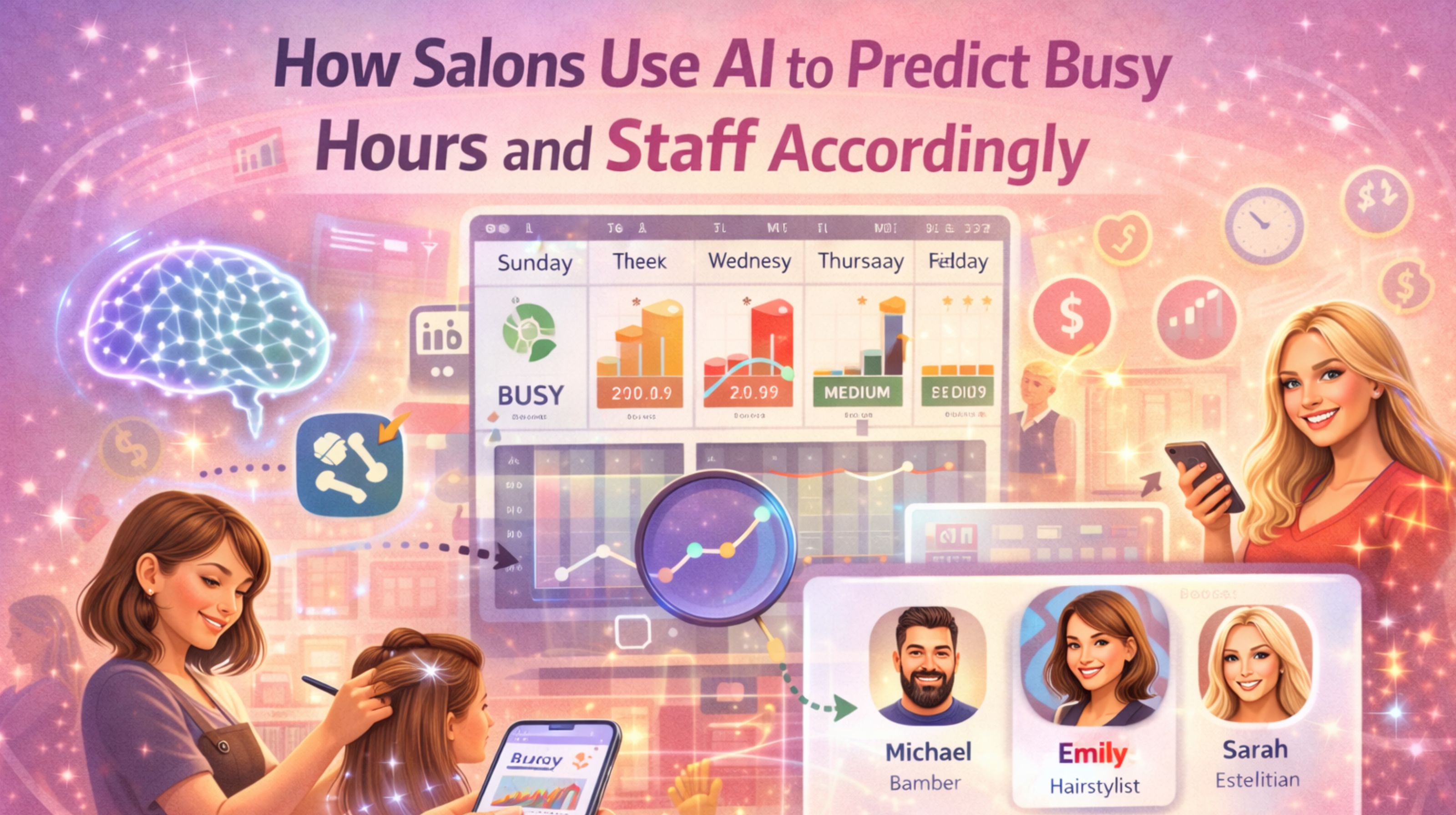


You book a 4 PM slot hoping for a relaxed experience, only to find a packed waiting area, stressed staff, and your stylist running 30 minutes behind. This common salon frustration is what AI scheduling tools aim to solve. In India, where festival seasons and weekends create massive demand spikes, salons are turning to predictive algorithms to forecast busy hours and roster staff smarter. But the gap between the AI's prediction and your actual wait time reveals the messy reality of walk-ins, last-minute cancellations, and complex Indian skin and hair routines that no algorithm can fully capture.
What "AI-Powered Staffing" Really Means for Your Local Salon
Forget Hollywood robots; in a salon context, AI is typically a software dashboard that analyses past booking data. It looks at patterns: how many keratin treatments were booked on Saturday afternoons in the last three months, how many walk-ins arrived during wedding season evenings, or how a 50% discount on facials last month doubled the client load. The system then projects similar future demand. A real salon observation is that even with this tech, the burning sensation from a hurried chemical peel or the patchy hair colour from a rushed stylist often stems from the salon manager overriding the AI's recommendation to save on staff wages, betting they can "handle" the rush.
The Reality Check: AI Forecasts vs. Indian Salon Chaos
The algorithm might predict a quiet Tuesday morning, but it can't factor in the 10 aunties who just decided to walk in for threading before a kitty party, or the bride who calls to move her full bridal trial to that same slot. A non-obvious detail people overlook is that AI models are trained on digital bookings and card payments. They often miss the significant portion of Indian salon transactions that are cash-based and walk-in, creating a blind spot in the data. The boundary where the service stops working is during unforeseen events like a sudden power cut, a local festival announcement, or when a key stylist calls in sick—the AI's perfect schedule collapses instantly.
The Staffing Mistake: When Data Ignores Service Complexity
A major risk is salons using AI only to count "bodies" rather than "service minutes." The software may correctly predict 20 clients between 5-7 PM, but if it doesn't distinguish between a quick eyebrow thread (10 mins) and a full global hair colour with Olaplex (3 hours), the staff allocation will be disastrously wrong. A common misunderstanding causing dissatisfaction is when customers see "AI-optimised" on a salon's app and expect zero wait times, not realising the prediction is for the salon's profit efficiency, not necessarily individual client convenience. This often leads to technicians being double-booked, directly impacting the quality of your haircut or facial.
How to Use This Knowledge for Your Next Salon Visit
Your decision help lies in reading between the lines of digital booking. If a salon app like ParlourTime shows most slots are open, the AI likely predicts low demand, meaning you might get more attentive service. Conversely, if prime-time slots are blocked out weeks in advance, the system has flagged a high-demand period. To avoid the rush, book against the AI's prediction—choose the off-peak hours it identifies. Ask the salon directly if they staff based on these forecasts; their answer will reveal much about their management priorities. For more insights on salon operations, you can explore our detailed blogs.
FAQ
q: Can AI in salons actually prevent my appointment from being delayed?
a: It can reduce delays but not eliminate them. AI predicts trends, but walk-ins, service extensions, and staff emergencies are unpredictable. The best-managed salons use AI as a guide but keep buffer staff for reality.
q>Do salons cut staff because of AI predictions, making service worse?
a>Unfortunately, this is a real risk. Some salons use AI forecasts to run a leaner team during predicted "slow" periods to cut costs. If an unexpected rush occurs, the remaining staff are overwhelmed, leading to rushed, poor-quality service and long waits.
q>How can I tell if my salon uses AI scheduling well?
a>Look for consistency. If your appointments consistently start on time even during festive seasons, and the staff don't seem perpetually frantic, the salon is likely using data effectively and hiring adequate staff. Chaotic environments often signal poor implementation or cost-cutting overrides.
q>Should I avoid salons that use AI for staffing?
a>Not necessarily. A well-implemented system at a reputable salon, like those that use platforms such as ParlourTime for management, can significantly improve your experience by ensuring the right specialist is available when you book. The key is ethical management that prioritises service quality over pure labour cost savings.