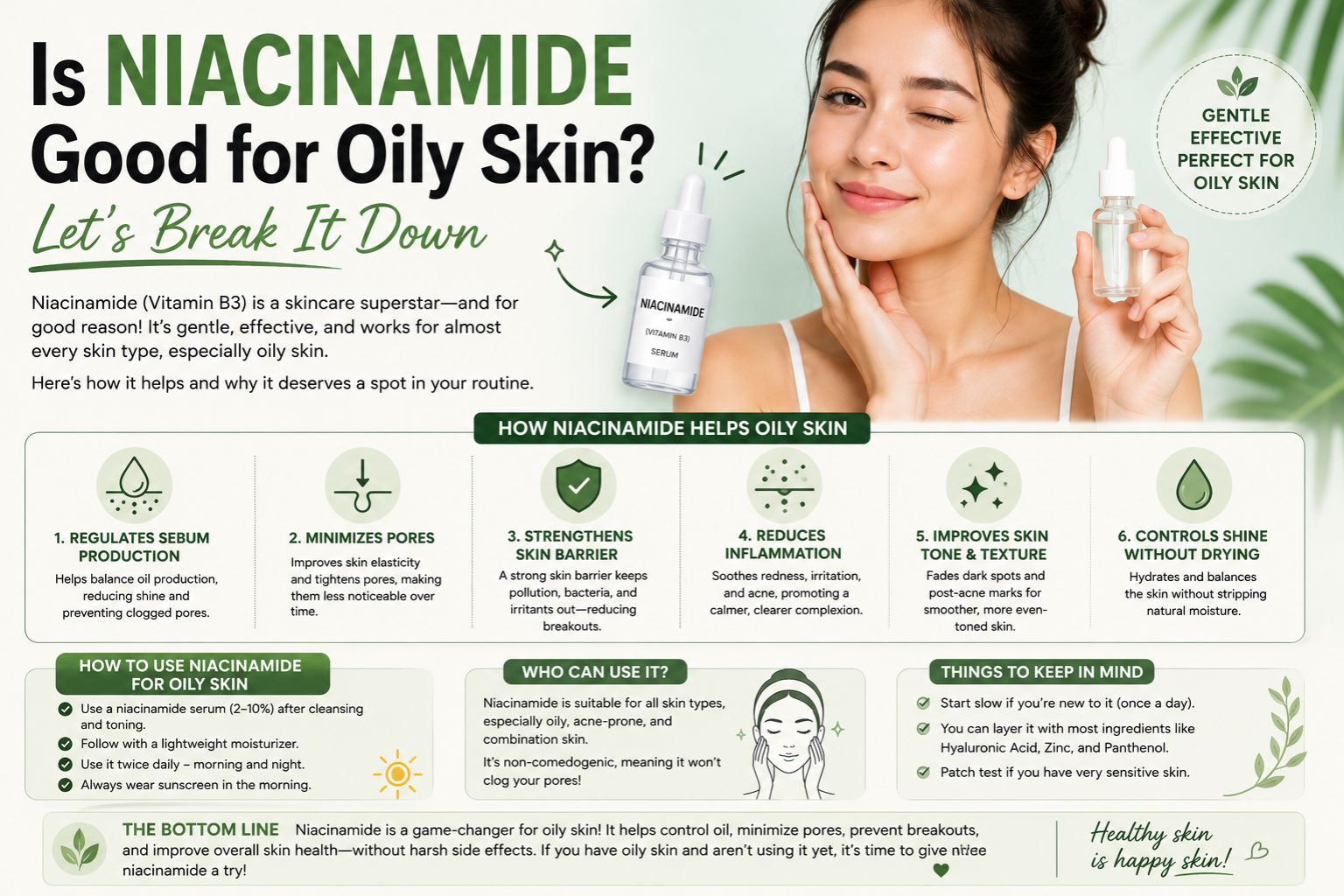


If you are wondering whether niacinamide is good for oily skin, you are not alone. Many customers in Indian salons and skincare clinics ask this exact question after dealing with excess shine, large pores, and—honestly—recurring acne that just won't quit. While niacinamide is widely recommended for regulating sebum, the real experience often depends on your skin's tolerance and the concentration used in the product. What sounds like a universal solution can sometimes lead to unexpected tightness or irritation if not matched correctly to your skin type, and that's a thing people don't always talk about.
What Niacinamide Actually Does for Oily Skin in Real Use
Niacinamide, also known as vitamin B3, is often prescribed to reduce sebum production and improve the appearance of enlarged pores. In salon settings, it is frequently included in serums and boosters as part of customized facials for oily skin. One common observation during these services is that clients with naturally oily skin often experience a temporary matte finish after application—like, it looks nice for a bit. However, many people overlook the fact that niacinamide works best when layered correctly. Using it with acidic ingredients like vitamin C in the same routine can reduce its effectiveness and sometimes cause redness, which nobody wants before a wedding or event.
The Reality Check: Does It Control Oil or Just Mask It?
While niacinamide can help regulate oil production over several weeks, it does not permanently stop your skin from producing sebum. That's just not realistic. A common misunderstanding is comparing it to professional salon treatments like a deep cleansing facial, which physically extracts oil and debris. In reality, niacinamide works at a cellular level to improve barrier function, meaning your skin may still appear shiny in the T-zone if you have highly active oil glands. I've seen this happen. For bridal preparation or event skincare, relying solely on niacinamide without proper cleansing and lifestyle adjustments often leads to disappointment when the shine returns within a few hours—especially in humid weather.
Common Mistakes and Hidden Risks When Using Niacinamide
One of the biggest mistakes people make is using niacinamide in high concentrations without assessing their skin's tolerance first. A burning sensation or mild stinging is not uncommon, honestly, especially if your skin barrier is already compromised from over-exfoliation. Another blind spot is combining niacinamide with products that contain strong acids or retinoids on the same night, which can lead to irritation rather than oil control—and then you're stuck wondering what went wrong. Many salon clients also overlook the importance of moisturizing underneath niacinamide, assuming that oily skin does not need hydration. This mistake can trigger compensatory oil production, defeating the purpose entirely and leaving you oilier than before.
How to Decide If Niacinamide Is Right for Your Oily Skin
The decision should be based on your skin's current condition and your routine's timing—there's no one-size-fits-all here. If you have active acne or clogged pores, niacinamide can be a supportive ingredient, but it should not replace professional extraction or prescribed treatments. A useful boundary is that niacinamide works best when your skin barrier is healthy and your routine is consistent. If you experience persistent breakouts or sensitivity, it may be better to consult a dermatologist before adding new products. For those navigating beauty service timing and skin concerns, parlourtime offers pathways to connect with local professionals who understand real Indian skin conditions—and trust me, that local knowledge makes a difference.
FAQ
q Can niacinamide make oily skin worse?
a In some cases, yes—and it's frustrating when it happens. If your skin barrier is damaged or you are using a high concentration (above 10%), it can cause irritation or breakouts. Starting with a lower percentage like 4–5% is safer for oily but sensitive skin.
q How long does niacinamide take to show results on oily skin?
a Most people notice a difference in oil production after 6 to 8 weeks of consistent use—but honestly, it can feel longer. However, factors like diet, weather, and product layering affect the timeline. Delayed results are normal for deeper sebum regulation, so don't give up too soon.
q Should I use niacinamide before or after moisturizer for oily skin?
a Niacinamide is typically applied after cleansing and before moisturizer. If your skin feels tight or dry after application, using a lightweight moisturizer afterwards is recommended. Never skip hydration even if your skin feels oily—that's the mistake everyone makes.
q Can niacinamide replace salon treatments for oily skin?
a No—and please don't think it can. Professional treatments like facials or chemical peels address deeper congestion and excess oil through physical or clinical means. Niacinamide is a supportive ingredient but cannot substitute for professional beauty service guidance when the condition is persistent. You really need both working together.