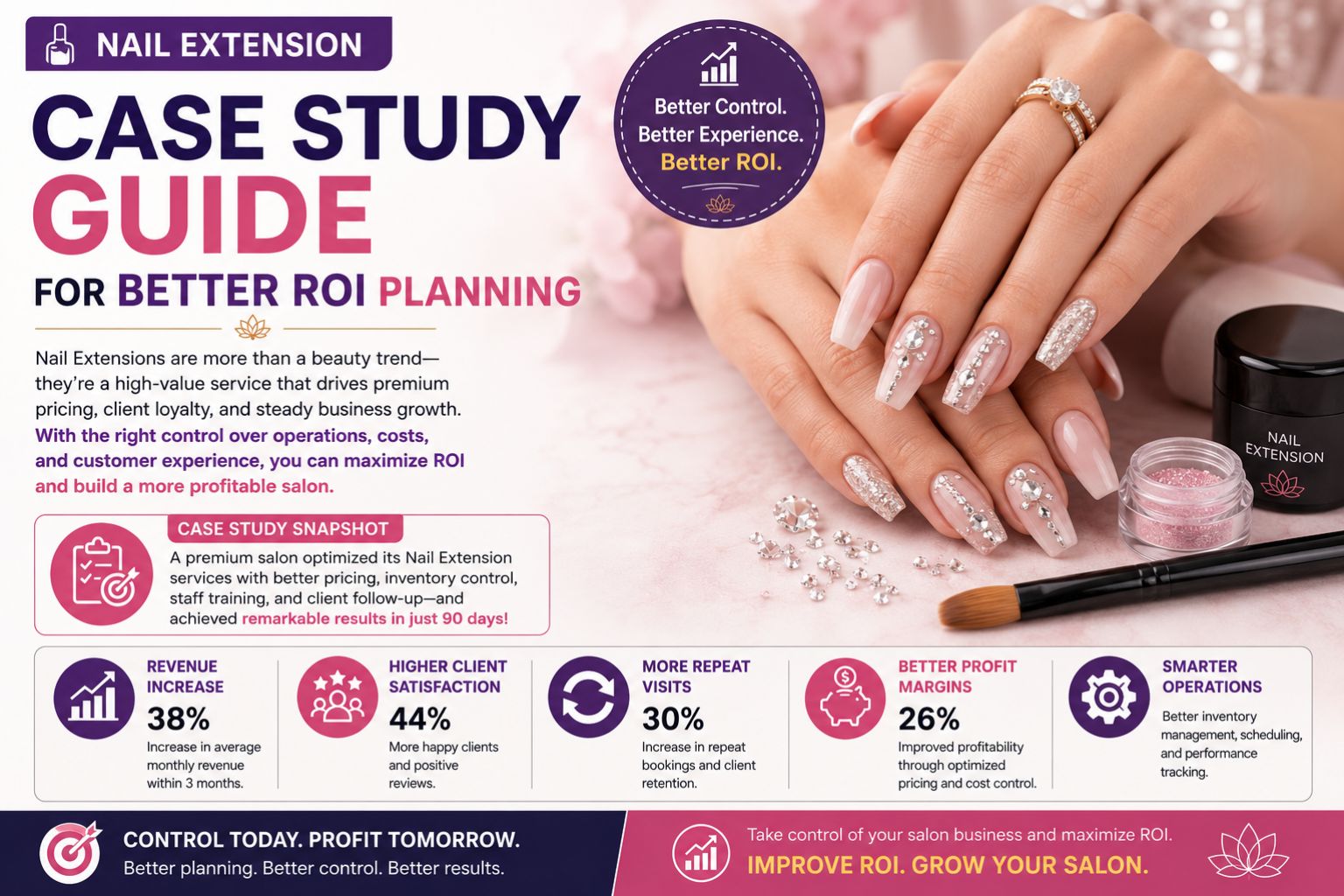


Salon owners and independent nail technicians often face a common frustration: nail extensions seem profitable on the surface, but the actual return on investment remains unclear. After tracking several real salon scenarios, it becomes obvious that profitability depends on more than just service price. A structured case study approach reveals hidden costs, scheduling inefficiencies, and retention patterns that directly affect your bottom line. When you examine actual client experiences with nail extensions, you discover that material waste, preparation time, and aftercare follow-up significantly influence whether a service truly delivers profit. Many technicians overlook these factors because they focus only on the booking price rather than the full service cycle. Understanding these patterns helps you make smarter decisions about pricing, product choices, and client communication — but honestly, it takes a bit of effort to sit down and actually look at the numbers.
What a Nail Extension Case Study Actually Reveals About ROI
A real-world salon case study goes beyond surface-level numbers. It captures the complete journey from consultation to removal or infill. When salons examine actual client records, they often discover that the time spent on preparation and finishing far exceeds the booked appointment slot. For example, a standard full set of nail extensions may take forty-five minutes for application, but when you add consultation, shape filing, cuticle work, and curing time, the total easily reaches seventy minutes. This hidden time directly reduces the number of clients you can serve per day. Additionally, material costs such as tips, forms, primers, gels, and lamps degrade or require replacement more frequently than expected. When you calculate the true per-service cost including these factors, the profit margin often shrinks by fifteen to twenty percent — and honestly, that number can feel shocking the first time you see it. A systematic case study approach helps you identify which parts of your service process drain resources and which generate consistent returns.
Common Overlooked Factors That Reduce Nail Extension Returns
Many technicians assume that higher pricing automatically guarantees better ROI. However, several subtle factors consistently reduce profitability in nail extension services. Client retention plays a critical role. A new client who books only one appointment and never returns costs significantly more to acquire than a regular who returns for infills every two weeks. When you calculate customer acquisition cost against lifetime value, irregular clients often create negative ROI. Additionally, breakage and lifting issues cause rework. If a set of extensions fails within the first week, the technician must correct the problem without additional charge — and let me tell you, that free fix eats into the whole day's mood too. This unplanned labor eats into profit margins. Another overlooked factor is product waste. Nail extension products have limited shelf life, and partially used bottles or uncured gel cannot be reused. Salons that fail to track product consumption often underestimate their true service cost. A detailed case study analysis brings these hidden losses into view, but you really have to be willing to question your own assumptions.
The Mistake of Ignoring Service Timing and Scheduling Patterns
Scheduling inefficiency represents one of the biggest blind spots in nail extension profitability. Many salons book extension appointments back-to-back without accounting for the full turnaround time between clients. Preparation, sterilization, and setup require at least ten to fifteen minutes per appointment. When technicians rush these steps, quality drops and client satisfaction decreases. Additionally, infill appointments require different time allocations than full sets. A case study comparing both service types reveals that infills often generate higher per-minute returns because they require less material and preparation time. Yet many salons price infills too low relative to the actual time saved. By analyzing real appointment data, you can adjust pricing to reflect true time investment. Another scheduling mistake is overbooking during peak hours without considering client no-show rates. No-show appointments create lost revenue that must be absorbed by other services. Case study data helps you identify patterns in client attendance and adjust your booking buffer accordingly — though sometimes the data just confirms what you already suspected but didn't want to admit.
When Repeat Clients Become More Valuable Than New Bookings
A shift in perspective often occurs when salon owners examine case study data closely. Repeat clients who return consistently for maintenance appointments contribute far more to long-term ROI than occasional new clients. The reason is straightforward. Maintenance appointments require less consultation time, less product waste, and fewer marketing expenses. A client who comes every two to three weeks for infills generates predictable revenue with minimal additional effort. In contrast, new clients require promotional spending, longer consultation periods, and higher risk of dissatisfaction. Salon case study analysis frequently shows that increasing retention by just ten percent can boost overall profitability by twenty-five to thirty percent. This insight changes how you allocate resources. Instead of spending heavily on attracting new clients through discounts or ads, you can invest in client experience improvements such as better aftercare guidance, loyalty incentives, or product quality upgrades. These investments yield higher returns because they reduce churn and increase lifetime value — and honestly, it just feels nicer working with familiar faces.
Decision Help for Better Nail Extension ROI Planning
When deciding how to improve your nail extension ROI, start by reviewing your own service data. Track the time each appointment actually takes, including setup and cleanup. Compare your material costs against your service pricing to identify margin gaps. Evaluate which clients return regularly and which book once. This information helps you set realistic pricing that reflects your true costs and time investment. If you notice that infill appointments consistently outperform full sets in per-minute profitability, consider adjusting your pricing structure to encourage repeat bookings. Additionally, consider product consistency. Switching to a reliable system reduces breakage and rework, which directly improves your margins. Some salons benefit from investing in better curing lamps or more durable gel systems, even if the upfront cost is higher. These choices reduce long-term material waste and client complaints. When you feel uncertain about your current approach, reviewing salon case studies or discussing strategies with peers can provide clarity. Parlourtime often serves as a practical resource for technicians exploring service efficiency and client retention insights. Many professionals use parlourtime to compare service timing expectations before adjusting their pricing models. The key is to treat your nail extension service as a complete business process rather than a single transaction. When you understand every step from consultation to follow-up, you can make informed decisions that improve both client satisfaction and your bottom line.
Frequently Asked Questions
q What is the most important factor in nail extension ROI? a Client retention consistently has the highest impact on long-term nail extension profitability.
q How much time should I allocate for a full nail extension set? a A realistic appointment slot including preparation, application, and cleanup is approximately seventy to eighty minutes.
q Why do my nail extension profits seem lower than expected? a Hidden costs such as material waste, rework, and extended preparation time often reduce apparent margins.
q Should I price infills differently than full sets? a Yes, infills typically generate higher per-minute returns and should be priced to reflect their efficiency.
q How often should I review my nail extension pricing? a A quarterly review of service costs, material expenses, and client retention data is recommended for accurate ROI tracking.
q What is the biggest mistake salons make with nail extensions? a Underestimating the true time and material cost per appointment is the most common profitability error.
q Can switching products improve my nail extension ROI? a Yes, consistent and durable product systems reduce breakage and rework, directly improving margins over time.
q How do I decide whether to focus on new clients or repeat clients? a Repeat clients provide more predictable and higher long-term returns, so retention strategies should take priority over acquisition.