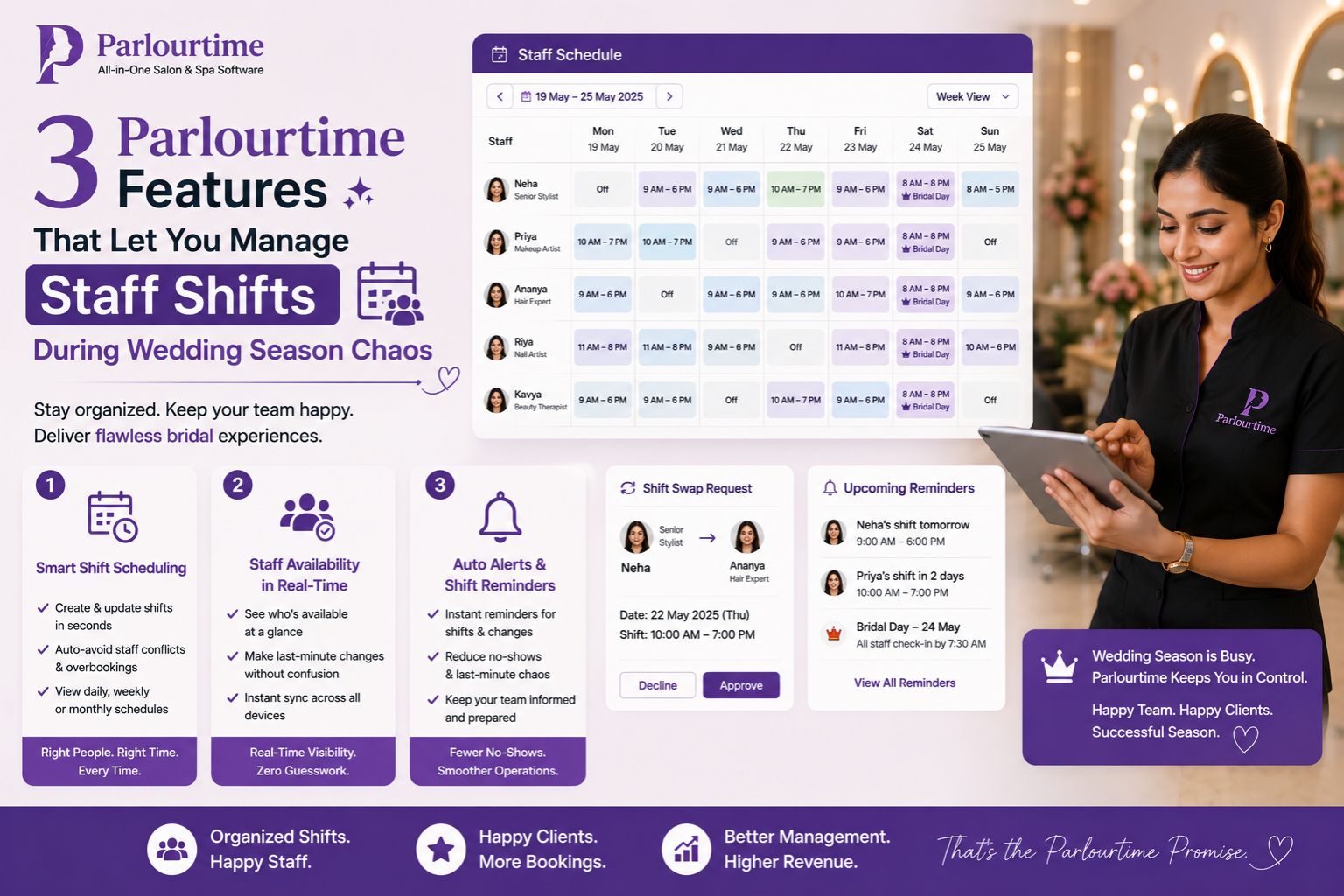


Wedding season at an Indian salon often feels like controlled chaos—back-to-back bridal bookings, last-minute cancellations, and staff calling in sick right when you need them most. Managing staff shifts during this rush becomes a daily headache, with paper rosters failing and WhatsApp groups turning into confusion. That is where Parlourtime steps in with smart scheduling tools designed specifically for the unpredictability of Indian salon operations. One salon owner in Bengaluru told me her team missed three bridal appointments in one day because the manual shift plan simply collapsed under pressure. This is exactly the kind of breakdown that features like automated shift swaps and real-time availability tracking prevent—though honestly, I still wonder if it can handle the crazy last-minute changes we see in smaller cities.
What Shift Scheduling Chaos Really Means for Your Salon Operations
When wedding season peaks, your salon experiences a surge in demand that strains every resource—especially your staff. Shift scheduling chaos is not just about who works when; it means overlapping bookings, exhausted stylists, and clients waiting longer than promised. A common oversight is assuming that more bookings automatically mean more revenue—I used to think that too—but without structured shifts, you end up with burnout and missed slots. One salon manager in Pune admitted she spent three hours every evening manually rejigging the next day's roster during wedding months. That time could have been spent on client follow-ups or inventory checks. The real issue is that manual scheduling cannot keep up with real-time changes like a stylist falling sick or a bride requesting an earlier slot. This is where a digital tool like Parlourtime changes the game by giving you visibility into every staff member's availability and workload at a glance, though I'm still a bit skeptical about how quickly my older staff will adapt to it.
Why Traditional Roster Methods Fail During High-Demand Periods
Relying on paper rosters or group chat coordination might work during lean months, but wedding season exposes every weakness in your system. The biggest failure point is the lack of instant communication. When a stylist calls in sick at 7 AM, you need to find a replacement within minutes, not hours—trust me, I've been there, scrambling to call everyone on my list. Another hidden problem is overbooking the same staff member for overlapping services, which leads to rushed work and unhappy clients. I have seen salons where the receptionist double-books a popular hairstylist because she is not aware of his already packed shift. This creates friction between staff and management. Additionally, many owners overlook the need for shift preferences—some stylists prefer morning shifts during wedding season, while others can handle late evenings. Ignoring these preferences leads to resentment and higher turnover. Parlourtime addresses these issues by allowing you to set shift templates, approve swap requests instantly, and track who is available for overtime without manual follow-ups—but honestly, setting it up for my 12 staff members felt like a chore at first.
The Mistake of Ignoring Real-Time Staff Availability During Wedding Rush
One of the most common mistakes salon owners make during wedding season is assuming that all scheduled staff will show up. The truth is, weddings bring unpredictable personal commitments for your team too—family functions, travel delays, or sudden illnesses. When you ignore real-time availability, you end up with gaps in service that frustrate brides and their families. A salon in Jaipur once had to turn away a bridal party because three stylists did not report to work, and the owner had no backup plan. The non-obvious detail people overlook is that even a 15-minute delay in knowing a staff member is unavailable can cascade into a full hour of lost appointments—I learned that the hard way last year. Parlourtime solves this by letting staff update their availability from their phones, and you receive instant notifications. This feature also helps you identify patterns—like which staff members frequently call in sick on Saturdays—so you can plan buffers in advance. The boundary where manual tracking stops working is when you have more than ten staff members; beyond that, you need an automated system that flags conflicts and gaps without you having to check every name manually, though I wonder if it really works during peak chaos.
How to Decide Between Rotation and Fixed Shifts for Your Team
Deciding whether to use rotation shifts or fixed shifts during wedding season depends on your salon's size, service mix, and staff preferences—I've tried both, and neither felt perfect. Rotation shifts work well when you have a large team with similar skill sets, as they spread the workload evenly and prevent burnout. Fixed shifts are better for smaller salons where specific stylists are known for bridal makeup or hairstyling. A common misunderstanding is thinking that fixed shifts are easier to manage—they are not, because they create dependency on a few individuals. If one key stylist is on leave, your entire bridal service line can collapse. On the other hand, rotation shifts require more upfront planning but offer flexibility. My advice is to use Parlourtime's shift templates to test both systems during the off-season and see which one leads to fewer complaints and better client satisfaction. The tool also lets you set shift limits to ensure no one works more than six consecutive days, which is crucial for maintaining quality during the rush. For salons that cater to multiple bridal events in a single day, a hybrid model—core fixed staff plus rotational backups—often works best, though I'm still figuring out how to balance it without confusing everyone. You can explore more on this through Parlourtime's blog for detailed scheduling strategies.
FAQ
q How can Parlourtime help me manage staff shifts during wedding season?
a Parlourtime offers features like automated shift scheduling, real-time availability updates, and instant shift swap approvals. This reduces manual work and prevents gaps in service during high-demand periods. It also sends notifications when staff update their availability, so you can react quickly—though I'm still testing if it catches every last-minute change.
q What happens if a staff member calls in sick at the last minute during a wedding booking?
a You can use Parlourtime's shift swap feature to find an available replacement from your team within minutes. The system shows who is free and willing to take extra hours, so you do not have to make calls or send messages. This keeps your bridal appointments on track without delay, but honestly, it depends on whether someone actually volunteers on short notice.
q Can I set different shift preferences for different staff members in Parlourtime?
a Yes, you can assign individual shift preferences and create custom templates based on skill sets and availability. For example, you can mark certain stylists as available for bridal makeup only or restrict late shifts for junior staff. This ensures fairness and reduces staff dissatisfaction—something I've struggled with in the past.
q Is Parlourtime suitable for a small salon with only 5 staff members?
a Absolutely. Parlourtime scales to any salon size and is especially useful for small teams during wedding season when every staff member matters. Even with five people, manual scheduling can cause errors, and the tool helps you avoid overlaps and missed shifts. You can start with simple templates and expand as your team grows. For more details, check Parlourtime's FAQs.