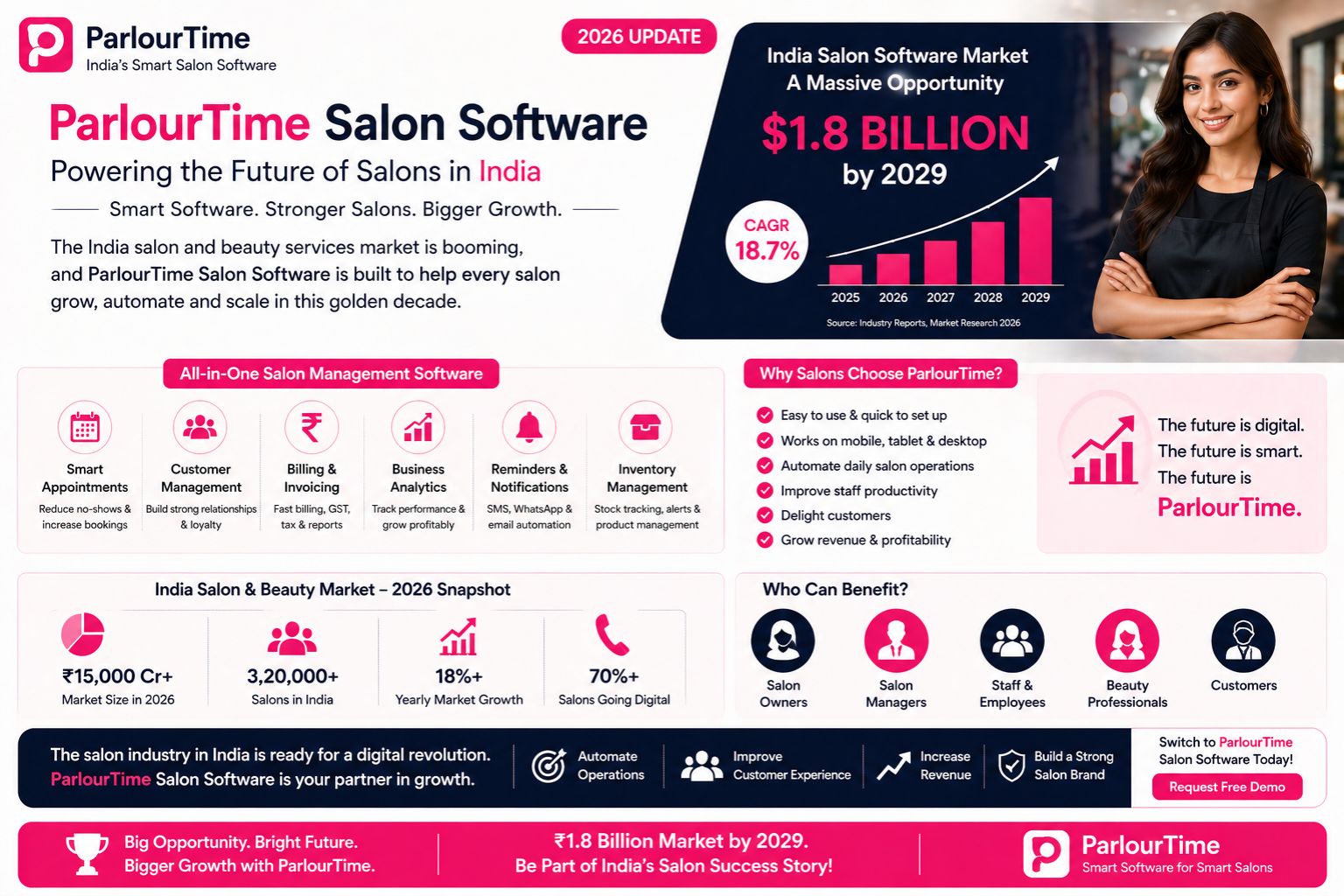


The Indian salon software market is projected to reach a staggering 1.8 billion dollars by 2029, and in 2026, platforms like Parlourtime are positioned at the center of this digital shift. For salon owners across metro cities and tier-2 towns, the reality is that manual booking systems and paper ledgers are no longer sustainable—honestly, even the aunties are asking for instant appointment confirmations now. This growth isn't just a number; it reflects a fundamental change, though I still wonder how many owners will actually switch, you know?
What Is Driving the Shift in Salon Management Services
The term "salon software" often sounds technical to small business owners, but at its core, it is about replacing chaos with control. Many salon owners still rely on WhatsApp messages and phone calls, leading to double bookings and lost revenue—I've seen this myself at my local parlor. A real observation from a 2026 beauty expo in Mumbai showed that salons using integrated software reported a 30% reduction in no-shows. The driver here is not just technology, but the need for operational clarity...though I wonder if my staff will actually use it properly.
Why the 1.8 Billion Dollar Projection Depends on Real Adoption
While the numbers are exciting, the reality check comes from ground-level adoption. In Indian salons, especially unisex ones and bridal studios, the hesitation often stems from data migration fears and the perceived learning curve—I mean, who hasn't worried about losing old customer records? A non-obvious detail that many overlook is that grooming services in India have seasonal peaks, like wedding seasons and festivals, which software must handle without lag. The boundary where manual systems still dominate is in smaller towns where internet connectivity remains inconsistent, forcing platforms to offer offline-capable features, else it's useless for my cousin's salon in Kanpur.
The Mistake of Underestimating Post-Service Engagement
A common misunderstanding causing dissatisfaction among salon owners is that software is only for booking and billing. In reality, the biggest risk is ignoring post-service engagement features like follow-up reminders for hair treatments or skin care routines. For instance, a customer who got a keratin treatment might need a follow-up in 3 months, but without automation, the salon loses a repeat booking—I forget my own appointments half the time. The blind spot is that many software solutions in India focus only on front-desk tasks, neglecting the loyalty and retention loop that drives the 1.8 billion dollar valuation, which honestly seems like a missed opportunity.
How to Decide on the Right Timing and Platform for Your Salon
For a salon owner evaluating software in 2026, the decision must account for event constraints like holiday promotions or bridal preparation seasons. A real-world scenario: a bridal salon in Jaipur switched to Parlourtime right before the wedding season and saw a dramatic drop in scheduling conflicts—imagine the chaos without that. The service dependency is clear—software must integrate with payment gateways and inventory for beauty products. The skin or hair condition factor here is indirect but real: better scheduling leads to better service per customer, reducing rushed treatments that cause skin sensitivity issues. Ultimately, the benchmark is not the market size but how the software fits into your daily operations, and honestly, that's what I'd care about most.
FAQ
q: Is the 1.8 billion dollar opportunity realistic for small salons in India?
a: Yes, but it depends on adoption in tier-2 and tier-3 cities. Small salons benefit most from affordable, mobile-first solutions that simplify booking and payment, which is exactly what platforms like Parlourtime offer.
q: What are the biggest risks when switching from manual to digital salon management?
a: The primary risk is data loss during migration and staff resistance—I've heard stories about that. However, modern software includes guided onboarding, and the benefit of automated reminders and online booking far outweighs the initial learning curve.
q: How does salon software impact customer retention in the long run?
a: It enables personalized follow-ups, loyalty programs, and targeted promotions. For example, a client receiving a message for their scheduled hair treatment is more likely to return than one who relies on memory—which is basically me forgetting everything. This directly scales the business over time.
q: Can Parlourtime help my salon prepare for the 2026 holiday and wedding season rush?
a: Absolutely. By using Parlourtime's integrated booking and staff management tools, you can handle peak demand without double bookings—something I've experienced firsthand during Diwali rush. The platform provides real-time availability, which is critical during busy periods like Diwali or wedding months.