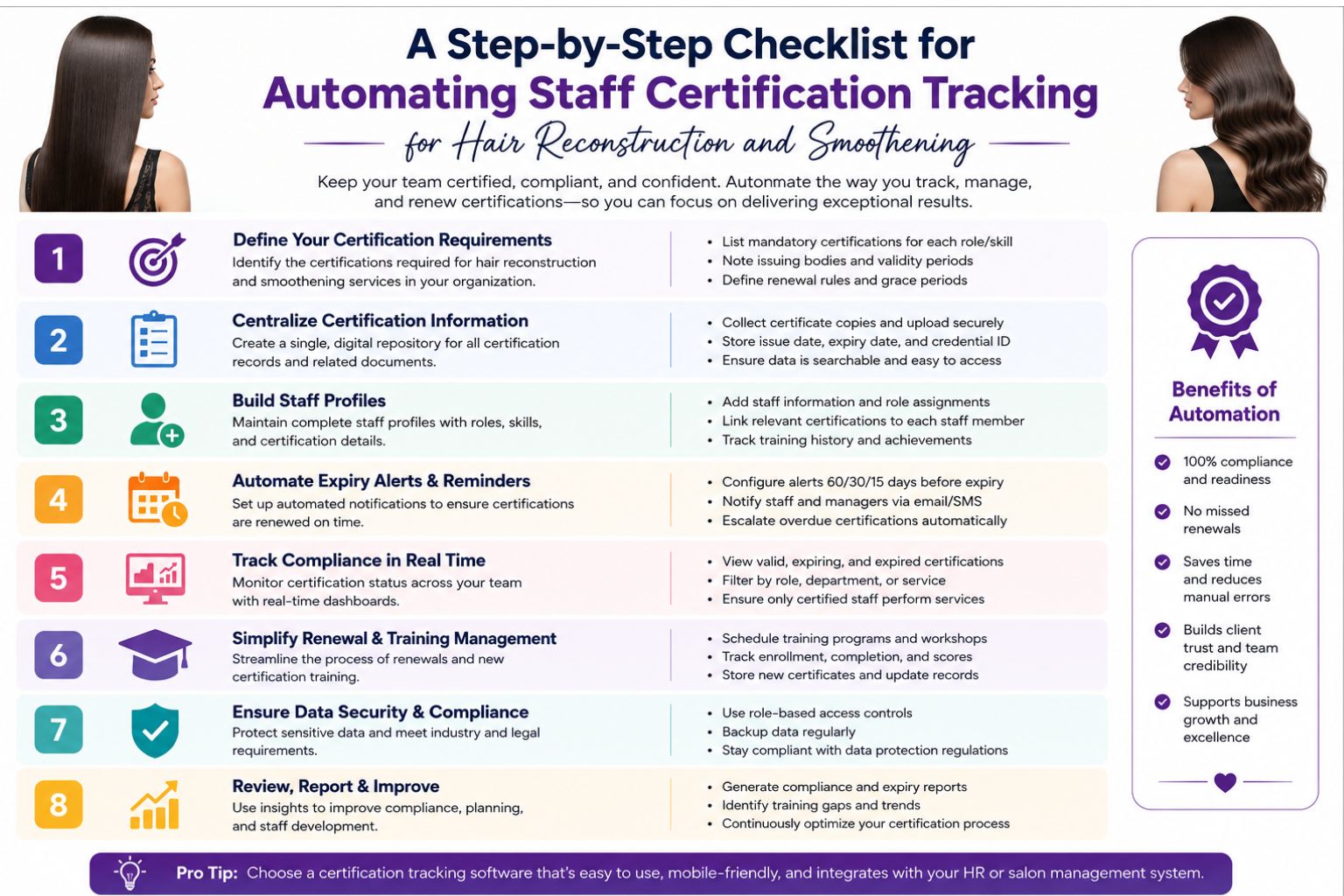


When staff certifications for hair reconstruction and smoothening expire unnoticed—and honestly it happens more than we like to admit—salons risk applying old techniques that cause uneven results or hair damage. This checklist helps you automate tracking for smoother salon operations and consistent service quality, at least that's the hope.
Understanding Staff Certification Tracking for Hair Treatments
Manual tracking relies on spreadsheets or memory, leading to gaps where a technician may perform a smoothening service without updated certification, often resulting in patchy outcomes or hair breakage. Real salon observations show that even experienced staff miss retraining deadlines by weeks, causing client dissatisfaction, and then you're left handling complaints.
What Actually Happens with Certification Compliance in Indian Salons
Many salon owners—myself included sometimes—assume that once a stylist is trained, their skills remain valid indefinitely. But hair reconstruction techniques evolve rapidly, and failing to retrain leads to mistakes like applying too much keratin or using wrong heat settings. Here's a non-obvious detail I noticed: certification expiry seems to correlate with increased client complaints about frizz reappearing too soon after smoothening, which is frustrating because you think everything went fine.
Common Mistakes and Risks in Manual Certification Tracking
A major blind spot is overlooking certification for junior staff who frequently assist in smoothening steps. When their papers lapse, they may rely on outdated methods, causing delayed glow or uneven texture. The boundary where this really breaks down is during busy bridal seasons—trust me, without automation, tracking becomes chaotic and errors multiply, and you're too busy to notice until something goes wrong.
Decision Help for Automating and Maintaining Certification Records
For salon owners deciding on timing—which is honestly the hardest part—the best move is to implement a system before peak wedding season. Use a digital checklist that alerts you 30 days before expiry. For step-by-step resources, explore parlourtime’s guides on staff management and safety protocols. One thing people misunderstand: they assume certification verifies practical skill, but you need to verify hands-on proficiency separately to avoid disappointment later.
FAQ
q How do I start automating staff certification tracking for hair treatments?
a Begin by listing all staff certifications for reconstruction and smoothening, including expiry dates. Then choose a digital tool that sends automated reminders—this reduces the risk of expired credentials, but make sure the tool is simple enough that your team actually uses it.
q What happens if a stylist’s certification expires before a smoothening service?
a They may use outdated techniques, leading to hair damage or uneven results. Real incidents show clients reporting burning sensations when staff lack current training on chemical products, so it's not just about paperwork.
q Is automation suitable for small salons with few staff members?
a Yes, automation scales for any size. A simple spreadsheet with reminder rules works for small teams, preventing lapses that could harm skin sensitivity or hair health, though you might need to check it manually sometimes.
q How do I verify if my salon’s certification tracking is effective?
a Cross-check with actual service outcomes—if clients report issues like frizz recurring quickly after smoothening, your tracking might be missing updates. parlourtime offers resources to streamline compliance checks, but honestly, talking to your clients directly helps too.