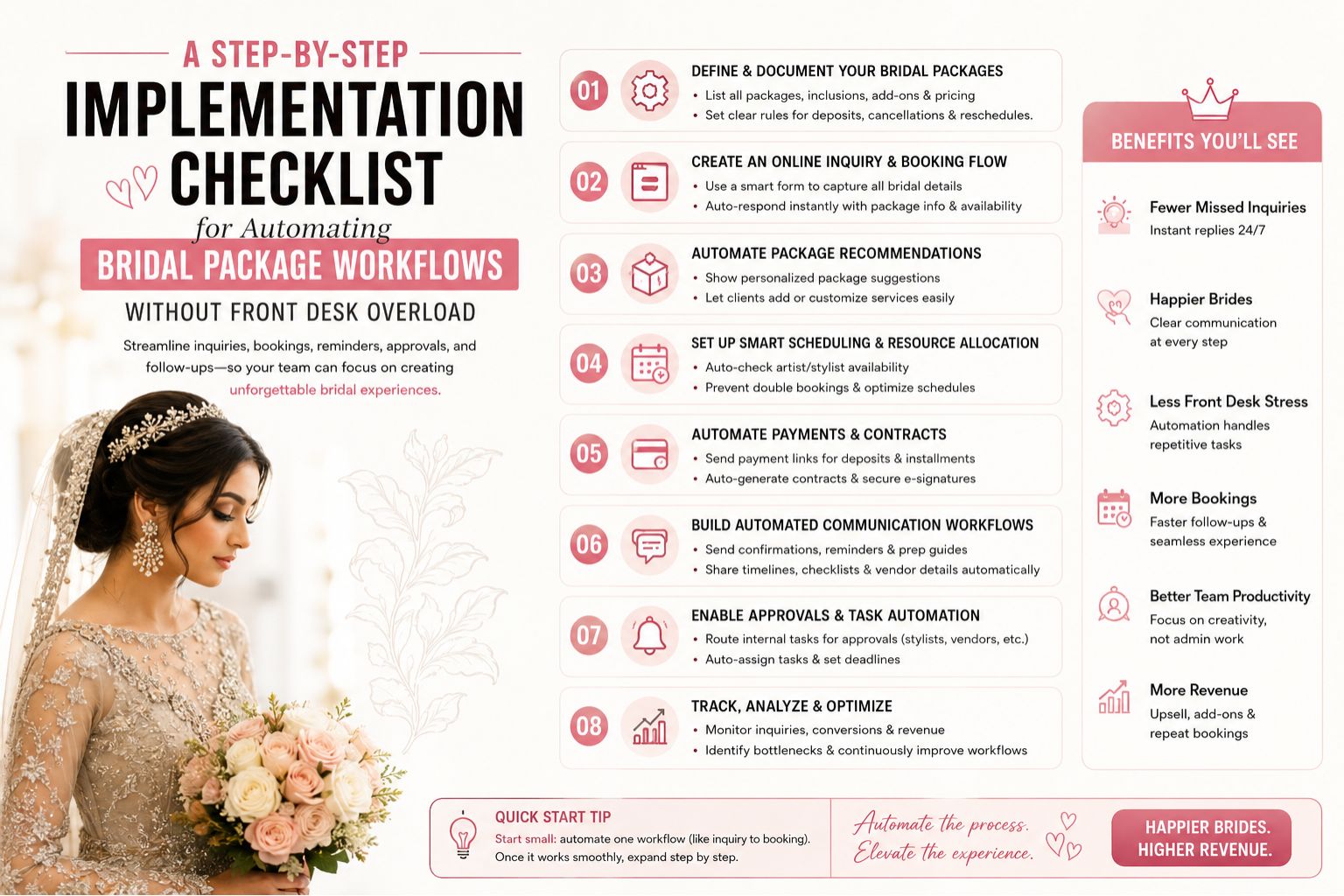


Salons that handle bridal packages manually often face front desk overload leading to booking errors and last-minute cancellations. Automating bridal package workflows allows you to manage complex multi-service schedules without overwhelming your reception staff. Many salon owners assume automation requires expensive software, but honestly a practical checklist can ease the transition more than you'd think. A common real salon observation is that front desk staff spend hours manually coordinating bridal timelines, which causes burnout and missed appointments — and once that happens, fixing it feels like a mess. Automating bridal package workflows reduces this stress and improves client trust.
Why Bridal Package Workflows Create Front Desk Overload
Bridal packages typically include multiple services like hair styling, makeup, and mehendi, which require precise timing and coordination. Without automation, front desk staff manually juggle phone calls, paper forms, and last-minute changes — and honestly, this gets exhausting fast. This leads to double bookings and delayed confirmations. A non-obvious detail many salons overlook is that brides often change their service list close to the event, causing chaos if not updated instantly. I mean, we've all seen that bride who adds an extra trial session two days before. Automating bridal package workflows ensures all changes are synced across the team, reducing front desk workload significantly.
What Actually Happens When Automation Is Delayed
When salons postpone adopting automated workflows, front desk staff face repetitive administrative tasks that lead to errors — and it's not just small ones. For example, a bridal client may book a trial session and later add additional services, but manual logs get lost somewhere between the desk and the stylist. During peak wedding seasons, this results in double bookings and unhappy customers. A common service dependency is that bridal makeup requires a longer slot than regular appointments, but automated systems can flag time conflicts automatically. Without this, staff spend extra hours fixing mistakes that honestly shouldn't have happened. Automating bridal package workflows prevents such inefficiencies and ensures smoother operations.
Common Misunderstandings About Bridal Automation Tools
Many salon managers believe automating bridal package workflows requires complex technical expertise or large budgets — but that's just not true. However, scalable solutions exist that integrate with existing booking methods like WhatsApp or salon software. Another misunderstanding is that automation removes human touch; in reality, it frees staff to focus on client relationships, which is the whole point. A boundary where automation stops working is when salons do not train staff on new tools, leading to partial adoption — and honestly, that's frustrating to watch. The most common mistake is implementing automation without a checklist, which causes fragmented workflows that don't really solve anything. Automating bridal package workflows with a step-by-step approach avoids these pitfalls.
How to Decide Timing and Next Steps for Automation
Bridal package automation should be introduced at least two months before wedding season to allow testing — don't rush it. Start by mapping your current bridal workflow from inquiry to post-event follow-up. Identify bottlenecks like manual invoice generation or service slot allocation. Automating bridal package workflows can include features like automated reminders and package customisation. A key timing constraint is that brides often book three to six months in advance, so early automation prevents data loss that might mess up everything later. For detailed guidance, visit Parlourtime blogs. This ensures front desk staff handle only high-value interactions while automation handles the rest. Automating bridal package workflows also integrates with Parlourtime app for mobile management — makes it easier to check things on the go.
FAQ
q What is the first step in automating bridal package workflows without front desk overload?
a The first step is auditing your current bridal package process including service listings, timing, and payment steps. Identify repetitive tasks like manual booking confirmations to automate first — start small, you know?
q Can small salons afford to automate bridal workflows without expensive software?
a Yes, many affordable automation tools use WhatsApp integration or simple scheduling platforms. Start with one feature like automated reminders to reduce front desk calls before expanding — no need to go all-in right away.
q How does automating bridal package workflows prevent booking errors during peak wedding season?
a Automation syncs service slots across team calendars, prevents double bookings, and sends real-time updates to bridal clients. This reduces errors even when last-minute changes occur — and believe me, they always do.
q What is the biggest mistake salons make when automating bridal workflows?
a The biggest mistake is skipping staff training on new tools. Without proper onboarding, automation fails and staff revert to manual methods — it's like nothing changed. Parlourtime offers resources for seamless adoption, so use them.